State can fix fee, lay down admission process, says SC
 Call 8585951111Got Doubts?
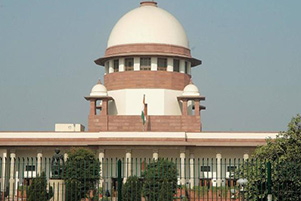
Supreme Court
A Constitution Bench of the Supreme Court has ruled that the State is authorised in law to regulate admission process, fix fee and lay down any other regulatory mechanism in all educational institutions.
The Bench, comprising Justices Anil R Dave, A K Sikri, R K Agrawal, Adarsh K Goel and R Banumathi, on Monday also upheld the validity of the common admission test (CET) to be conducted by state governments and national eligibility cum entrance test (NEET) for admission to medical colleges.
NEET to make a comeback for common medical entrance in India
Authoring the judgment, Justice Sikri rejected the private colleges’ contentions, pointing out that though private colleges had the right to establish and administer educational institutions, but could not treat it as a “business or a “profession”.

“Education subserves the larger public interest of ensuring that the nation develops and progresses on the strength of its highly educated citizenry and, hence, the fundamental rights of both minority and non-minority institutions has to be balanced by ensuring that high standard of education is available to all meritorious candidates…the only way to achieve this goal, recognising the private participation in this welfare goal, is to ensure that there is no commercialisation or profiteering by educational institutions,” the Bench said.
The court noted that the government would be empowered to regulate admission by prescribing a CET or NEET and also “forbid capitation fee and profiteering.”
“Education is treated as a noble ‘occupation’ on ‘no profit, no loss’ basis. Thus, those who establish and are managing the educational institutions are not expected to indulge in profiteering or commercialise this noble activity,” it said adding that the State can lay down regulatory measures for private aided or unaided, minority or non-minority institutions.
“The Court proceeds on the footing that the Legislature understands the needs of the people. The Constitution is primarily for the common man. Larger interest and welfare of student community to promote merit, achieve excellence and curb malpractices, fee and admissions can certainly be regulate,” it added.
Overruling the judgment made by a three-judge bench in 2013, which had allowed minority institutions to have their own admission process, the constitution bench said that in case of the central and the state governments issuing notification for common entrance tests, the issue could be resolved between them on the basis of Article 254 of the Constitution.
According to Article 254, both the state and central governments have powers to make laws related to higher education but when the central government makes a law or issues a notification, it would override the state governments’ laws.
The 2013 judgment which had held NEET as unconstitutional, is presently stayed as review petitions are awaiting final arguments.
Click to read preparation strategy for NEET
The court also set up a committee comprising former Chief Justice of India R M Lodha, former CAG Vinod Rai and Shiv Sareen, Director, Institute of Liver and Biliary Sciences, to oversee all statutory functions under the MCI Act.

Vipra Shrivastava is MA in English Literature from Delhi University with extensive experience in content writing of over 14 years. She has been handling content for Management, Accounting and Commerce streams for 8
Read Full Bio