What does it mean to be a Quality Engineer?
 Call 8585951111Got Doubts?
By Mohit Kohli

Quality Engineering
The term ‘Quality’ is used quite often by almost everyone on a day to day basis for almost every product or service available in the market. We are now talking in terms of Quality even with relation to terms not related to product or service such as lifestyle, environment, environmental conditions, medical facilities and per capita income etcetera, just to name a few.
With improved standard of life, Quality has become synonymous with almost everything or every service we use on a daily basis, right from the time we wake up till the time we go to bed. Even while sleeping we have products or services running in the background, of which some of us might be blissfully unaware. The fact of the matter is that with cut-throat completion because of a large number of product or service providers the consumer has become the king. With such a varied number of options available in the market, for almost everything, the consumer is spoilt of choices available at their disposable. And the best thing about educated consumers nowadays is that they go for quality rather than the price tag. They don’t mind shelling a few extra bucks for peace of mind.
Quality, thus can be defined in a layman’s perspective as a product or service that fulfills all the requirements of the consumer stated or otherwise (such as looks, performance, durability or after sale service etc).

The pioneers in this field have put across the meaning of Quality as “Fitness for use” (Joseph Juran) and “Conformance to requirements” (Phil Crosby).
Academic Options Available:
Because of the vast scope of Quality Assurance (QA) in various streams, there is no entry level under-graduate option for Quality Engineer immediately after completing your class 12 board exams. You have to first of all do a graduation course in engineering science in a stream of your choice or in an area of specialisation you would like to work, in the profession you would like to pursue. In US, for example, in order to become an ASQ (The American Society for Quality) certified engineer CQE (Certified Quality Engineers), you should have 8 years of experience or a combination of 8 years of experience and post-secondary education. Although to become eligible for ASQ, a BE degree of 4 years duration is not a mandatory requirement. It does waive off 4 years of experience requirement if you have master’s degree or doctorate.
My stint as a Quality Engineer
I completed BE (Mechanical) in 1994 when the concept of quality in the industry was in its nascent stage in India. Luckily, I had SQC (Statistical Quality Control) as an elective in the final year of my BE course. I was able to get a job as a Trainee Assistant Engineer at Eastern Medikit Ltd in the QA department. At the time of my joining the company was making IV Cannula and other surgical goods for their clients in US and Europe, and these were then being exported all across the world. The management was forward looking and progressive in their approach and therefore decided to market these surgical goods under their own brand name. There was only one competitor from Europe which ruled the market in India and abroad. To establish their brand presence and to convince the public in general that the product being manufactured by them was comparable to any similar product in the world and also to reassure the public regarding safety and quality of the product, the company decided to go for certifications by International Auditors such as ISO and CE. I was given the task of monitoring, inspection and auditing of the product right from the point of raw material coming into the store, all the different stages of manufacturing, lab testing, maintaining the Clean Room conditions for surgical goods to the final product being shipped out in blister packs in specifically designed cardboard boxes. Voluminous amount of data like test reports, certified raw material coming in on a daily basis, inspection reports, lab test results at each stage and proper colour coding and font size and design of the packs of finished products besides user manuals were made, maintained and stored for future reference. It was a great and thrilling experience as I didn’t have to focus on only one stage of manufacturing but all the different processes of manufacturing involved. We were successful in our endeavor and got certified as an ISO 9001 and CE company. CE certification is mandatory if you plan to export your goods to Europe. Since, the testing at each stage required destructive testing (meaning that the piece tested could not be put back into production) we had to use sample sizes depending on the size of the batch.
My second stint as a Quality Engineer was at a KPO called HyperQuality where we had to audit calls for HP customer service centers at all the locations across the world namely US, Canada, UK, Philippines and India. This profile was completely different from the one I held at Eastern Medikit. At Eastern Medikit we were checking and auditing everything before the product hit the market. Whereas in the second profile, there was no product that we were manufacturing but instead checking the process adherence after the technician had interacted with the customer. The agents were marked on process adherence steps documented and provided by HP. The agents were marked on various parameters like – call closing/opening, branding, hold procedure, soft skills, dead air, the troubleshooting steps followed as per HP guidelines and proper documentation of each call. All these call monitoring reports were sent across to HP, who would then coach the technicians missing out on any of these parameters to improve CSat (Customer Satisfaction) score.
Both the job experiences I have mentioned above were highly enriching and rewarding with tremendous job satisfaction.
About the Author:
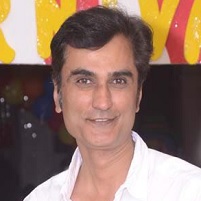
Mohit Kohli
Mohit is a qualified Mechanical Engineer and has worked as Quality Engineer at Eastern Medikit Ltd. and various ITES Companies, Research Associate at IIT Delhi and as Associate Editor at Northern Escapes. He’s given up corporate life and has taken up freelance writing as it gives him time to update himself with latest technologies such as Cloud computing /architecture, deep/dark web and Quantum Physics to name a few. He’s also associated with Drug Free World to expose the malpractices of Pharmaceutical companies /Doctors. He’s also planning to write about Lifeskills Management Program and spread awareness among street children who don’t have the luxury to attend schools.
