
HR Move from Transactional to Transformational to Survive in Digital World

HR role has evolved from supportive and administrative to be proactively involved in talent acquisition. Today, HR needs to focus on more transformational activities as their key responsibilities.
By Dr. Shruti Traymbak

Human Resource plays a very important role in today’s competitive world. It shifts from a supportive or administrative function to a strategic function or we can say that it is not only taking care of administrative duties but also proactively involved in talent requisition. In other words, HR needs to focus in transformational activities rather than transactional activities.
Transactional HR or Administrative HR
Transactional HR activities concerned with only administrative function such as the primary important functions of HR such as recruiting, selecting revising and publishing workplace policies and scrutinizing work place issues. Process centric matters generally are transactional activities. Human Resource specialists and generalists handle the transactional functions with the help of all the stages of the employment relationships from recruitment, selection, induction and orientation of new employees to processing terminates and conducting exit interviews.

Transformnational HR
In present digital scenario, employers confront a daunting array of historic challenge and the traditional HR or Transactional is not sufficient for survival. To sustain in such a competitive environment, Transformational HR activities plays an important role that are strategic orientated, proactive and forward thinking and actively involved in succession planning. These types of activities not only help in proactive thinking but also facilitates the organization in achieving business goals.
HR Move from Transactional to Transformational
Transactional activities should be delivered with a transformational purpose. This includes using fit for purpose HR technology, with reporting metrics, to support business decision making around employee retention, engagement, succession planning and achieving business goals. Effective technology will reduce administration and provide HR with enhanced business intelligence meaning their time and resources can be used more productively to drive the organizational agenda, culture and profits forward.
The transformational HR department should focus on “talent management”, which is more holistic and comprehensive as compared to recruitment, selection and retention. On the other hand, Succession Planning also refers to “talent management” in which employees are identified and developed or transformed into new leaders who can replace old employees when they leave, retire or die. It is a process that ensures that organization is ready for the future. It helps business moving forward during the unavoidable circumstances that come with running business and such plans perform as an excellent tool to preserve and nurture talent employees.
Organizations adopt succession planning progams to develop employees for future perspective or this program is a great way to build our next generation leaders. For example, Steve Jobs founder of Apple University embraced succession planning by educating employees and leaders to understand how he initiated the business and how to think like him.
Attitudes make a difference for a transformational HR department. A “can do” attitude of the transformational department facilitates in the brainstorming session to create an innovative idea rather than believing in formulating policy and monitoring attitude of the transactional department.
HR change is unavoidable; KPMG International’s new Future of HR global study found that HR leaders have conflicting attitudes and approaches to this change. KPMG International (The future of HR 2019: In the Know or in the No The gulf between action and inertia) has conducted survey more than 1,200 HR executives across the globe and found that
1.) About two-thirds of HR executives agree that HR has undergone or is undergoing a digital transformation. But only 40% of HR leaders said they have a digital workplan in place at the enterprise or HR level.
2.) Most of the HR executives about 70% recognize the need for workforce transformation.
3.) Hardly a third 37% — feel “very confident” about HR’s actual ability to transform and move them forward via key capabilities like analytics and Artificial Intelligence ( AI).
4.) A survey found that workplace culture is considered a top barrier to digital transformation for 41% of respondents. About 35% said their current culture is more task-oriented rather than innovative.
5.) HR executives who believe HR has a strategic role in their business are more likely to be pursuing digital transformation (67%) compared to 48% who view the HR role as unchanged.

6.) Despite data’s remarkable ability to deliver new insights and enhanced decision-making, barely one in five — 20% — of HR leaders believe analytics will be a primary HR initiative for them over the next one to two years. Fewer still — 12% — cite analytics as a top management concern.
7.) Recent and projected technology investment has been highest for cloud and Human Capital Management software: 49% of HR executives invested in Human Capital Management (HCM) over the past 2 years 32% in cloud capabilities.
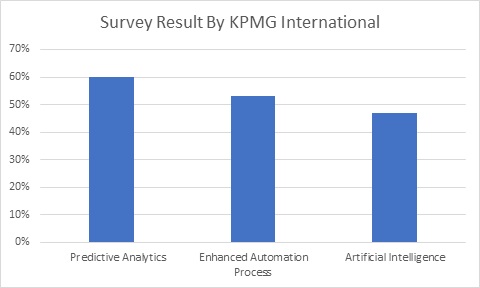
8.) KPMG International found that in the next year or two, more are planning investments in areas such as-Predictive Analytics 60%, Enhanced Automation Process 53% and Artificial Intelligence 47%.
This philosophy will permit employees to be resourceful; embracing technology and creativity to grow, sustain, improve and contribute to the organization in the best way possible.
About the Author:
Dr. Shruti Traymbak is faculty at Lloyd Business School.
Related Articles:
| Top 5 Online MBA Courses in India: Know Eligibility and Fees |
| Education for Sustainable Development: From a Practitioner and Public Service Perspective |
News & Updates
Photos & Videos





+51
- Top Skill University Colleges in Delhi/NCR
- Top Commerce Colleges in Delhi/NCR
- Top BBA Colleges in Delhi/NCR
- Top State Public University Colleges in Delhi/NCR
- Top Open University Colleges in Uttar Pradesh
- Top Commerce Colleges in Uttar Pradesh
- Top BBA Colleges in Uttar Pradesh
- Top State Public University Colleges in Uttar Pradesh
Contact Details
Address
Plot Number 11, Knowledge Park II,
Greater Noida ( Uttar Pradesh)
Get details of Similar Colleges

Student Forum
 Anything you would want to ask experts?
Answered 2 months ago
Lloyd Business School has mentioned that its scholarships are revised on yearly basis. However, there is no explicit mention of PGDM students getting scholarship benefits in second or final year of their curriculum. Candidates can confirm this by asking admission desk.
S
Contributor-Level 10
Answered 2 months ago
Yes, candidates can apply for Lloyd Business School PGDM courses in offline mode.
However, registrations for accepted entrance exams is done in online mode only. Below are the steps for offline mode of PGDM application:
- Go to admission office of Lloyd Business School.
- Get an admission form and begin fi
S
Contributor-Level 10
Answered 2 months ago
Lloyd Business School PGDM placement programme has attracted top recruiters such as Accenture, Big Basket and ITC Limited in 2025.
However, other big recruiters such as TCS, HCL, IBM, Wipro and others have also recruited graduating PGDM students in the past.
S
Contributor-Level 10
Answered 2 months ago
When Lloyd Business School PGDM placements on international level are considered, the highest package is recorded at INR 25 LPA. This is slightly higher than domestic placement's the highest package which stood at INR 24.8 LPA. Other details on international placements have not been released.
S
Contributor-Level 10
Answered 2 months ago
Yes, candidates who are in their final year of UG level course are eligible to apply for Lloyd Business School PGDM course. These students can appear in all accepted entrance exams as well as fill PGDM admission form. Such candidates will be required to submit their final marksheet and degree at a l
S
Contributor-Level 10
Answered 2 months ago
No, Lloyd Business School does not accept direct admission into its PGDM courses.
Candidates are required to appear in personal interview and group discussion rounds if they are selected during admission. Selection is done based on scores obtained in CAT, MAT, XAT, CMAT and GMAT.
S
Contributor-Level 10
Answered 2 months ago
Lloyd Business School PGDM eligibility criteria does not mention work experience as a mandatory requirement to apply for admission. Thus, candidates can begin PGDM application process as soon as they receive their entrance exam and final year scores.
S
Contributor-Level 10
Answered 2 months ago
Total tuition fees for PGDM courses at Lloyd Business School ranges between INR 3.65 Lacs to INR 8.25 lakh. Out of all PGDM specialisations, Business Analytics has the highest course fees. Other specialisation have equal fees to each other.
S
Contributor-Level 10