
Exemplar Solution
Get insights from 1.3k questions on Exemplar Solution, answered by students, alumni, and experts. You may also ask and answer any question you like about Exemplar Solution
- 1.3k
Questions
- 0
Discussions
- 0
Active Users
- 0
Followers
Have a question about Exemplar Solution? Ask our experts
Keep it short & simple. Type complete word. Avoid abusive language.
A bag contains 5 black and 6 red balls. Determine the number of ways in which 2 black and 3 red balls can be selected from the lot.
A bag contains 5 black and 6 red balls. Determine the number of ways in which 2 black and 3 red balls can be selected from the lot.
This is a long answer type question as classified in NCERT Exemplar
 Upvote

How many automobile license plates can be made if each plate contains two different letters followed by three different digits?
How many automobile license plates can be made if each plate contains two different letters followed by three different digits?
This is a long answer type question as classified in NCERT Exemplar
Upvote How many committees of five persons with a chairperson can be selected from 12 persons?
How many committees of five persons with a chairperson can be selected from 12 persons?
This is a long answer type question as classified in NCERT Exemplar
Upvote We wish to select 6 persons from 8, but if the person A is chosen, then B must be chosen. In how many ways can selections be made?
We wish to select 6 persons from 8, but if the person A is chosen, then B must be chosen. In how many ways can selections be made?
This is a long answer type question as classified in NCERT Exemplar
Upvote Out of 18 points in a plane, no three are in the same line except five points which are collinear. Find the number of lines that can be formed joining the points.
[Hint: Number of straight lines = 18C2 – 5C2 + 1.]
Out of 18 points in a plane, no three are in the same line except five points which are collinear. Find the number of lines that can be formed joining the points.
[Hint: Number of straight lines = 18C2 – 5C2 + 1.]
This is a long answer type question as classified in NCERT Exemplar
Upvote A candidate is required to answer 7 questions out of 12 questions, which are divided into two groups, each containing 6 questions. He is not permitted to attempt more than 5 questions from either group. Find the number of different ways of doing questions.
A candidate is required to answer 7 questions out of 12 questions, which are divided into two groups, each containing 6 questions. He is not permitted to attempt more than 5 questions from either group. Find the number of different ways of doing questions.
This is a short answer type question as classified in NCERT Exemplar
Upvote If the letters of the word RACHIT are arranged in all possible ways as listed in dictionary, then what is the rank of the word RACHIT?
[Hint: In each case number of words beginning with A, C, H, I is 5!]
If the letters of the word RACHIT are arranged in all possible ways as listed in dictionary, then what is the rank of the word RACHIT?
[Hint: In each case number of words beginning with A, C, H, I is 5!]
This is a short answer type question as classified in NCERT Exemplar
Upvote Eight chairs are numbered 1 to 8. Two women and 3 men wish to occupy one chair each. First the women choose the chairs from amongst the chairs 1 to 4 and then men select from the remaining chairs. Find the total number of possible arrangements.
[Hint: 2 women occupy the chair, from 1 to 4 in 4P2 ways and 3 men occupy the remaining chairs in 6P3 ways.]
Eight chairs are numbered 1 to 8. Two women and 3 men wish to occupy one chair each. First the women choose the chairs from amongst the chairs 1 to 4 and then men select from the remaining chairs. Find the total number of possible arrangements.
[Hint: 2 women occupy the chair, from 1 to 4 in 4P2 ways and 3 men occupy the remaining chairs in 6P3 ways.]
This is a short answer type question as classified in NCERT Exemplar
Upvote Choose the correct option for <!-- [if gte mso 9]><xml>
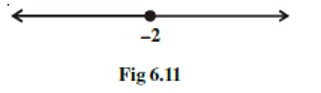
<!-- [if !supportLists]-->(a) <!--[endif]--> <!-- [if gte mso 9]><xml>
<!-- [if !supportLists]-->(b) <!--[endif]--> <!-- [if gte mso 9]><xml>
<!-- [if !supportLists]-->(c) <!--[endif]--> <!-- [if gte mso 9]><xml>
<!-- [if !supportLists]-->(d) <!--[endif]--> <!-- [if gte mso 9]><xml>
Choose the correct option for <!-- [if gte mso 9]><xml>
<!-- [if !supportLists]-->(a) <!--[endif]--> <!-- [if gte mso 9]><xml>
<!-- [if !supportLists]-->(b) <!--[endif]--> <!-- [if gte mso 9]><xml>
<!-- [if !supportLists]-->(c) <!--[endif]--> <!-- [if gte mso 9]><xml>
<!-- [if !supportLists]-->(d) <!--[endif]--> <!-- [if gte mso 9]><xml>
This is an Objective Type Questions as classified in NCERT Exemplar
Upvote Choose the correct option for <!-- [if gte mso 9]><xml>
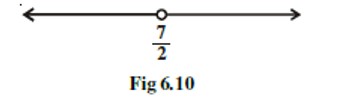
<!-- [if !supportLists]-->(a) <!--[endif]--> <!-- [if gte mso 9]><xml>
<!-- [if !supportLists]-->(b) <!--[endif]--> <!-- [if gte mso 9]><xml>
<!-- [if !supportLists]-->(c) <!--[endif]--> <!-- [if gte mso 9]><xml>
<!-- [if !supportLists]-->(d) <!--[endif]--> <!-- [if gte mso 9]><xml>
Choose the correct option for <!-- [if gte mso 9]><xml>
<!-- [if !supportLists]-->(a) <!--[endif]--> <!-- [if gte mso 9]><xml>
<!-- [if !supportLists]-->(b) <!--[endif]--> <!-- [if gte mso 9]><xml>
<!-- [if !supportLists]-->(c) <!--[endif]--> <!-- [if gte mso 9]><xml>
<!-- [if !supportLists]-->(d) <!--[endif]--> <!-- [if gte mso 9]><xml>
This is an Objective Type Questions as classified in NCERT Exemplar
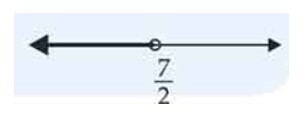
Upvote