NAIs short-term courses: Explore your Historical love

NAIs short-term courses: Explore your Historical love

3 mins read43 Views Comment
Updated on Jun 24, 2010 05:35 IST
<p style="text-align: justify;"><strong>New Delhi, June 23</strong> - If you love history and want to contribute in. its preservation, then. you can check out the courses run at the National Archives of India, New Delhi.</p> <p style="text-align: justify;">NAI's short-term courses are in records or archives management, reprography, care and conservation of books and others. The only full-fledged one-year programme is a postgraduate diploma in archives and records management.</p> <p style="text-align: justify;">The programme was earlier open only to MAs in history but now, a few non-humanities students are also entering this domain. "The <img style="float: right; margin: 3px 4px; border: 3px solid black;" src="https://images.shiksha.com/mediadata/images/1277381006phpRBIh0W.jpeg" alt="" width="150" height="110">trend has been seen in the last few years when even science graduates apply to study here," says Rajesh Verma, assistant director, National Archives.</p> <p style="text-align: justify;">Practical knowledge is the main thrust of the course. Students are trained to do the preservation and management of records. They work in laboratories and libraries where they observe, experience and perform the conservation work at a colossal archival centre, which has 1.75 lakh books and hundreds of thousands of maps and manuscripts.</p> <p style="text-align: justify;">On entering the main building of NAI, one can see the staff laminating several-centuries-old records. The smaller documents are preserved by hand-lamination while larger ones are passed through a machine where they are heated so that blotting paper sticks to both sides. Apart from these old methods, students are also taught about preserving archives through micro-film.</p> <p style="text-align: justify;">During the programme, students are also taken to the regional office in Bhopal, a repository of microfilms of archives stored at the headquarters in Delhi, and to record centres at Jaipur, Puducherry and Bhubaneswar.</p> <p style="text-align: justify;">"Such tours are very useful for two reasons. In Puducherry, we saw quite a few French records and we observed their heritage, history and records and also preservation techniques practised by the archivists at that centre," says Manish Tiwari, a student and a civil services aspirant.</p> <p style="text-align: justify;">There are around 10 sponsored students while others are "private" candidates, as they are called. Most of them have read modern Indian history. A few have diverse backgrounds. Sarath Pillai, an IAS aspirant, is a humanities graduate while Tiwari is a dentist by training. "I want to sit for the civil services exam and after BDS (Bachelor of Dental Surgery), I studied for an MA in history and got interested in history and related subjects. This might help me in my preparation for the civil services," says Tiwari.</p> <p style="text-align: justify;">Talking about the need to make archival studies popular, Pillai said, "There is a lack of consciousness for archives. Most of us have a background in history, but we never read about archives in the course curriculum. This course imparts that important knowledge of archives."</p> <p style="text-align: justify;"><img style="float: left; margin: 3px 4px; border: 3px solid black;" src="https://images.shiksha.com/mediadata/images/1277380997phpj7IXSH.jpeg" alt="" width="149" height="110">There is Parmila (who uses only her first name), a student with a library background while another student, A Ahmed, has studied museology (museum studies). "The ways and techniques to manage library and archives are quite similar. The only difference lies in the fact that archives are the primary source of knowledge while library books are the secondary," says Parmila.</p> <p style="text-align: justify;">To pursue archival studies, what better place could one get that NAI, "a temple of records" as Pillai calls it. He was awed by 40 km of linear space occupied by 40,00,000 records stored and preserved at NAI, one of the oldest buildings in Lutyens' Delhi.</p> <p style="text-align: justify;">Before completing the programme, students have to submit a dissertation on a chosen subject related to archives. Dilimaliya Nage, a candidate from Sri Lanka's Department of National Archives, is working on &lsquo;Lanka-India relationships' while Tiwari's subject is &lsquo;Urbanisation in Delhi'. Though the subjects don't necessarily talk about archives, they certainly touch upon history.</p> <p style="text-align: justify;">History needs to be preserved, lest it starts fading from our memories. That's what these students learn to do.</p> <p style="text-align: justify;">&nbsp;</p> <p style="text-align: justify;"><strong>Author: Vimal Chander Joshi (HT Horizons)</strong></p> <p style="text-align: justify;"><strong>Date: 24th June, 2010</strong></p> <hr style="text-align: justify;" /> <p style="text-align: justify;"><strong>For further details about related courses and colleges please click below:</strong></p> <p style="text-align: justify;"><a href="https://arts.shiksha.com/" target="_blank">Related courses and colleges</a></p> <p style="text-align: justify;">&nbsp;</p>
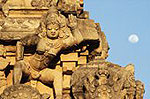
New Delhi, June 23 - If you love history and want to contribute in. its preservation, then. you can check out the courses run at the National Archives of India, New Delhi.

NAI's short-term courses are in records or archives management, reprography, care and conservation of books and others. The only full-fledged one-year programme is a postgraduate diploma in archives and records management.

The programme was earlier open only to MAs in history but now, a few non-humanities students are also entering this domain. "The trend has been seen in the last few years when even science graduates apply to study here," says Rajesh Verma, assistant director, National Archives.

Practical knowledge is the main thrust of the course. Students are trained to do the preservation and management of records. They work in laboratories and libraries where they observe, experience and perform the conservation work at a colossal archival centre, which has 1.75 lakh books and hundreds of thousands of maps and manuscripts.

On entering the main building of NAI, one can see the staff laminating several-centuries-old records. The smaller documents are preserved by hand-lamination while larger ones are passed through a machine where they are heated so that blotting paper sticks to both sides. Apart from these old methods, students are also taught about preserving archives through micro-film.

During the programme, students are also taken to the regional office in Bhopal, a repository of microfilms of archives stored at the headquarters in Delhi, and to record centres at Jaipur, Puducherry and Bhubaneswar.

"Such tours are very useful for two reasons. In Puducherry, we saw quite a few French records and we observed their heritage, history and records and also preservation techniques practised by the archivists at that centre," says Manish Tiwari, a student and a civil services aspirant.

There are around 10 sponsored students while others are "private" candidates, as they are called. Most of them have read modern Indian history. A few have diverse backgrounds. Sarath Pillai, an IAS aspirant, is a humanities graduate while Tiwari is a dentist by training. "I want to sit for the civil services exam and after BDS (Bachelor of Dental Surgery), I studied for an MA in history and got interested in history and related subjects. This might help me in my preparation for the civil services," says Tiwari.

Talking about the need to make archival studies popular, Pillai said, "There is a lack of consciousness for archives. Most of us have a background in history, but we never read about archives in the course curriculum. This course imparts that important knowledge of archives."
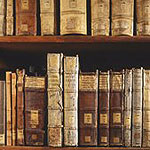
There is Parmila (who uses only her first name), a student with a library background while another student, A Ahmed, has studied museology (museum studies). "The ways and techniques to manage library and archives are quite similar. The only difference lies in the fact that archives are the primary source of knowledge while library books are the secondary," says Parmila.

To pursue archival studies, what better place could one get that NAI, "a temple of records" as Pillai calls it. He was awed by 40 km of linear space occupied by 40,00,000 records stored and preserved at NAI, one of the oldest buildings in Lutyens' Delhi.

Before completing the programme, students have to submit a dissertation on a chosen subject related to archives. Dilimaliya Nage, a candidate from Sri Lanka's Department of National Archives, is working on ‘Lanka-India relationships' while Tiwari's subject is ‘Urbanisation in Delhi'. Though the subjects don't necessarily talk about archives, they certainly touch upon history.

History needs to be preserved, lest it starts fading from our memories. That's what these students learn to do.


Author: Vimal Chander Joshi (HT Horizons)

Date: 24th June, 2010


For further details about related courses and colleges please click below:

Related courses and colleges


About the Author
This account contains a repository of informative articles by external authors with domain expertise in various aspects of guiding students on how to go about pursuing their undergraduate and postgraduate studies in Read Full Bio
qna

Comments