Challenges aplenty
 Call 8045680126Got Doubts?
What are the challenges facing a BSF officer today?
The challenges are of two types. One pertains to the border management, which is by itself a very complex subject. Complexity comes up because of the internal as well as external factors. Take for example the Bangladesh border. There are regional forces that try to create problems for the BSF. In border management the basic job is to provide a sense of security to the people living in border areas. The men also have to stop border crimes like smuggling. Now when you take steps against these things, especially smuggling and other trans-border crimes like cattle lifting, forcible grazing, you directly confront the local populace. Your profession per se, comes in direct conflict with the local population. And at the same time you need to provide the local people with security. That is the biggest dilemma BSF personnel have to face, when they are on border duty.
Secondly, there comes a time when you are taken out of the border management duty and are put in other duties like counter-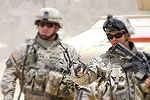 insurgency, anti-militancy. That is a big challenge. And there you cannot take a ham handed approach. You are fighting your own citizens. You cannot kill them at random. That would lead to a public outcry like it happens once in a while. Aberrations do take place and public opinion, in spite of all the good work being done by the BSF, turns against it. You need to take a balanced approach.
What are the growth prospects in the BSF?
Honestly speaking, I say BSF as a force will not give you any great growth prospects. This is particularly true for the cadre officers and not the IPS officers who join the force at posts above those of DIGs. The prospects, however, keep changing. I will give you my own example. I joined the force in 1969. During those days the recruitment rules used to say that I would become a deputy commandant in six years. Then I would become a commandant. And after 12 years I would be eligible to become a DIG. But the recruitment rules always remained on paper. I picked up my first promotion after 12 years. Think of that!

However, there have been some improvements over the years and the post of an additional director general now has been given to the cadre. And an officer joining the force today can hope to end his career as an additional DG. The special DGs and the DG are invariably IPS officers.
How are the BSF officers geared to tackle the threat of terrorism and infiltration from across the border?
We are fully trained for that. Both border management and prevention of infiltration are key aspects of the training of BSF officers. Infiltration from across the normal international border is entirely different from that from across the Line of Control, like infiltration from the POK side. However, the basic techniques for curbing infiltration, whatever the location of it, are the same.
Author: Pranab Ghosh interviews SK Dutta, retired inspector general, BSF
Date: 12th May, 2010
For further details about related courses and colleges please click below:
Related courses and colleges
