The watercraftwallahs
 Call 8045680126Got Doubts?
A conversation between a woman Indian naval officer and an ‘outsider’?
Outsider: So are you working or studying?
Officer: I’m working.
Outsider: Where?
Officer: I’m in the Navy?
Outsider: You mean like a civilian?
Officer: No, I’m an officer.
Outsider: Oh…but like a civilian?
Officer: No, I’m a commissioned officer in the Navy.
Outsider: Oh! So, you wear uniform?
Officer: Yes, I do.
Outsider: So, what do you do in the Navy?
Officer: I’m a naval architect.
Outsider: Oh…it’s a good choice, women have good decorative skills.
Decorative skills? The naval officer wondered “what to say” to that because she’s in one of the most demanding of professions, which 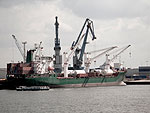 involves designing and developing warships, submarines, hovercraft, hydrofoils and merchant ships. She’s a naval architect — a community that’s celebrating a big recent achievement as they’ve just rolled out India’s first indigenously-designed and manufactured stealth warship, INS Shivalik, from the public sector, 200-(odd)-year-old, Mazagon Docks Ltd in Mumbai.

These professionals are a few from among the countless who get to put sails to their childhood pastime of making and floating paper boats in rainwater puddles.
They design, develop and repair a range of watercraft, including merchant ships (tankers, cargo ships, bulk carriers, etc), warships, submarines, passenger ferries, cruise liners, hovercraft, boats, yachts, icebreakers, and other structures such as hydrofoils and oil drilling platforms. They essentially make small floating cities.
Says a faculty member at IIT Delhi, which runs a diploma programme in naval construction for the Indian Navy, “It’s a profession known to mankind by intuition as across the globe, civilisations have grown and prospered around water bodies. The negative side is only individual thinking, based on self-drawn constraints. In a particular location, growth remains limited like most other engineering jobs.”
Apart from the Indian Navy and government and private shipyards, naval architects have opportunity in self-employment. “The career of a naval architect has massive growth potential in entrepreneurship — ship repairs, boatbuilding, shipbuilding, harbours and docks, ship lifts, equipment for the ships, the list goes on,” says the faculty member. The recession in 2008 affected India’s shipbuilding industry, too, but the pall of gloom is lifting, he says.
However, India lacks graduate naval architects. Many drift towards greener pastures — either an MS abroad or an MBA. They get into management positions or fly to better-paying companies in China, Korea and Singapore, says Harish C Narula, chairman, Fibroplast Marine, Noida, which designs and manufactures commercial and defence boats for clients such as the Coast Guard, CRPF, and the Uttar Pradesh Police. “For the last two years, there has been no (graduate) naval architect (taking up a naval architecture job) in India.” So, Narula says he ends up hiring mechanical engineers and training them. The Indian Navy, too, takes in engineers from different branches, including civil, metallurgical, and mechatronics, who are then trained in naval construction.
Narula says the government should open more institutes giving diplomas in naval architecture/shipbuilding as well as BTech in this discipline, to meet market requirements.
The industry is revving up, with the public sector companies in the lead. India requires more vessels, especially for coastal security in view of increased terrorist threats.
Author: HT Horizon
Date: 6th May, 2010
For further details about related courses and colleges please click below:
Related courses and colleges
