
Overview
Get insights from 89 questions on Overview, answered by students, alumni, and experts. You may also ask and answer any question you like about Overview
- 89
Questions
- 0
Discussions
- 0
Active Users
- 0
Followers
Have a question about Overview? Ask our experts
Keep it short & simple. Type complete word. Avoid abusive language.
Consider a completely full cylindrical water tank of height 1.6 m and cross-sectional area 0.5 m². It has a small hole in its side at a height 90 cm from the bottom. Assume, the cross-sectional area of the hole to be negligibly small as compared to that of the water tank. If a load 50 kg is applied at the top surface of the water in the tank then the velocity of the water coming out at the instant when the hole is opened is : (g = 10 m/s²)
<!-- [if !supportLineBreakNewLine]-->
<!--[endif]-->

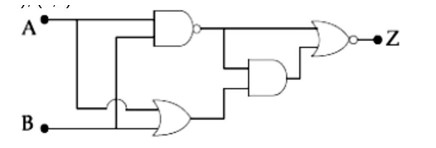
A satellite is moving in a low nearly circular orbit around the earth. Its radius is roughly equal to that of the earth's radius Rₑ. By firing rockets attached to it, its speed is instantaneously increased in the direction of its motion so that it become √(3/2) times larger. Due to this the farthest distance from the centre of the earth that the satellite reaches is R. Value of R is:
A satellite is moving in a low nearly circular orbit around the earth. Its radius is roughly equal to that of the earth's radius Rₑ. By firing rockets attached to it, its speed is instantaneously increased in the direction of its motion so that it become √(3/2) times larger. Due to this the farthest distance from the centre of the earth that the satellite reaches is R. Value of R is:

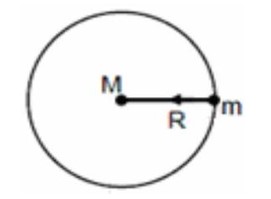
The mass density of a spherical galaxy varies as K/r over a large distance 'r' from its center. In that region, a small star is in a circular orbit of radius R. Then the period of revolution, T depends on R as:
The mass density of a spherical galaxy varies as K/r over a large distance 'r' from its center. In that region, a small star is in a circular orbit of radius R. Then the period of revolution, T depends on R as:
M = ∫ ρdV
M = ∫? (k/r) 4πr²dr
M = 4πkR?²/2 = 2πkR?²
F? = GMm/R?² = 2ω?²R
 Upvote

A satellite is in an elliptical orbit around a planet P. It is observed that the velocity of the satellite when it is farthest from the planet is 6 times less than that when it is closest to the planet. The ratio of distances between the satellite and the planet at closest and farthest points is:
<!-- [if !supportLineBreakNewLine]-->
<!--[endif]-->
v_max/v_min = (1+e)/ (1-e)
r_max/r_min = (1+e)/ (1-e) = 6
Upvote The acceleration due to gravity on the earth's surface at the poles is g an and angular velocity of the earth about the axis passing through the pole is ω. An object is weight at the equator and at a height h above the poles by using a spring balance. If the weights are found to be same, then h is : (h << R, where R is the radius of the earth)
<!-- [if !supportLineBreakNewLine]-->
<!--[endif]-->
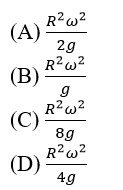
The acceleration due to gravity on the earth's surface at the poles is g an and angular velocity of the earth about the axis passing through the pole is ω. An object is weight at the equator and at a height h above the poles by using a spring balance. If the weights are found to be same, then h is : (h << R, where R is the radius of the earth)
<!-- [if !supportLineBreakNewLine]-->
<!--[endif]-->
g_e = g - Rω²
g? = g - (2gh/R)
Now Rω² = 2gh/R
h = R²ω²/2g
Upvote