How to prepare for Group Exercise?


By Ruchi Shrimali
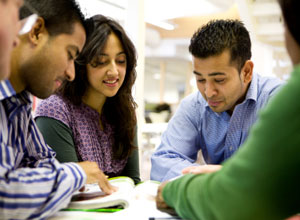
Group Exercises for MBA aspirants
Many B-schools choose to set up Group Exercises (GE) or group tasks as a preliminary round before Personal Interviews, instead of holding Group Discussions. Aspirants are assessed on their leadership skills, communication skills, tactfulness, problem-solving abilities, and ability to stay focused and get the task done in the designated time.
Mudra Institute of Communications (MICA) comes up with interesting group exercises every year. From re-enacting a scene from a classic movie and relating it to the current scenario, to preparing a TV commercial for men's luxury watch brand to coming up with right communication tools for 2 to 5-year-olds to reduce their consumption of chocolates and candies, MICA group exercises can be fun and tricky at the same time!
Symbiosis Centre for Management and Human Resource Development (SCMHRD), Pune, also uses Group Exercises as an assessment tool while selecting students for its postgraduate programmes. There are two case studies given to each group. Students get five minutes to go through the case study and 15 minutes to discuss and reach a consensus. In 2012, the MBA aspirants at SCMHRD were given following topics as group exercises:

- First task was a case study about the recent failures of the Indian cricket team in England and Australia. Six possible reasons of failure were given. The group had to rank them in descending order of importance.
- Second task was another case study about an MBA college which needed changes in curriculum and evaluation methods to make students more industry-ready.
Hitesh Gossain, an alumnus of IIM Ahmedabad, suggests:
- In a group exercise, you don’t always have to play the leader. It does not pay to dominate the group. Be assertive, not aggressive.
- If you make good and sensible suggestions in a confident and clear manner and contribute well, it is enough. The idea is to accomplish the task while avoiding conflicts.
- You can help the group by seeking the views of quieter members and encouraging them, being the ice-breaker when the group is having a dull or quite moment or being diplomatic while dealing with a bully. Use your opportunities well.
- Stay focused and keep an eye on the watch. Summarising everyone’s views in the end might help in accomplishing the task better and drawing a consensus.
Sharad Seth, an alumnus of IIM Bangalore says, "There are simply two types of people in a group – ones who take things forward and ones who stall things. B-schools are looking for positive people with passion to do big things in life.”
He suggests these positive roles that you can play in a group:
- Leader: Keep things on-track, coordinate resources and people well, and take initiatives. Recognise the skills of others and put them to good use. However, be careful that you do not turn out to be domineering.
- Motivator: Be enthusiastic or use light, funny comments to break tensions.
- Team-builder: Draw out shy people, ask their views and make them feel comfortable. Create a congenial environment and learn to compromise.
- Visionary: Come up with creative and innovative ideas to solve a problem. You can be original and radical, if not always practical.
- Summariser: If you are calm and cool, and a good observer, you can help in clearing out group objectives, work as a mediator, and tie-up loose ends.
- Rationaliser: Logical, analytical and objective, a rationaliser points out the practical points in implementation of a solution or idea. You can play quite an important role in crucial decision-making stage.
Negative roles you must not assume in a group exercise are:
- Do not be a Hitler. Do not expect that everyone will bow down to your ideas.
- Do not show off or interrupt others. Give others a chance to state their views and opinions.
- Do not switch topics too quickly or before things have been discussed properly.
- Do not make negative comments. Remember, everyone in the group is your peer and successfully cracked the entrance exam too.
- Do not be shy or choose to show no involvement in the group task. Find a way to contribute.
- Do not lose focus and do not distract others from the topic.
- If you do suggest a negative side of an idea or argument, be ready with the alternatives.
- Do not shout. Keep your tone in check. Speak clearly and confidently.
- Do not play the victim. Here is a group competing with you. It is not there to nurse your self-confidence or ego issues.
In the end, if you are preparing for a group exercise round, be prepared to back up your arguments with logic and defend your actions with logic during the PI round.
Best of Luck!
