Tips from GATE 2013 Topper - Chemical Engineering


Madiha Jawed | shiksha.com
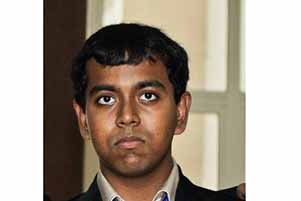
Currently pursuing his ME in Chemical Engineering from IISc (Indian Institute of Science)Bangalore, Balaaji Mahadevan topped the prestigious exam, GATE 2013, in the field of Chemical Engineering. According to Balaaji, preparation for any such exam is a continuous process and should ideally be started during graduation itself.
One of the most important advice Mahadevan has for GATE 2014 aspirants is to ‘Just chill’. He says, “GATE isn’t the end of the world. Even if your exam goes badly there are other paths to fulfil your dreams. Don’t be too hard on yourself and don’t put too much pressure on yourself. A tension free mind is probably the best recipe for success”.
We caught up with him and asked him to share his experience and advice students on how they can crack GATE 2014.
Q. According to you, what is the minimum time frame needed to prepare well for GATE? How long did you prepare for it? What was your preparation strategy?
It really depends on the individual, but I feel preparing for such exams is a continuous process starting from what you learn in your under-graduation, how good your fundamentals in your subject are, etc.
I prepared for GATE for around 6 months (basically during the final semester in my college).
My preparation strategy involved revising whatever was done in my undergrad courses, going deeper into the subject in a few areas where I felt had a poor understanding. Also some of the stuff in the GATE syllabus wasn’t covered in my B.E years, so I had to do everything from scratch in those areas. My preparation also involved solving as many problems as possible, especially previous year papers. I also made an attempt to improve on my accuracy and do problems at a faster rate because at the end of the day accuracy and time management are the 2 things which differentiate you from the rest in the competition.
Q. Is it necessary to join a coaching institute or is self-study good enough?
No. Self study is good enough.
Q. What study plan did you follow for your prep?
Basically the GATE chemical engineering paper is divided into 2 parts.
- Aptitude and Engineering Maths (accounts for 30% weightage of marks)
- Chemical Engineering (70% marks)
The aptitude and maths portion is quite easy and high scoring. Since I was confident about tackling this portion of the syllabus I hardly spent any time on this. My main focus was on chemical engineering subjects which are comparatively difficult and low scoring. I made it a point to cover the entire syllabus at least once since it is always a cushion to have a situation where you can attempt as many questions as possible. I don’t recommend selective studying.
Q. How did you divide your time between chapters/section? Which chapters/sections did you spend more time on?
Aptitude/Maths: I spent very little time and did the Maths portion just a couple of days before the exam.
Chemical Engineering:
I spent most of the time on Fluid Flow operations, Transport Phenomena, Thermodynamics, Mass Transfer, Heat Transfer, Unit Operations, Kinetics and Reactor Design, Process Control. These are the subjects from where a major chunk of the questions are asked. It’s recommended to do these subjects in depth, understand the underlying concepts, solve problems, etc.
Plant Economics and Chemical Process Technology are mostly about mugging up formulas and a whole lot of other stuff. I devoted very little time to these 2 subjects, just mugged up whatever I could and solved questions from previous years. There isn’t much scope for conceptual understanding in these 2 subjects, it’s just about remembering stuff and if you are lucky on the day of the exam, you may land up with something familiar in the question paper.
Q. How did you work on improving your weak areas?
To improve my weak areas, I decided to start from scratch. I referred to some classical texts and lectures on those areas, spent a lot of time to develop a deeper understanding, and did different types of problems.
Q. How much time did you spend on revision?
I didn’t explicitly draw out any plans regarding revision. My preparation itself extended upto the final hour before the exam. But from time to time I would pick out some random sums from some previously finished chapter to test myself and any shortcoming would be addressed then and there. If your fundamentals are clear, if you are in a position to derive the formulas by yourself there isn’t a need to revise much. Of course all the stuff that you need to memorize should be refreshed from time to time.
Q. Any useful study material/ reference books you can recommend to GATE aspirants?
It is better to study from standard text books. I used the following books:
- Introduction to Fluid Mechanics- Fox, Pritchard, Mcdonald
- Transport Phenomena- Bird, Stewart, Lightfoot
- Introduction to Chemical Engineering Thermodynamics-Smith, Van Hess, Abbott
- Mass Transfer Operations-Treybal
- Heat Transfer-Holman
- Unit Operations of Chemical Engineering-McCabe, Smith, Harriott
- Elements of Chemical Reaction engineering-Fogler
- Process Dynamics and Control-Seborg,Edgar,Mellichamp
- Chemical Engineering for GATE –Ram Prasad
Also there are some nice lecture series’ available in the NPTEL (National Programme on Technology Enhanced Learning) channel in YouTube which can supplement the study material.
It is better to study from standard text books. I used the following books:
· Introduction to Fluid Mechanics- Fox, Pritchard, Mcdonald
· Transport Phenomena- Bird, Stewart, Lightfoot
· Introduction to Chemical Engineering Thermodynamics-Smith, Van Hess, Abbott
· Mass Transfer Operations-Treybal
· Heat Transfer-Holman
· Unit Operations of Chemical Engineering-McCabe, Smith, Harriott
· Elements of Chemical Reaction engineering-Fogler
· Process Dynamics and Control-Seborg,Edgar,Mellichamp
· Chemical Engineering for GATE –Ram Prasad
Also there are some nice lecture series’ available in the NPTEL (National Programme on Technology Enhanced Learning) channel in YouTube which can supplement the study material.
Q. Tips for GATE 2014 aspirants?
- Avoid selective studying. All subjects are equally important.
- Focus on understanding the subject, never memorize stuff without understanding. GATE is a concept based exam. If your concepts are sound there is no reason why you shouldn’t do well.
- Do as many problems as possible. Get exposure to different types of possible problems.
- Focus on speed. Time management is very important for any competitive exam. While practising problems, always note the time taken and strive to improve your speed. A couple of mock tests will also help you in this regard.
- Focus on accuracy. Avoid silly calculation mistakes, reading the question wrongly etc. There are negative marking schemes for many questions and the margin of error is very small.
- Do previous year papers. It gives you an idea of what to expect on D-Day.
- Try to score as much as possible in aptitude/mathematics. It is by far the easier part of the exam, having a significant weightage and a high score here can do wonders in terms of the final result.
- Most importantly - just chill. GATE isn’t the end of the world. Even if your exam goes badly there are other paths to fulfil your dreams. Don’t be too hard on yourself and don’t put too much pressure on yourself. A tension free mind is probably the best recipe for success.
In the end Mahadevan brings to light that, “Probably 95% of your preparation won’t be used in the exam, but work is never wasted, the effort makes you better.”

Comments
(4)