Foreign education cost heads up as rupee bows down
 Call 8045680126Got Doubts?
By Ruchi Shrimali
In the last year, the rupee has depreciated by more than 18 per cent, which also means that the course fee for a study abroad aspirant has gone up by 18% in one year. Cost of foreign education on rise is not an ordinary matter for those from humble backgrounds. A course that would have cost a study abroad aspirant Rs 30 lakhs, including the tuition fee and living expenses, in 2011 would now cost him or her about 5.4 lakh rupees more!
Dearth of alternative funding resources
Many students are looking for alternative funding sources like scholarships or part-time jobs but the opportunities available are just not enough. There are only about 50 scholarships available for overseas education while most of the countries do not allow students to work part-time or full-time during the course of their study. 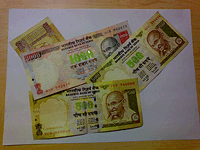
Studying and living abroad means that Indian students have to exchange Indian rupees for US dollars or the currency of that country. Even if they do get an education loan from a bank, the depreciation of rupee means that they will now get less money in return. Besides, the exchange rates of banks are also on the rise.

Even if a student does have a strong academic record, it is not easy to arrange additional finances. Thus, there are many students who have had to shelve their study plans due to the rising fees of the courses they wanted to opt for.
Banks are cautious towards ‘high risk' education loans
Most of the Indian banks have a cap for Rs 15 to 20 lakh on education loans for higher studies abroad. The depreciating rupee means that it will become difficult for this amount to suffice for students. This is going to affect the students who wanted to go abroad to study in the next academic year.
Banks are also planning to work on cost economics for education loans in March or April this year, where they might slow down on education loans. With the dagger of double dip recession hanging over everybody's head, they think that students may find it more difficult to find jobs after they finish their studies and hence, are at higher risk when it comes to defaulting on repayments.
Pinning hopes on ‘home'
With more and more higher education institutes coming up in India, some of the students who originally wanted to go abroad are now looking towards India for a cheaper and better option. Apart from this, many overseas universities too are joining hands with Indian counterparts to offer their courses locally to Indian students, giving them an advantage of studying at home.
What do you think about foreign education and its rising costs? Do share your views with us here.

Comments
(2)
S
2012-01-19 20:26:47
I
2012-01-14 17:13:36