Aldehydes, Ketones and Carboxylic Acids
Get insights from 184 questions on Aldehydes, Ketones and Carboxylic Acids, answered by students, alumni, and experts. You may also ask and answer any question you like about Aldehydes, Ketones and Carboxylic Acids
- 184
Questions
- 0
Discussions
- 0
Active Users
- 0
Followers
Have a question about Aldehydes, Ketones and Carboxylic Acids? Ask our experts
Keep it short & simple. Type complete word. Avoid abusive language.
Which of the following is an example of Stephen reaction?
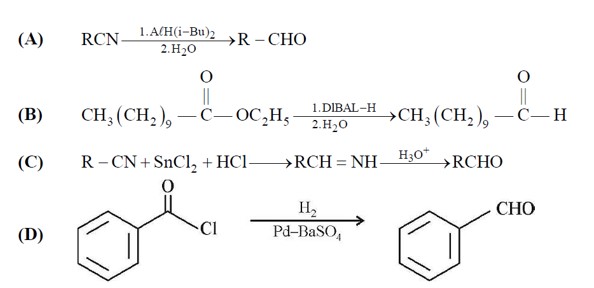
Which of the following is an example of Stephen reaction?
Reduction of alkyl cyanide using SnCl2 and HCl is called as Stephen reduction reaction.
 Upvote

Three isomers A, B and C (mol. formula C?H?O?) gives the following results:
B or C →Decarboxylation→ D(C?H?)
A →Decarboxylation→ E(an isomer of D)
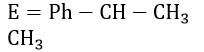
Both D and E are non-resolvable.
D or E →H?/KMnO?→ Benzoic acid
B is more reactive than C towards decarboxylation reaction.
A, B, C respectively are:
Three isomers A, B and C (mol. formula C?H?O?) gives the following results:
B or C →Decarboxylation→ D(C?H?)
A →Decarboxylation→ E(an isomer of D)
Both D and E are non-resolvable.
D or E →H?/KMnO?→ Benzoic acid
B is more reactive than C towards decarboxylation reaction.
A, B, C respectively are:
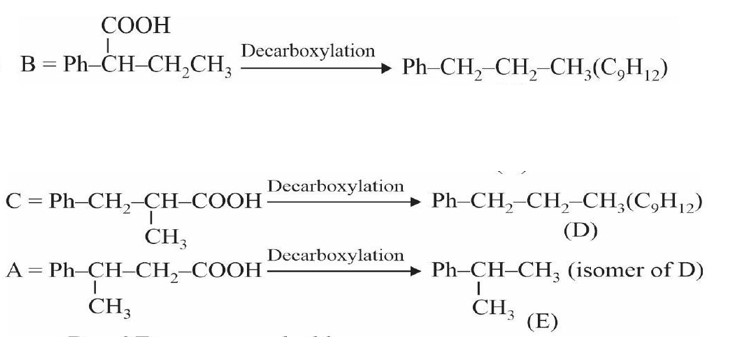
D and E are non-resolvable.
(Benzoic Acid)
Or
Upvote The increasing order of the reactivity of the following compounds in nucleophilic addition reaction is:
(a) Di-tert-butyl ketone
(b) Acetone
(c) Acetaldehyde
(d) p-Nitrobenzaldehyde
The increasing order of the reactivity of the following compounds in nucleophilic addition reaction is:
(a) Di-tert-butyl ketone
(b) Acetone
(c) Acetaldehyde
(d) p-Nitrobenzaldehyde
Nucleophilic addition on carbonyl compounds decreases by increasing steric hindrance.
Upvote Correct acidic strength order of the given carbonyl compound is <!-- [if gte mso 9]><xml>
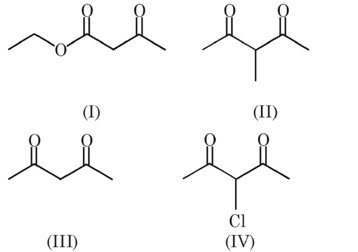
Correct acidic strength order of the given carbonyl compound is <!-- [if gte mso 9]><xml>
Process of active methylene group
Upvote The correct order of reactivity for the nucleophilic addition reaction of the following carbonyl compounds with ethyl magnesium iodide is:

The correct order of reactivity for the nucleophilic addition reaction of the following carbonyl compounds with ethyl magnesium iodide is:
If the carbonyl compound is sterically crowded, then it will be reluctant to undergo addition reaction. Moreover, attachment of bulkier alkyl group with the carbonyl carbon decreases the partial positive charge resulting into the minimization of attack by R? from RMgBr. So, the order is
Upvote 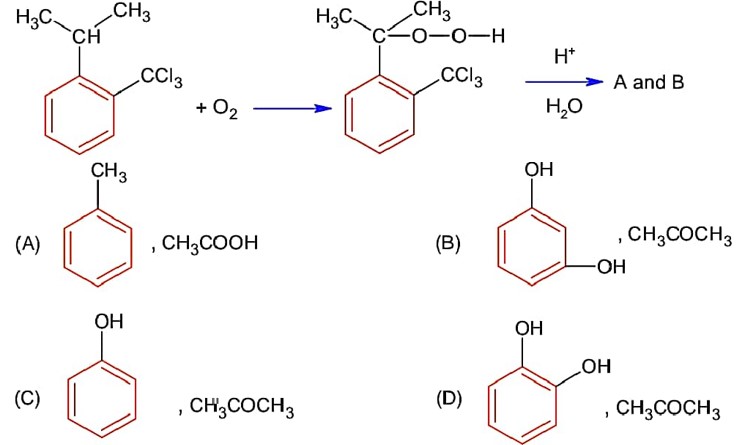
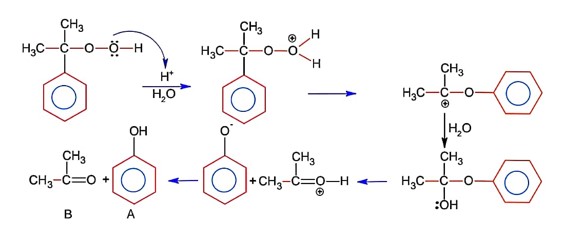
The product 'X' formed in following reaction is:
<!-- [if !supportLineBreakNewLine]-->
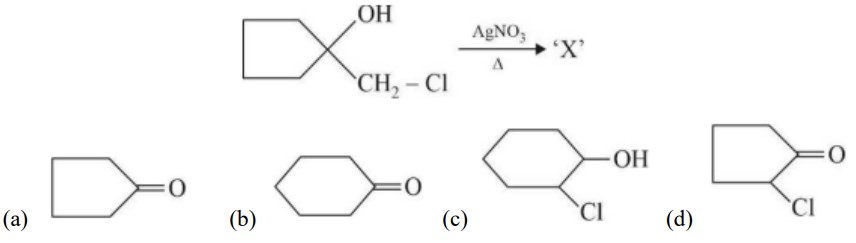
<!--[endif]-->
The product 'X' formed in following reaction is:
<!-- [if !supportLineBreakNewLine]-->
<!--[endif]-->
Here cyclohexanone is formed as follows
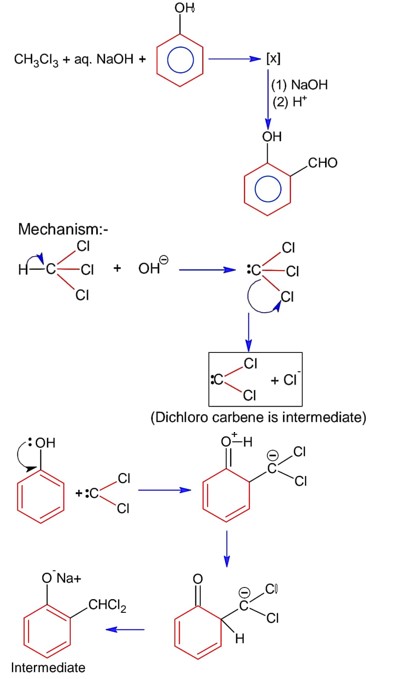
Upvote 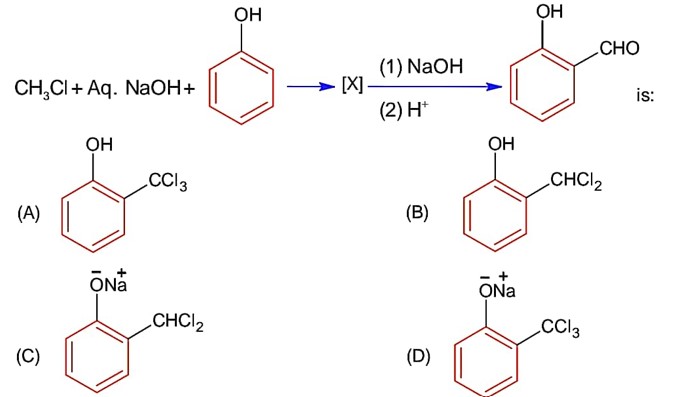
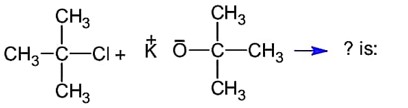
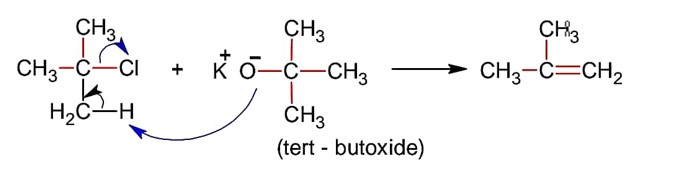
Base is tert-butoxide thus favours elimination with 3° alkyl halide and gives alkene
Upvote What is the final product (major) ‘A’ in the given reaction?
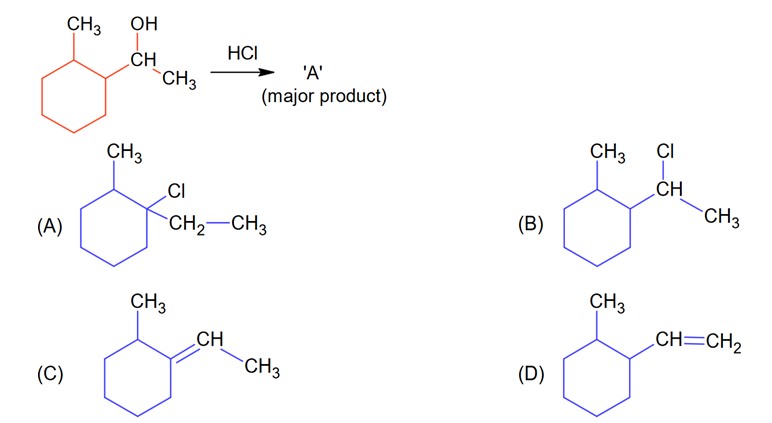
What is the final product (major) ‘A’ in the given reaction?