
Ncert Solutions Chemistry Class 12th
Get insights from 2.6k questions on Ncert Solutions Chemistry Class 12th, answered by students, alumni, and experts. You may also ask and answer any question you like about Ncert Solutions Chemistry Class 12th
- 2.6k
Questions
- 0
Discussions
- 0
Active Users
- 79
Followers
Have a question about Ncert Solutions Chemistry Class 12th? Ask our experts
Keep it short & simple. Type complete word. Avoid abusive language.
Name three oxoacids of nitrogen. Write the disproportionation reaction of that oxoacid of nitrogen in which nitrogen is in +3 oxidation state.
Name three oxoacids of nitrogen. Write the disproportionation reaction of that oxoacid of nitrogen in which nitrogen is in +3 oxidation state.
This is a short answer type question as classified in NCERT Exemplar
Three oxoacids are
(a) HNO2, Nitrous acid
(b) HNO3, Nitric acid
(c) Hyponitrous acid, H2N2O2
3HNO2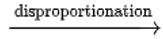 + H2O + 2NO
 Upvote

White phosphorus reacts with chlorine and the product hydrolyses in the presence of water. Calculate the mass of HCl obtained by the hydrolysis of the product formed by the reaction of 62 g of white phosphorus with chlorine in the presence of water
White phosphorus reacts with chlorine and the product hydrolyses in the presence of water. Calculate the mass of HCl obtained by the hydrolysis of the product formed by the reaction of 62 g of white phosphorus with chlorine in the presence of water
This is a short answer type question as classified in NCERT Exemplar
P4+6Cl2→4PCl3… (i)
PCl3+3H2O→H3PO3+3HCl ×4
On adding eq. (i) and (ii)
P4+6Cl2+12H2O→4H3PO3+12HCl
1 mol of white phosphorus produces 12 mol of HCl
62 g of white phosphorus has been taken which
Upvote P4O6 reacts with water according to equation P4O6 + 6H2O→ 4H3PO3. Calculate the volume of 0.1 M NaOH solution required to neutralise the acid formed by dissolving 1.1 g of P4O6 in H2O.
P4O6 reacts with water according to equation P4O6 + 6H2O→ 4H3PO3. Calculate the volume of 0.1 M NaOH solution required to neutralise the acid formed by dissolving 1.1 g of P4O6 in H2O.
This is a short answer type question as classified in NCERT Exemplar
P4O6 + 6H2O→4H3PO3 (i)
Next is neutralization
4 times H3PO3 + 2NaOH→Na2HPO3 + 2H2O (ii)
On addition of 2 equations
P4O6+8NaOH→4Na2HPO3+2H2O
P4O6 ( mol.mass )= (4×31+16×6)=220
Number of moles of P4O6&nb
Upvote Explain why ozone is thermodynamically less stable than oxygen?
Explain why ozone is thermodynamically less stable than oxygen?
This is a short answer type question as classified in NCERT Exemplar
Due its disintegration into oxygen results in the release of heat ΔH is negative) and an increase in entropy (ΔS is positive), ozone is thermodynamically unstable in comparison to oxygen. These two reactions combine t
Upvote Explain why the stability of oxoacids of chlorine increases in the order given below:
HClO < HClO2 < HClO3 < HClO4
Explain why the stability of oxoacids of chlorine increases in the order given below:
HClO < HClO2 < HClO3 < HClO4
This is a short answer type question as classified in NCERT Exemplar
Oxygen is more electronegative than chlorine, the negative charge on chlorine disperses from ClO− to ClO4− ion as the number of oxygen atoms linked to chlorine grows. As a result, ion stability will improve in the fol
Upvote In the ring test of NO3- ion, Fe2+ ion reduces nitrate ion to nitric oxide, which combines with Fe2 + (aq) ion to form brown complex. Write the reactions involved in the formation of brown rings.
In the ring test of NO3- ion, Fe2+ ion reduces nitrate ion to nitric oxide, which combines with Fe2 + (aq) ion to form brown complex. Write the reactions involved in the formation of brown rings.
This is a short answer type question as classified in NCERT Exemplar
NO3− + 3Fe2+ + 4H+→ NO+ + 3Fe3+ + 2H2O
[Fe (H2O)6]2+ + NO → [Fe (H2O)5 (NO)]2+ + H2O ( brown ring )
Upvote In reaction with Cl2 , phosphorus forms two types of halides ‘A’ and ‘B’. Halide A is yellowish-white powder but halide ‘B’ is colourless oily liquid. Identify A and B and write the formulas of their hydrolysis products.
In reaction with Cl2 , phosphorus forms two types of halides ‘A’ and ‘B’. Halide A is yellowish-white powder but halide ‘B’ is colourless oily liquid. Identify A and B and write the formulas of their hydrolysis products.
This is a short answer type question as classified in NCERT Exemplar
A is PCl5 (yellowish white powder)
P4 + 10Cl2→4PCl5
B is PCl3 (colourless oily liquid)
Hydrolysis of the following product
PCl3+3H2O→H3PO3+3HCl
PCl5+4H2O→H3PO4+5HCl
Upvote This is a short answer type question as classified in NCERT Exemplar
Six F atoms can be accommodated around sulphur due to fluorine's tiny size, however the chloride ion is comparably bigger, resulting in interatomic repulsion.
Upvote <p><strong>SF<sub>6</sub> is known but SCl<sub>6</sub> is not. Why?</strong></p>
Out of H2O and H2S, which one has higher bond angle and why?
Out of H2O and H2S, which one has higher bond angle and why?
This is a short answer type question as classified in NCERT Exemplar
Oxygen is more electronegative than sulphur, the bond angle of H2O is greater, and the bod pair electron of an OH bond will be closer to oxygen, causing bond-pair repulsion between bond pairs of two OH bonds
Upvote