
Ncert Solutions Chemistry Class 12th
Get insights from 2.6k questions on Ncert Solutions Chemistry Class 12th, answered by students, alumni, and experts. You may also ask and answer any question you like about Ncert Solutions Chemistry Class 12th
- 2.6k
Questions
- 0
Discussions
- 0
Active Users
- 79
Followers
Have a question about Ncert Solutions Chemistry Class 12th? Ask our experts
Keep it short & simple. Type complete word. Avoid abusive language.
Give reason to explain why ClF3 exists but FCl3 does not exist.
Give reason to explain why ClF3 exists but FCl3 does not exist.
This is a short answer type question as classified in NCERT Exemplar
Chlorine has vacant d-orbitals, which become excited upon bonding when electrons from the 3p-orbital are promoted to the 3d-orbital, giving it a covalency of three.
Due to the lack of unoccupied d-orbitals in the second energy shell,
 Upvote

Why is nitric oxide paramagnetic in gaseous state but the solid obtained on cooling it is diamagnetic?
Why is nitric oxide paramagnetic in gaseous state but the solid obtained on cooling it is diamagnetic?
This is a short answer type question as classified in NCERT Exemplar
NO2 exists as a monomer with one unpaired electron in the gaseous state, but it dimerises to N2O4 in the solid state, leaving no unpaired electron, making the solid form diamagnetic.
Upvote In PCl5 , phosphorus is in sp3d hybridised state but all its five bonds are not equivalent. Justify your answer with reason.
In PCl5 , phosphorus is in sp3d hybridised state but all its five bonds are not equivalent. Justify your answer with reason.
This is a short answer type question as classified in NCERT Exemplar
Three P—Cl bonds are arranged in one plane at a 1200 angle. These bonds are known as equatorial bonds because they are formed between two points. The remaining two P—Cl bonds, one above the equatorial plane and the other b
Upvote PH3 forms bubbles when passed slowly in water but NH3 dissolves. Explain why?
PH3 forms bubbles when passed slowly in water but NH3 dissolves. Explain why?
This is a short answer type question as classified in NCERT Exemplar
PH3 is insoluble in water and cannot create hydrogen bonds with it, it forms bubbles, whereas NH3 dissolves because it is soluble in water and can form hydrogen bonds with it.
Upvote This is a short answer type question as classified in NCERT Exemplar
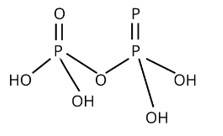
Upvote Write a balanced chemical equation for the reaction showing catalytic oxidation of NH3 by atmospheric oxygen.
Write a balanced chemical equation for the reaction showing catalytic oxidation of NH3 by atmospheric oxygen.
This is a short answer type question as classified in NCERT Exemplar
4NH3 + 5O2 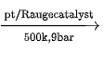 4NO + 6H2O
Upvote In the preparation of H2SO4 by Contact Process, why is SO3 not absorbed directly in water to form H2SO4 ?
In the preparation of H2SO4 by Contact Process, why is SO3 not absorbed directly in water to form H2SO4 ?
This is a short answer type question as classified in NCERT Exemplar
SO3 generates a dense fog of sulphuric acid that does not condense quickly, it is not absorbed directly in water to form H2SO4.
Upvote On heating compound (A) gives a gas (B) which is a constituent of air. This gas when treated with 3 mol of hydrogen (H2) in the presence of a catalyst gives another gas (C) which is basic in nature. Gas C on further oxidation in moist condition gives a compound (D) which is a part of acid rain. Identify compounds (A) to (D) also give necessary equations of all the steps involved.
On heating compound (A) gives a gas (B) which is a constituent of air. This gas when treated with 3 mol of hydrogen (H2) in the presence of a catalyst gives another gas (C) which is basic in nature. Gas C on further oxidation in moist condition gives a compound (D) which is a part of acid rain. Identify compounds (A) to (D) also give necessary equations of all the steps involved.
This is a long answer type question as classified in NCERT Exemplar
A = NH4NO2
B = N2
C = NH3
D = HNO3
(i) NH4NO2→N2 + 2H2O
(ii) N2 + 3H2→2NH3
(iii) 4NH3 + 5O2→4NO + 6H2O
4NO + O2→4NO2
3NO2 + H2O→2HNO3 + NO
Upvote On heating lead (II) nitrate gives a brown gas “A”. The gas “A” on cooling changes to colourless solid “B”. Solid “B” on heating with NO changes to a blue solid ‘C’. Identify ‘A’, ‘B’ and ‘C’ and write reactions involved and draw the structures of ‘B’ and ‘C’.
On heating lead (II) nitrate gives a brown gas “A”. The gas “A” on cooling changes to colourless solid “B”. Solid “B” on heating with NO changes to a blue solid ‘C’. Identify ‘A’, ‘B’ and ‘C’ and write reactions involved and draw the structures of ‘B’ and ‘C’.
This is a long answer type question as classified in NCERT Exemplar
Here, ‘A’ is NO2 (Nitrogen dioxide)
‘B’ is N2O4 (dinitrogen tetraoxide)
‘C’ is N2O3 (dinitrogen trioxide)
A brown gas is produced when lead nitrate (II) is heated

2Pb (NO3)2  2PbO + 4NO2 + O2
2NO2  N2O
Upvote An amorphous solid “A” burns in air to form a gas “B” which turns lime water milky. The gas is also produced as a by-product during roasting of sulphide ore. This gas decolourises acidified aqueous KMnO4 solution and reduces Fe3+ to Fe2+ . Identify the solid “A” and the gas “B” and write the reactions involved.
An amorphous solid “A” burns in air to form a gas “B” which turns lime water milky. The gas is also produced as a by-product during roasting of sulphide ore. This gas decolourises acidified aqueous KMnO4 solution and reduces Fe3+ to Fe2+ . Identify the solid “A” and the gas “B” and write the reactions involved.
This is a long answer type question as classified in NCERT Exemplar
‘A’ is S8 ‘B’ is SO2 gas
S8 + 8O2  8SO2
2MnO4 – + 5SO2 + 2H2O → 5 SO42– + 4H+ + 2Mn2+
(violet) &nbs
Upvote