Ncert Solutions Chemistry Class 12th
Get insights from 2.6k questions on Ncert Solutions Chemistry Class 12th, answered by students, alumni, and experts. You may also ask and answer any question you like about Ncert Solutions Chemistry Class 12th
- 2.6k
Questions
- 0
Discussions
- 0
Active Users
- 79
Followers
Have a question about Ncert Solutions Chemistry Class 12th? Ask our experts
Keep it short & simple. Type complete word. Avoid abusive language.
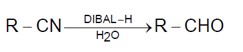
R–CN --(i) DIBAL-H / (ii) H₂O→ R – Y
Consider the above reaction and identify “Y”
R–CN --(i) DIBAL-H / (ii) H₂O→ R – Y
Consider the above reaction and identify “Y”
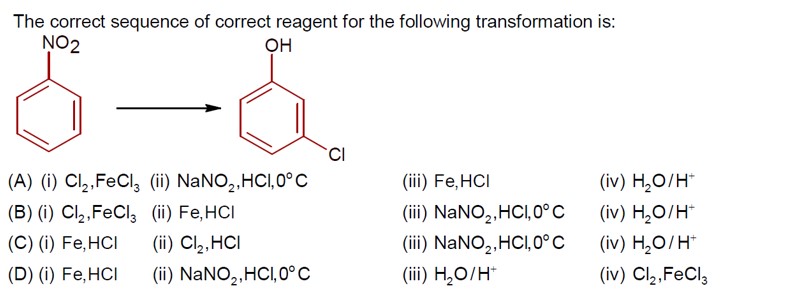

In a solid AB, A atoms are in ccp arrangement and B atoms occupy all octahedral sites. If two atoms from the opposite face are removed, then the resultant stoichiometry of the compound is AxBy. The value of x is ___________(nearest integer)
In a solid AB, A atoms are in ccp arrangement and B atoms occupy all octahedral sites. If two atoms from the opposite face are removed, then the resultant stoichiometry of the compound is AxBy. The value of x is ___________(nearest integer)
After removal A = 4 -
After removal B = 4 – 1 = 4 (only two atoms are removed)
Final formula of the compound = A3B4
 Upvote

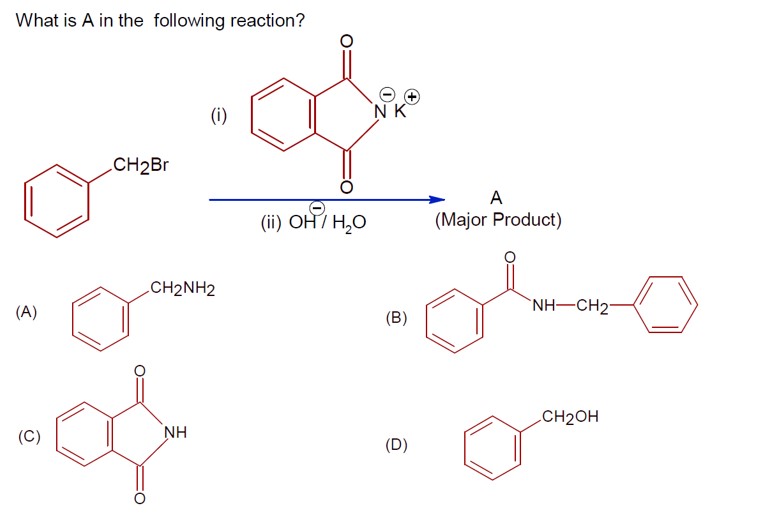
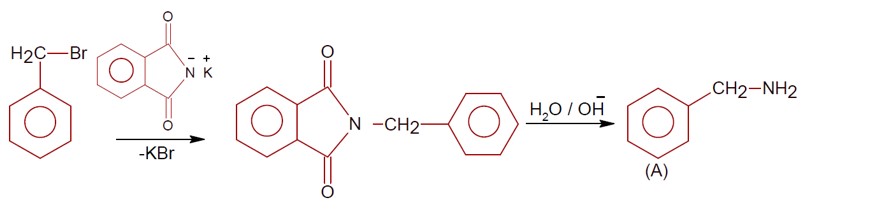
Consider the following statements about amines and select the incorrect one.
Consider the following statements about amines and select the incorrect one.
Diazonium salts of aromatic amines are more stable
Upvote Compound A gives D-Galactose and D-Glucose on hydrolysis. The compound A is:
<!-- [if !supportLineBreakNewLine]-->
<!--[endif]-->
Compound A gives D-Galactose and D-Glucose on hydrolysis. The compound A is:
<!-- [if !supportLineBreakNewLine]-->
<!--[endif]-->
Lactose is a disaccharide which is formed by forming C? -C? glycosidic linkage between D-galactose and D- glucose.
Lactose - (Hydrolysis)-> D - galactose + D - glucose
Upvote Given below are two statements : one is labelled as Assertion A and the other is labelled as Reason R.
Assertion A: SO₂(g) is adsorbed to a larger extent than H₂(g) on activated charcoal.
Reason R: SO₂(g) has a higher critical temperature than H₂(g).
In the light of the above statements, choose the most appropriate answer from the option given below.
Given below are two statements : one is labelled as Assertion A and the other is labelled as Reason R.
Assertion A: SO₂(g) is adsorbed to a larger extent than H₂(g) on activated charcoal.
Reason R: SO₂(g) has a higher critical temperature than H₂(g).
In the light of the above statements, choose the most appropriate answer from the option given below.
SO? is adsorbed more than H? on activated charcoal as critical temperature of SO? is higher than H? As higher the critical temperature, easier is liquifaction of gas and more is adsorption of gas on charcoal.
Upvote Select the correct statements.
(A) Crystalline solids have long range order.
(B) Crystalline solids are isotropic.
(C) Amorphous solids are sometimes called pseudo solids
(D) Amorphous solids soften over a range of temperatures.
(E) Amorphous solids have a definite heat of fusion
Choose the most appropriate answer from the options given below:
<!-- [if !supportLineBreakNewLine]-->
<!--[endif]-->
Select the correct statements.
(A) Crystalline solids have long range order.
(B) Crystalline solids are isotropic.
(C) Amorphous solids are sometimes called pseudo solids
(D) Amorphous solids soften over a range of temperatures.
(E) Amorphous solids have a definite heat of fusion
Choose the most appropriate answer from the options given below:
<!-- [if !supportLineBreakNewLine]-->
<!--[endif]-->
Characteristics of crystalline solids:-
Crystalline solid have long range order.
Crystalline solid are anisotropic in nature.
Crystalline solid have definite heat of fusion.
Characteristics of amorphous solids:-
Amorphous solids have short range of order.
Amorphous solids are sometimes called pseudo solid
Upvote Which of the following in NOT an example of synthetic detergent?
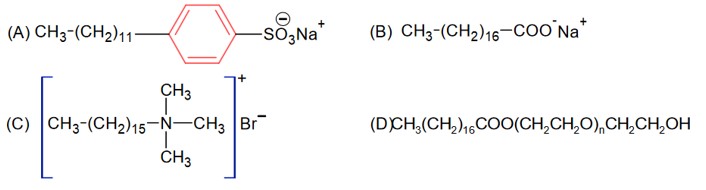
Which of the following in NOT an example of synthetic detergent?
CH3 – (CH2)16 – COONa is the sodium salt of fatty acid used in soap is not synthetic detergent.
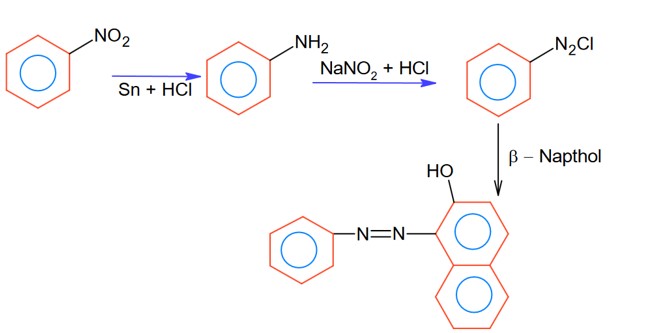
Upvote The final product ‘C’ in the following series of reactions
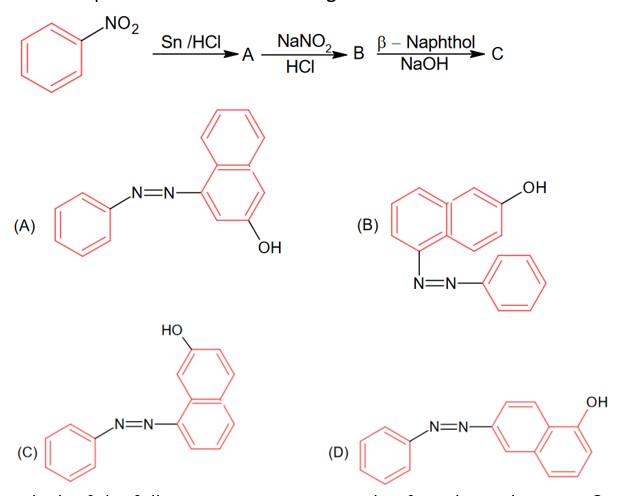
The final product ‘C’ in the following series of reactions