
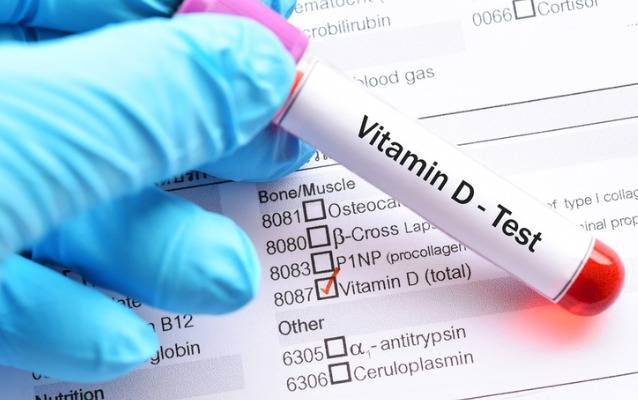
KL University Develops Paper Sensor To Measure Vitamin-D Deficiency
August 30, 2021: The KL University (Deemed To Be) has created a one-of-a-kind handmade paper sensor that can accurately test Vitamin-D insufficiency.
The sensor was developed by a team led by Pradeep Kumar Brahman from the Department of Chemistry and Tummala Anusha, a research scholar on the institute's Andhra Pradesh campus, for speedy and reliable Vitamin-D monitoring.
Smaller clinics, dispensaries in distant places, medical institutions in geographically inaccessible locations, and smaller facilities to measure Vitamin-D shortages without cumbersome equipment or labs could all benefit from this technique. The research was recently published in Elsevier's microchemical journal.
The price of this paper sensor will be around Rs 40 to Rs 50, whereas commercially accessible Vitamin-D tests in hospitals and labs will cost around Rs 1,500 to Rs 2,000.
The university team examined the proof-of-concept with many real-life samples and found that the sensor's accuracy is greater than 94 percent, which is com
KL University Develops Paper Sensor To Measure Vitamin-D Deficiency
August 30, 2021: The KL University (Deemed To Be) has created a one-of-a-kind handmade paper sensor that can accurately test Vitamin-D insufficiency.
The sensor was developed by a team led by Pradeep Kumar Brahman from the Department of Chemistry and Tummala Anusha, a research scholar on the institute's Andhra Pradesh campus, for speedy and reliable Vitamin-D monitoring.
Smaller clinics, dispensaries in distant places, medical institutions in geographically inaccessible locations, and smaller facilities to measure Vitamin-D shortages without cumbersome equipment or labs could all benefit from this technique. The research was recently published in Elsevier's microchemical journal.
The price of this paper sensor will be around Rs 40 to Rs 50, whereas commercially accessible Vitamin-D tests in hospitals and labs will cost around Rs 1,500 to Rs 2,000.
The university team examined the proof-of-concept with many real-life samples and found that the sensor's accuracy is greater than 94 percent, which is comparable to commercially available tests. Within 30 minutes, the sensor generates results and reports, saving valuable diagnostic time.
The sensor was created by developing a paper electrode with a certain dimension and printing it on A4 photocopy paper using a specially designed ink called Conductive Ink, which contains cobalt-silver doped copolymer-ionic liquid and functions as a sensor to detect Vitamin-D insufficiency.
In a voltametric cell, the strip is dipped in the patient's serum sample containing electrolyte solution, together with two common electrodes (Reference and Counter Electrodes). At a constant potential, an amperometric measurement is taken.
The current obtained is proportional to the Vitamin-D content. The three electrodes are connected to a Potentiostat, which is in turn connected to a monitor where the lab worker may observe the Vitamin-D sensor's results.
The advancement of this technology is also crucial in light of a study published in the journal Endocrine that found that low levels of Vitamin-D are linked to an increased risk of Covid-19 hospitalisation cases.
In Covid-19, vitamin D deficiency was recently proposed as a factor linked to a higher likelihood of poor prognosis. According to experts, those with low Vitamin-D levels are more likely to develop hypertension, Type 2 diabetes, and cardiovascular disorders.
- Chat with our counsellor
- Get your personalised list of colleges & exams matching your preferences
Know more about this University
- KL University Guntur News & Events
- KL University Guntur Scholarship Details
- KL University Guntur Courses & Fees 2026: UG, PG, Doctorate Courses
- KL University Guntur Placements 2026: Highest Package, Average Package, Top Recruiters
- KL University Guntur Cutoff 2026/2025/2024
- KL University Guntur Answered Questions
- KL University Guntur Faculty Details & Reviews
- KL University Guntur Infrastructure Details & Reviews
Photos & Videos


+25

Student Forum
 Anything you would want to ask experts?
Answered 10 hours ago
If I were choosing based on the overall campus ecosystem, program variety, infrastructure and opportunities, I would lean towards LPU. It offers a very large campus, numerous programs, internships, industry interactions, clubs, competitions and international exposure. LPU also has multiple scholarsh
u
Contributor-Level 9
Answered a month ago
the biggest issue: assignments are handwritten on paper, then scanned/photographed and uploaded - for every subject, every week. This isn't a once-in-a-while thing, it's the standard submission format. Combined with a genuinely high volume of internal assignments and homework, it adds up to far more
A
Beginner-Level 1
Answered a month ago
KL University, Hyderabad BTech ECE tuition fee is INR 11.2 lakh. Candidates have to pay first semester fee or admission fee after the final selection. There is a one-time fee of INR 15,000, which is included in the fee structure. The given fee is as per official sources but can still vary.
P
Contributor-Level 10
Answered a month ago
If you tell me the exact B.Sc. course name you're interested in (for example, B.Sc. Medical Microbiology, Biotechnology, etc.), I can look up its 2026 tuition fee, hostel fee, eligibility, and admission process.
A
Beginner-Level 2
Answered a month ago
KL University Hyderabad offers BTech for four-years at the UG level. The course is spread across eight semesters. The deemed-to-be university offers BTech in:
- CSE
- Artificial Intelligence & Data Science
- Electronics & Communication
- Computer Science & Information Technology, etc.
N
Guide-Level 15
Which is the best between KL and LPU?