COVID-19: SERB launches projects to develop mathematical models to study coronavirus spread


The evaluation of the project proposals will be done on a first-come basis. The last date to submit the project proposals is April 30.
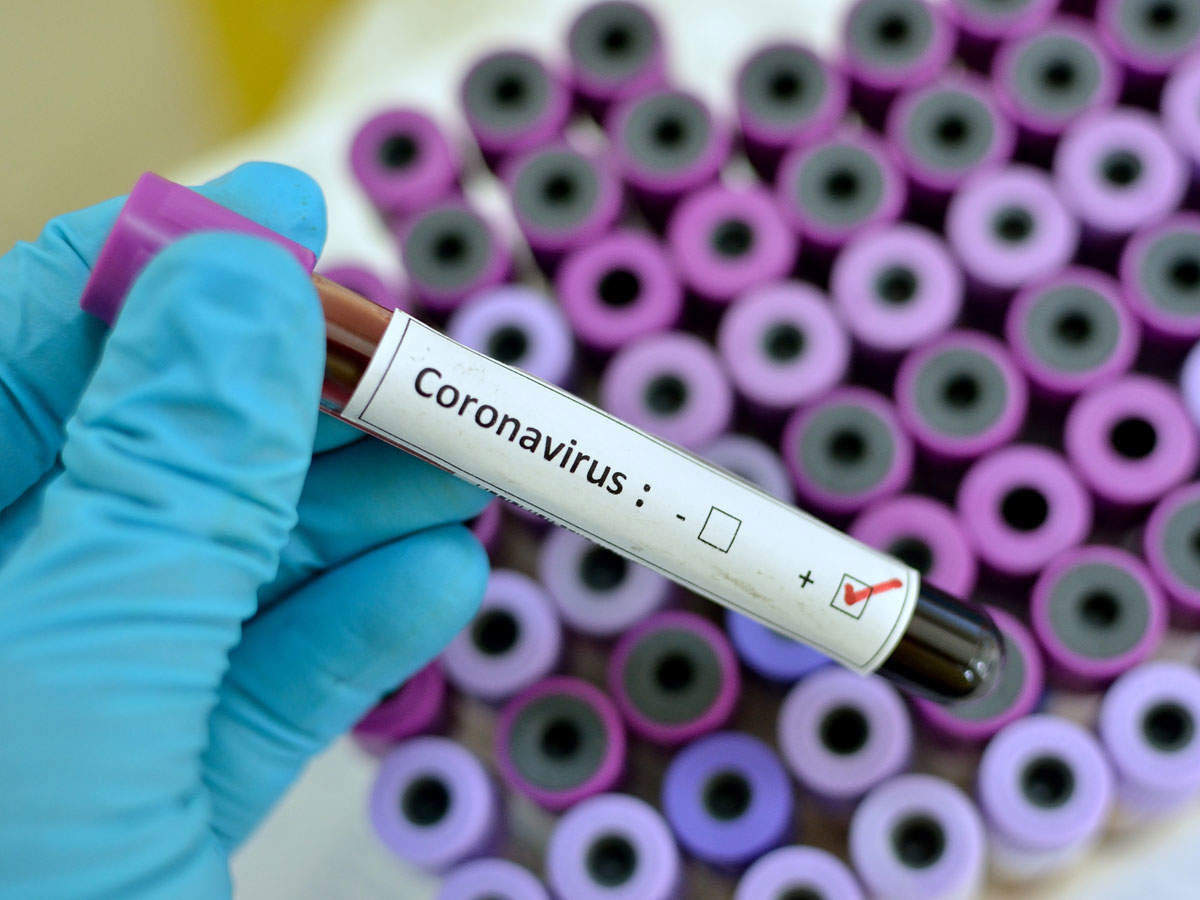
While research leaders and R&D units are busy striving to come up with vaccines and antivirals to win the battle against the contagious coronavirus, the Science and Engineering Research Board (SERB) has come together to develop mathematical models to study the rate of the coronavirus spread among the population. SERB also states that a data-driven inference for COVID-19 is also critical to forecast the infection.
Amid the 21 days lockdown, SERB announced short-term projects in the following areas preferably with multidisciplinary efforts under its MATRICS programme:
- Mathematical modeling of COVID-19 spread
- Statistical Machine Learning, Forecasting and Inferences from Pandemic Data
- Focused Algorithms for Infectious Disease Modeling
- Quantitative Social Science Approaches for Epidemiological Models
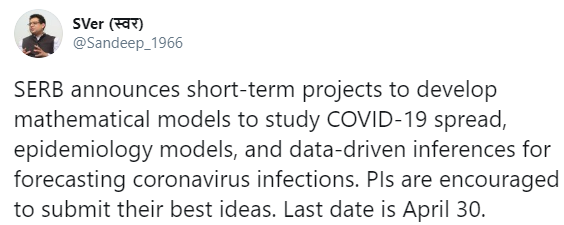
Talking about the project, here's what SERB Secretary Professor Sandeep Verma tweeted:
SERB Short-term MATRICS 2020: Project Duration
The project duration will be up to one year with a maximum budget limit of Rs 5 lakh plus overhead. Interested candidates have to submit their proposal through the online portal of SERB i.e. serbonline.in in MATRICS format.
SERB Short-term MATRICS 2020: Project Selection
SERB will not consider the project calls that are not related to the theme. The evaluation of the project proposals will be done on a first-come basis. The last date to submit the project proposals is April 30.

The applicants who are already holding ongoing projects under MATRICS are also eligible to apply under this call.
To check 'Mathematical Modeling and Computation for COVID-19 spread' project PDF, CLICK HERE
The novel coronavirus spread is continuously straining the health and economy of the world. The global pandemic stranded the education system around the globe resulting in millions of students forced to study at home. Schools are shuts, classes are suspended, campuses are closed and examinations are postponed. State governments are promoting students to higher classes without conducting annual examinations, offices are closed and working professionals are working sitting in the boundaries of their homes. In the absence of a COVID-19 vaccine, practicing social distancing by reducing contact rates in the population is considered to be a better option to control the spread of this deadly virus.
Read More:
Follow Shiksha.com for latest education news in detail on Exam Results, Dates, Admit Cards, & Schedules, Colleges & Universities news related to Admissions & Courses, Board exams, Scholarships, Careers, Education Events, New education policies & Regulations.
To get in touch with Shiksha news team, please write to us at news@shiksha.com
