
Ncert Solutions Chemistry Class 11th
Get insights from 2k questions on Ncert Solutions Chemistry Class 11th, answered by students, alumni, and experts. You may also ask and answer any question you like about Ncert Solutions Chemistry Class 11th
- 2k
Questions
- 0
Discussions
- 0
Active Users
- 29
Followers
Have a question about Ncert Solutions Chemistry Class 11th? Ask our experts
Keep it short & simple. Type complete word. Avoid abusive language.
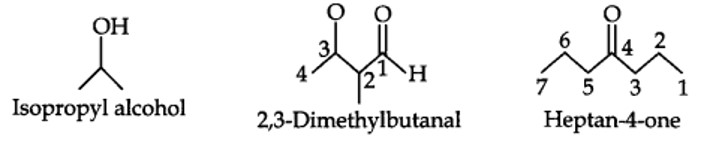
12.7. Give condensed and bond line structural formulas and identify the functional group(s) present, if any, for:
(a) 2, 2, 4-Trimethylpentane
(b) 2-Hydroxy-l, 2, 3-propanetricarboxylic acid
(c) Hexanedial
<!-- [if !supportLineBreakNewLine]-->
<!--[endif]-->
12.7. Give condensed and bond line structural formulas and identify the functional group(s) present, if any, for:
(a) 2, 2, 4-Trimethylpentane
(b) 2-Hydroxy-l, 2, 3-propanetricarboxylic acid
(c) Hexanedial
<!-- [if !supportLineBreakNewLine]-->
<!--[endif]-->
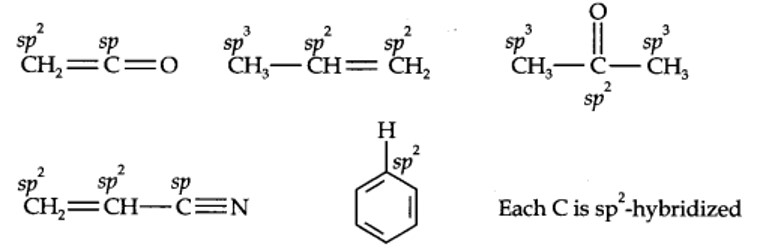
12.1. What are hybridisation states of each carbon atom in the following compounds? CH2=C=O, CH3CH=CH2, (CH3)2CO, CH2=CHCN, C6H6.
12.1. What are hybridisation states of each carbon atom in the following compounds? CH2=C=O, CH3CH=CH2, (CH3)2CO, CH2=CHCN, C6H6.
11.4 The state of hybridisation of B in BH4 is
(a) sp (b) sp2 (c)sp3 (d) None
<!-- [if !supportLineBreakNewLine]-->
<!--[endif]-->
11.4 The state of hybridisation of B in BH4 is
(a) sp (b) sp2 (c)sp3 (d) None
<!-- [if !supportLineBreakNewLine]-->
<!--[endif]-->
Kindly go through the solution
(b) sp2.
 Upvote

11.2. Assertion: The compounds formed by highlyreactive non-metals with highly reactive metalsaregenerally ionic while compounds formed between non-metals themselves are largely covalent in character.
Reason: There are large differencesin the electronegativities of highly reactive non-metals and highly reactive metals whereas small differences in theelectronegativities among the non-metals themselves.
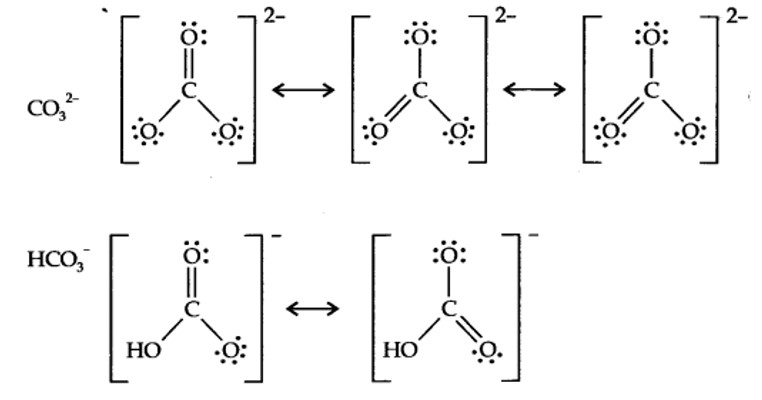
11.10. Write the resonance structures of CO32- and HCO3–.
11.10. Write the resonance structures of CO32- and HCO3–.
10.4. Salt of which alkaline earth metals do not impart colour to a non-luminous flame.
(a) Ca (b) Mg (c) Be (d) Ba
<!-- [if !supportLineBreakNewLine]-->
<!--[endif]-->
10.4. Salt of which alkaline earth metals do not impart colour to a non-luminous flame.
(a) Ca (b) Mg (c) Be (d) Ba
<!-- [if !supportLineBreakNewLine]-->
<!--[endif]-->
(c) Beryllium does not impart colour to a non-luminous flame.
Upvote 10.3. Which of the following is not a peroxide?
(a) KO2 (b) CrO5 (c) Na2O2 (d) BaO2
10.3. Which of the following is not a peroxide?
(a) KO2 (b) CrO5 (c) Na2O2 (d) BaO2