Mumbai's 35% population has poor access to healthcare infrastructure: IIT Bombay report


They also identified socially vulnerable wards (administrative units) using a social vulnerability index (SVI), developed on the basis of 16 indicators using the computational tool Principal Component Analysis.
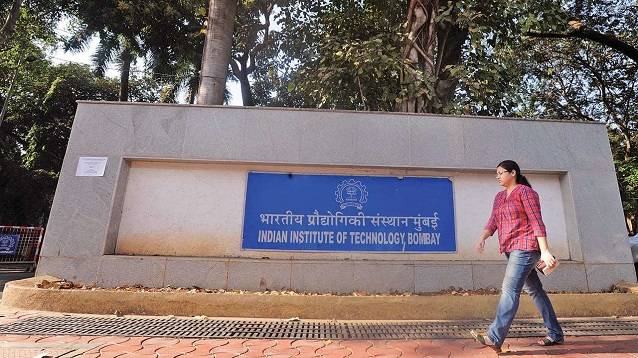
A study conducted by the Indian Institute of Technology (IIT) Bombay has revealed that the areas such as Chembur, Bhandup, Goregaon, Jogeshwari, Dahisar and parts of Ghatkopar in the city have very poor accessibility to healthcare services. The study measuring the accessibility to healthcare in greater Mumbai has also found Chembur, parts of Malad and Malwani need to improve the public transport system on priority to improve access to healthcare services for its residents.
The paper ‘Public transit accessibility approach to understanding the equity for public healthcare services: A case study of Greater Mumbai’ was published on June 25 in the peer-reviewed Journal of Transport Geography. The study was conducted by Gajanand Sharma, a PhD student in the department of civil engineering, and Gopal Patil, a professor in the same department at IIT-B.

Inequity in access to government healthcare facilities affects the overall urban population and can impact the vulnerable population that mostly relies on these services. In this study, the researchers measured the accessibility of healthcare services by public transport. They used travel time and the number of transit stops (accounting for transit connectivity) for Greater Mumbai.
They also identified socially vulnerable wards (administrative units) using a social vulnerability index (SVI), developed on the basis of 16 indicators using the computational tool Principal Component Analysis.
“Accessibility means the ease by which one can reach services such as hospitals, shopping malls and schools/colleges. In transportation, we quantify this ease of reaching services mainly by considering the travel time. For example, suppose from area A it takes 20 minutes to reach a hospital by public transport, whereas it takes 30 minutes from area B, assuming the same level of public transit infrastructure, we can say that the accessibility for hospitals for area A is better than that of B. In our definitions, we also take into account the number of bus stops to measure accessibility. A higher number of bus stops increase accessibility,” said Patil.
In this study, researchers measured the accessibility to healthcare facilities for a population of 12.4 million in Greater Mumbai, which comprises 577 traffic analysis zones.
Read More:
Follow Shiksha.com for latest education news in detail on Exam Results, Dates, Admit Cards, & Schedules, Colleges & Universities news related to Admissions & Courses, Board exams, Scholarships, Careers, Education Events, New education policies & Regulations.
To get in touch with Shiksha news team, please write to us at news@shiksha.com

She has over 10 years of experience in the education and publishing sectors. She specialises in exam coverage and content creation. At Shiksha, she writes, analyses, and presents information for students preparing f
Read Full Bio