Guidelines to develop e-content for disabled children released by Education Ministry


The report, ‘Guidelines for the Development of e-Content for Children with Disabilities’ comprises eleven sections and two appendices on creating e-content for visually and hearing-impaired students.
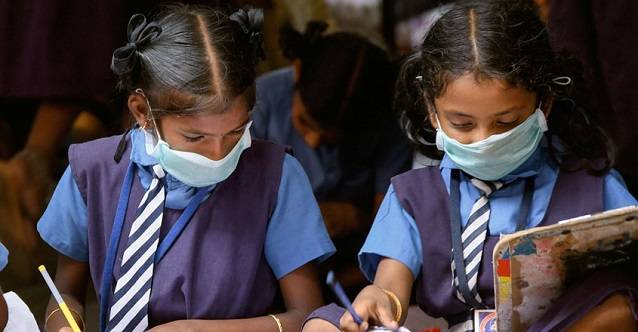
With an aim to promote inclusive education, Union education minister Ramesh Pokhriyal ‘Nishank’ gave a nod to guidelines to develop e-content for children with disabilities. As a part of the PM eVidya programme, an expert committee has made detailed recommendations to create “accessible” special e-content for Divyang, or children with disabilities.
It must be noted that the PM e-Vidya programmewas was launched by finance minister Nirmala Sitharaman on May 17, 2020, as one of a raft of COVID-19 relief measures. The report, ‘Guidelines for the Development of e-Content for Children with Disabilities’ comprises eleven sections and two appendices on creating e-content for visually and hearing-impaired students. It has laid special emphasis on extensive use of radio, community radio, and podcasts and the uploading of quick response or QR-coded digital textbooks.
As per the committee suggestions, the content must comply with “international accessibility standards”. For specific disabilities, the committee report also suggests “reasonable pedagogical accommodations”. Textbooks, the committee recommends, may be adapted into accessible digital textbooks, or ADTs. “The content of ADTs should be provided in multiple formats (text, audio, video, sign language, etc) with turn-on and turn-off features for easier access for the children,” the report says. The Ministry of education’s e-learning platforms like DIKSHA and e-pathshala must also comply with technical standards, the report added.
In addition, the committee has recommended specific guidelines for the creating of "supplementary e-content" for students having Intellectual and developmental disabilities, multiple disabilities, autism spectrum disorders, specific learning disabilities, blindness, low vision, deafness, and Hard of Hearing, and others.

Following the Universal Design for Learners or UDL, given by the United Nations Children’s Fund (UNICEF), the report recommends content adaptations. It includes introducing topics in the mother tongue or dominant language and sign language to arouse curiosity and make reading interesting. The content must also provide descriptive hyperlinks to access additional information when the internet is available.
To enhance acceptability compliance, the committee has further suggested the creation of e-modules for training content developers and curators to understand how to create and curate accessible content. It also recommends making it mandatory for all content developers and curators to go through the training modules.
Read More:
Follow Shiksha.com for latest education news in detail on Exam Results, Dates, Admit Cards, & Schedules, Colleges & Universities news related to Admissions & Courses, Board exams, Scholarships, Careers, Education Events, New education policies & Regulations.
To get in touch with Shiksha news team, please write to us at news@shiksha.com

She has over 10 years of experience in the education and publishing sectors. She specialises in exam coverage and content creation. At Shiksha, she writes, analyses, and presents information for students preparing f
Read Full Bio