
Students of HP Board 12th preparing for Science examination must go through the complete syllabus to prepare well. HPBOSE 12th syllabus for Science mentions the chapters and topics that are covered in class 12. Read details below.
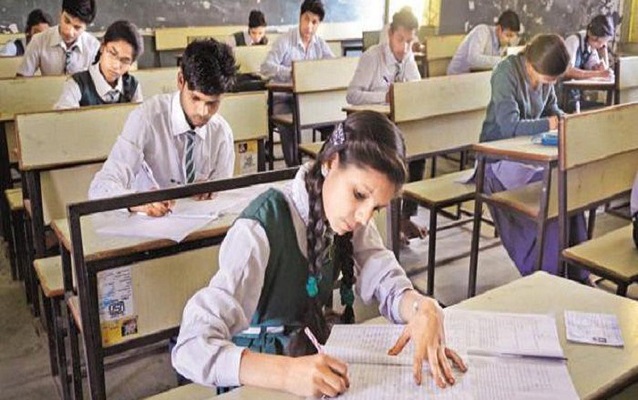
The Himachal Pradesh Board of Secondary Education (HPBOSE) is a state-level board of education that prescribes course curriculum, syllabus, and textbooks for school education in the state of Himachal Pradesh. HPBOSE conducts Class 12 board exams for Science and other major streams. The core subjects of HPBOSE Class 12 Science stream are Physics, Chemistry, and Biology for medical aspirants. Each paper carries 100 marks, including the theory paper and practical assessment.
HPBOSE 12th aspirants in All India like these B.Tech colleges
Students like you from All India who showed interest in HPBOSE 12th also showed interest in these B.Tech colleges
Want better recommendations?
There is a 90% more chance of getting best college recommendations by sharing preferences.
- Chat with our counselor
- Get your personalised list of colleges & exams matching your preferences
HPBOSE 12th Syllabus for Science stream is based on NCERT textbooks. The syllabus is extensive and therefore, students need to know the complete syllabus to prepare for the board exams. The students should focus on covering each topic of the syllabus to formulate a study plan accordingly. To devise a schedule, understanding the syllabus and scheme of examination is important for every student. This article discusses HPBOSE 12th Science syllabus in detail.

HPBOSE Class 12 Syllabus for Science Stream
The detailed syllabus of HPBOSE Class 12 Board Examination for Science stream is given below. Students are advised to solve and analyze the HPBOSE 12th previous years' question papers for better preparation.
Physics
According to the HPBOSE 12th exam pattern for Science, the total marks allocated for Physics examination is 100 — 60 marks for theory paper, 15 marks for internals and 25 marks for the practical assessment. The syllabus of HPBOSE Class 12 Physics is given below:
| Units |
Name of the Unit |
Topics |
Marks |
|---|---|---|---|
| I |
Electrostatics |
Electric Charges; Conservation of charge, Coulomb’s law-force between two point charges, forces between multiple charges; superposition principle and continuous charge distribution. Electric field, electric field due to a point charge, electric field lines, electric dipole, electric field due to a dipole; torque on a dipole in uniform electric field. Electric flux, statement of Gauss’s theorem and its applications to find field due to infinitely long straight wire, uniformly charged infinite plans sheet and uniformly charged thin spherical shell (field inside and outside). Electric potential, potential difference, electric potential due to a point charge, a dipole and system of charges; equipotential surfaces, electrical potential energy of a system of two point charges and of electric dipole in an electrostatic field. Conductors and insulators, free charges and bound charges inside a conductor; dielectrics and electric polarization, capacitor and capacitance, combination of capacitors in series and in parallel, the capacitance of a parallel plate capacitor with and without dielectric medium between the plates; energy stored in a capacitor. Van de Graaff generator. |
07 |
| II |
Current Electricity |
Electric current, flow of electric charges in a metallic conductor, drift velocity and mobility, and their relation with electric current; Ohm’s law, electrical resistance, V-I characteristics, (linear and non-linear) electrical energy and power, electrical resistivity and conductivity, Carbon resistors, colour code for carbon resistors; series and parallel combinations of resistors; temperature dependence of resistance. Internal resistance of a cell, Potential difference and emf of a cell, a combination of cells in series and parallel. Kirchhoff’s laws and simple applications, Wheatstone bridge, Metre bridge. Potentiometer- principle and its applications to measure potential difference, and for comparing emf of two cells; measurement of internal resistance of a cell. |
07 |
| III |
Magnetic Effect of Current and Magnetism |
Concept of magnetic field, Oersted’s experiment Biot-Savart law, and its application to current carrying circular loop. Ampere’s law and its applications to infinitely long straight wire, straight and tropical solenoids. Force on a moving charge in uniform magnetic and electric fields Cyclotron. Force on a current-carrying conductor in a uniform magnetic field. Force between two parallel current-carrying conductors-definition of ampere. Torque experienced by a current loop in uniform magnetic field; moving coil galvanometer-its current sensitivity and conversion to ammeter and voltmeter. Current loop as a magnetic dipole and its magnetic dipole moment; Magnetic dipole moment of a revolving electron; Magnetic field intensity due to a magnetic dipole (bar magnet) along its axis and perpendicular to its axis. Torque on a magnetic dipole (bar magnet) in a uniform magnetic field; bar magnet as an equivalent solenoid, magnetic field lines; Earth’s magnetic |
07 |
| IV |
Electromagnetic Induction and Alternating Current |
Electromagnetic induction, Faraday’s laws, Induced emf and current, Lenz’s law, Eddy currents, Self and mutual inductance. Need for displacement current. Alternating currents, peak and rms value of alternating current/voltage, reactance and impedance; LC oscillations, (qualitative treatment only), LCR series circuit, resonance; Power in AC circuits, wattles current. AC generator and transformer. |
07 |
| V |
Electromagnetic Waves |
Electromagnetic waves and their characteristics (qualitative ideas only); Transverse nature of electromagnetic waves. Electromagnetic spectrum (radio-waves, microwaves, infrared, visible, ultraviolet, X-rays, gamma rays) including elementary facts about their uses |
03 |
| VI |
Optics |
Reflections of light, spherical mirrors, mirror formula. Refraction of light total internal reflection and its applications, optical fibers, refraction at spherical surfaces, lenses, thin lens formula, lens-maker’s formula. Magnification, power of a lens, combination of thin lenses in contact. Refraction and dispersion of light through a prism. Scattering of light- blue colour of the sky and reddish appearance of the sun at sunrise and sunset. Optical instruments – Human eye, image formation and accommodation, correction of eye defects (myopia, hypermetropia, presbyopia and astigmatism) using lenses. Microscopes and astronomical telescopes (reflection and refraction) and their magnifying powers. Wave Optics – Wavefront and Huygen’s principle; reflection and refraction of plane wave at a plane surface using wavefronts. Proof of laws of reflection and refraction using Huygen’s principle. Interference- Young’s double-slit experiment and expression for fringe width, coherent sources and sustained interference of light. Diffraction due to a single slit, width of central maximum. Resolving power of microscopes and astronomical telescopes. Polarisation, plane-polarized light, Brewster’s Law; uses of plane Polarized light and Polaroid. |
12 |
| VII |
Dual Nature of Matter and Radiation |
Dual nature of radiation. Photoelectric effect, Hertz and Lenard’s observation; Einstein’s photoelectric equation-particle nature of light. Matter waves – wave nature of particles, de-Broglie relation, Davisson Germer experiment. |
03 |
| VIII |
Atoms and Nuclei |
Alpha-particle scattering experiment, Rutherford’s model of atom; Bohr model, energy levels, hydrogen spectrum. Composition and size of nucleus, atomic masses, isotopes, isobars, isotones, Radioactivityalpha, beta and gamma particles/rays and their properties; radioactive decay law. Mass-energy relation, mass defect, binding energy per nucleon and its variation with mass number, nuclear fission and fusion. |
04 |
| IX |
Electronic Devices |
Semiconductors; Semiconductor diode-I-V characteristics in forward and reverse bias, diode as a rectifier; I-V characteristics of LED, photodiode, solar cell, and Zener diode; Zener diode as a voltage regulator. Junction transistor, transistor action, characteristics of a transistor; transistor as an amplifier (common emitter configuration) and oscillator. Logic gates (OR, AND, NOT, NAND, and NOR): Transistor as a switch. |
06 |
| X |
Communication Systems |
Elements of a communication system (block diagram only); bandwidth of signals (speech, TV and digital data); bandwidth of transmission medium. Propagation of electromagnetic waves in the atmosphere, sky and space wave propagation. Need for modulation. Production and detection of an amplitude-modulated wave. |
04 |
Practical Assessment
The total marks allotted for HPBOSE Class 12 Physics practical assessment is 25. The complete break-up for the practical assessment is tabulated below:
| Topics |
Marks |
|---|---|
| An experiment from any section |
7 |
| Two activities (One from each section) |
6 (3+3) |
| Practical Record (Experiments and Activities) |
5 |
| Record of Demonstration Experiments and Viva (based on these experiments) |
2 |
| Viva on Experiments and Activities |
5 |
| Total |
25 |
Section – A
Experiments
- To determine resistance per cm of a given wire by plotting a graph of potential difference versus current
- To find the resistance of a given wire using meter bridge and hence determine the specific resistance of its material
- To verify the laws of combination (series/parallel) of resistances using a meter bridge (76)
- To compare the EMF of two given primary cells using potentiometer
- To determine the internal resistance of a given primary cell using the potentiometer
- To determine the resistance of a galvanometer by half-deflection method and to find its figure of merit
- To convert the given galvanometer (of known resistance of figure of merit) into an ammeter and voltmeter of desired range and to verify the same
- To find the frequency of the A.C. mains with a sonometer
Activities
- To measure the resistance and impedance of an inductor with or without iron core
- To measure resistance, voltage (AC/DC), current (AC and check continuity of a given circuit using multimeter
- To assemble a household circuit comprising three bulbs, three (on/off) switches, a fuse and a power source
- To assemble the components of a given electrical circuit
- To study the variation in potential drop with length of a wire for a steady current
- To draw the diagram of a given open circuit comprising at least a battery, resistor/rheostat, key, ammeter and voltmeter. Mark the components that are not connected in proper order and correct the circuit and also the circuit diagram.
Section – B
Experiments
- To find the value of v for different values of u in case of, a concave mirror and to the find the focal length
- To find the focal length of a convex lens by plotting graphs between u and v or between I/u and 1/v
- To find the focal length of a convex mirror, using a convex lens
- To find the focal length of a concave lens, using a convex lens
- To determine the angle of minimum deviation for a given prism by plotting a graph between angle of incidence and the angle of deviation
- To determine the refraction index of a glass slab using a travelling microscope
- To find refractive index of a liquid by using:
- Concave mirror
- Convex lens and plane mirror
- To draw the I-V characteristic curve of a p-n junction in forward bias and reverse bias
- To draw the characteristic curves of a Zener diode and to determine its reverse break down voltage
- To study the characteristics of a common-emitter npn or pnp, transistor and to find out the values of current and voltage gains
Activities
- To study the effect of intensity of light (by varying distance of the source) on an L.D.R.
- To identify a diode, an LED, a transistor, an IC, a resistor and a capacitor from mixed collection of such items
- Use of multimeter to:
- Identify base of transistor
- Distinguish between npn and pnp type transistors
- See the unidirectional flow of current in case of a diode and an LED
- Check whether a given electronic components (e.g. diode, transistor or I C) is in working order
- To observe refraction and lateral deviation of beam of light incident obliquely on glass slab
- To observe polarization of light using two Polaroid
- To observe diffraction of light due to a thin slit
- To study the nature and size of the image formed by:
- Convex lens
- Concave mirror, on a screen by using a candle and a screen (for different distances of the candle from the lens/mirror)
- To obtain a lens combination with the specified focal length by using two lenses from the given set of lenses
Chemistry
The total marks allocated for HPBOSE Class 12 Chemistry examination is 100 — 60 marks for the theory paper, 25 marks for the practical assessment, and 15 marks for the internal assessment. The syllabus of HPBOSE Class 12 Chemistry is given below:
| Unit |
Name of the Unit |
Topics |
Marks |
|---|---|---|---|
| I |
Solid State |
Classification of Solids based on different binding forces: molecular, ionic covalent and metallic solids, amorphous and crystalline solids (elementary idea), unit cell in two dimensional and three-dimensional lattices, calculation of density of unit cell, packing in solids, voids, number of atoms per unit cell in a cubic unit cell, point defects, electrical and magnetic properties. |
03 |
| II |
Solutions |
Types of solutions, expression of concentration of solutions of solids in liquids, solubility of gases in liquids, solid solutions, colligative properties-relative lowering of vapour pressure, elevation of B.P. depression of freezing point, osmotic pressure, determination of molecular masses using colligative properties, abnormal molecular mass. |
04 |
| III |
Electrochemistry |
Redox reactions, conductance in electrolytic solutions, specific and molar conductivity variations of conductivity with concentration, Kohlrausch’s Law, electrolysis and laws of electrolysis (elementary idea), dry cell. Electrolytic cells and Galvanic cells; lead accumulator, EMF of a cell standard electrode potential, Nernst equation and its application to chemical cells, fuel cells; corrosion. |
05 |
| IV |
Chemical Kinetics |
Rate of a reaction (average and instantaneous), factors affecting rates of reaction; concentration, temperature, catalyst; order and molecularity of a reaction; rate law and specific rate constant, integrated rate equations and half-life (only for zero and first-order reactions); concept of collision theory (elementary idea, no mathematical treatment) |
04 |
| V |
Surface Chemistry |
Adsorption- physisorption and chemisorptions factors affecting adsorption of gases of solids; catalysis: homogenous and heterogeneous activity and selectivity: enzyme catalysis; colloidal state: distinction between true solutions colloids and suspensions; lyophilic, lyophobic multimolecular, and macromolecular colloids; properties of colloids; Tyndall effect, Brownian movement, electrophoresis, coagulation; emulsion- types of emulsions. |
03 |
| VI |
General Principles and Processes of Isolation of Elements |
Principles and methods of extraction- concentration, oxidation, reduction, electrolytic method and refining; occurrence and principles of extraction of aluminium, copper, zinc and Iron. |
02 |
| VII |
p-Block Elements |
Group 15 Elements: General introduction, electronic configuration, occurrence oxidation states, trends in physical and chemical properties; nitrogen- preparation, properties and uses: compounds of nitrogen; preparation, properties of ammonia and nitric acid, oxides of nitrogen (structure only); Phosphorous-allotropic forms: compounds of phosphorous: preparation and properties of phosphine, halides (PCl3, PCl5) and oxoacids (elementary idea only) Group 16 Elements: General introduction, electronic configuration, oxidation states, occurrence, trends in physical and chemical properties; dioxygen: preparation, properties and uses; simple oxides; Ozone. Sulphur-allotropic forms; compounds of sulphur: preparation, properties and uses of sulphur dioxide: sulphuric acid: industrial process of manufacture, properties and uses, oxoacids of sulphur (structures only). Group 17 Elements: General introduction, electronic configuration, oxidation states, occurrence, trends in physical and chemical properties; compounds of halogens: preparation, properties and uses of chlorine and hydrochloric acid, interhalogen compounds, oxoacids of halogens (structure only) Group 18 Elements: General introduction, electronic configuration. Occurrence, trends in physical and chemical properties, uses |
06 |
| VIII |
d- and f-Block Elements |
General introduction, electronic configuration, occurrence and characteristics of transition metals, general trends in properties of the first-row transition metals – metallic character, ionization enthalpy, oxidation. States, ionic radii, colour catalytic property, magnetic properties, interstitial compounds, alloy formation. Preparation and properties of K2 Cr2 O7 and KMnO4. Lanthanoids- Electronic configuration, oxidation states, chemical reactivity and Lanthanoid contraction. Actinoids- Electronic configuration, oxidation states. |
05 |
| IX |
Coordination Compounds |
Coordination Compounds – introduction, ligands and coordination number, colour, magnetic properties and shapes, IUPAC nomenclature of mononuclear coordination compounds. Bonding; isomerism, importance of coordination compounds (in qualitative analysis, extraction of metals and biological system). |
03 |
| X |
Haloalkanes and Haloarenes |
Haloalkanes: Nomenclature, nature of C-X bond, physical and chemical properties, mechanism of substitution reactions. Haloarenes: Nature of C-X bond, substitution reactions (directive influence of halogen for mono-substituted compounds only) Uses and environment effects of –dichloromethane, trichloromethane, tetrachloromethane, iodoform, freons, DDT. |
04 |
| XI |
Alcohols, Phenols and Ethers |
Alcohols: Nomenclature, methods of preparation, physical and chemical properties (of primary alcohols only); identification of primary, secondary and tertiary alcohols; mechanism of dehydration, uses, some important compounds-methanol and ethanol. Phenols: Nomenclature, methods of preparation, physical and chemical properties, acidic nature of phenol, electrophilic substitution reactions, uses of phenols. Ethers: Nomenclature, methods of preparation, physical and chemical properties, uses. |
04 |
| XII |
Aldehydes, Ketones and Carboxylic Acids |
Aldehydes and Ketones: Nomenclature, nature of carbonyl group, methods of preparation, physical and chemical properties and mechanism of nucleophilic addition, reactivity of alpha hydrogen in aldehydes; uses. Carboxylic Acids: Nomenclature, acidic nature, methods of preparation, physical and chemical properties; uses. |
05 |
| XIII |
Organic Compounds containing Nitrogen |
Animes: Nomenclature, classification, structure, methods of preparation, Physical and chemical properties, uses, identification of primary, secondary and tertiary amines. Cyanides and Isocyanides: Will be mentioned at relevant places in context. Diazonium Salts: Preparation, chemical reactions and importance in synthetic organic chemistry. |
04 |
| XIV |
Biomolecules |
Carbohydrates: Classification, (aldoses and ketoses) monosaccharides, (glucose and fructose), oligosaccharides (sucrose, lactose, maltose), polysaccharides (starch, cellulose, glycogen); importance. Proteins: Elementary idea of α-amino acids: peptide bond, polypeptides, proteins, primary structure, secondary structure, tertiary structures and quaternary structure (qualitative idea only), denaturation of proteins: enzymes. Vitamins: Classification and functions Nucleic Acids: DNA and RNA. |
03 |
| XV |
Polymers |
Classification: natural and synthetic, methods of polymerization (addition and condensation), copolymerization. Some important polymers: natural and synthetic like polythene, nylon, polyesters, bakelite, rubber. |
03 |
| XVI |
Chemistry in Everyday life |
1. Chemicals in medicines: analgesics, tranquillizers, antiseptics, disinfectants, antimicrobials, antifertility drugs, antibiotics, antacids, antihistamines. 2. Chemicals in food: preservatives, artificial sweetening agents. 3. Cleansing agents: soaps and detergents, cleansing action. |
02 |
Practical Assessment
The total marks allotted for HPBOSE Class 12 Chemistry practical assessment is 25. The complete break-up for the practical assessment is tabulated below:
| Evaluation Scheme for Examination |
Marks |
|---|---|
| Volumetric Analysis |
08 |
| Salt Analysis |
06 |
| Content-Based Experiment |
03 |
| Class Record and Viva |
04 |
| Investigatory Project |
04 |
| Total |
25 |
The detailed syllabus of practical assessment is given below:
| Topics |
Details |
|---|---|
| Surface Chemistry |
(a) Preparation of one lyophilic and one lyophobic sol. Lyophilic sol-Starch, egg albumin and gum. Lyophobic sol-aluminum hydroxide, ferric hydroxide, arsenious sulphide. (b) Study of the role of an emulsifying agent in stabilizing the emulsions of different oils. |
| Chemical Kinetics |
(a) Effect of concentration and temperature on the rate of reaction between sodium thiosulphate and hydrochloric acid. (b) Study of reaction rates of any one of the following: (i) Reaction of iodide ion and with hydrogen peroxide at room temperature using different concentration of iodide ions. (ii) Reaction between potassium iodate, KIO3 and sodium sulphite: (Na2 SO3) using starch solution as indicator (clock reaction). |
| Thermochemistry |
(a) Any one of the following experiments: (i) Enthalpy of dissolution of copper sulphate or potassium nitrate. (ii) Enthalpy of neutralization of strong acid (HCl) and strong base (NaOH) (iii) Determination of enthalpy change during interaction (Hydrogen bond formation) between acetone and chloroform. |
| Electrochemistry |
Variation of cell potential in Zn/Zn2+ǁCu2+/Cu with change in concentration of electrolytes (CuSO4 or ZnSO4) at room temperature. |
| Chromatography |
(i) Separation of pigments from extracts of leaves and flowers by pap chromatography and determination of Rf values. (ii) Separation of constituents present in an inorganic mixture containing cations only (constituents having a wide difference in Rf values to be provided) |
| Preparation of Inorganic Compounds |
(i) Preparation of double salt of ferrous ammonium sulphate or potash alum. (ii) Preparation of potassium ferric oxalate. |
| Preparation of Organic Compounds |
Preparation of any two of the following compounds (i) Acetanilide (ii) Di-benzal acetone (iii) p-Nitroacetanilide (iv) Aniline yellow or 2-Naphthol aniline dye. (v) Iodoform |
| Test for the functional groups present in organic compounds |
Unsaturation, alcoholic, phenolic, aldehydic, ketonic, carboxylic and amino (primary groups)
|
|
|
I. Study of Carbohydrates, fats and proteins in pure form and detection of their presence in given foodstuffs. |
|
|
J. Determination of concentration/molarity of KMnO4 solution by titrating it against a standard solution of: (i) Oxalic acid (ii) Ferrous ammonium sulphate. (Students will be required to prepare standard solutions by weighing themselves) |
| Qualitative Analysis |
Determination of one cation and one anion in a given salt Cations- Pb2+, Cu2+,As3+, Al3+, Fe3+, Mn2+, Zn2+, Co2+ , Ni2+, Ca2+, Sr2+, Ba2+, Mg2+, NH4+ Anions- CO3 2- , S2- , SO3 2- , SO4 2- , NO2, NO3, Cl- , Br- , I- , PO4 3- ; C2O4 2- , CH3COO- |
Project
Some of the suggested projects are given below:
- Study of presence of oxalate ions in guava fruit at different stages of ripening
- Study of quantity of casein present in different samples of milk
- Preparation of soybean milk and its comparison with the natural milk with respect to curd formation, effect of temperature, etc.
- Study of the effect of Potassium Bisulphate as food preservative under various conditions (temperature, concentration, time, etc.)
- Study of digestion of starch by salivary amylase and, the effect of ph and temperature on it
- Comparative study of the rate of fermentation of following materials — Wheat Flour, Gram Flour, Potato Juice, Carrot Juice, etc.
- Extraction of essential oils present in Saunf (Aniseed), Ajwain (Carum), Illaichi (Cardamom)
- Study of common food adulterants in Fat, Oil, Butter, Sugar, Turmeric Powder, Chilli Powder and Pepper
Note: Any other investigatory project, which involves about 10 periods of work, can be chosen with the approval of the teacher.
Also Read: HPBOSE 12th Preparation
Biology
The total marks allocated for the examination is 100 — 60 marks for the theory paper, 15 marks for the internal assessment and 25 marks for the practical assessment.
| Unit |
Name of the Unit |
Topics |
Marks |
|---|---|---|---|
| I |
Sexual Reproduction |
Pollination and Fertilization in Flowering plants. Development of seeds and fruits. Human reproduction: reproductive system in male and female, menstrual cycle. Production of gametes, fertilization, implantation, embryo development, pregnancy and parturition. |
11 |
| II |
Genetics and Evolution |
Mendelian inheritance. Chromosome theory of inheritance, deviations from Mendelian ratio (gene interaction incomplete dominance, co-dominance, complementary genes, multiple alleles). Sex determination in human beings: XX, XY Linkage and crossing over. Inheritance pattern of haemophilia and blood groups in human beings. DNA: replication, transcription, translations. Gene expression and regulation. Genome and human genome project. DNA fingerprinting. Evolution: Theories and evidences. |
17 |
| III |
Biology and Human Welfare |
Animal Husbandry. Basic concepts of immunology, Vaccines. Pathogens, Parasites Plant breeding, tissue culture, food production. Microbes in household food processing, industrial production, sewage treatment and ENE generation. Cancer and AIDS. Adolescence and drug/alcohol abuse. |
10 |
| IV |
Biotechnology and its Applications |
Recombinant DNA technology. Applications in Health, Agriculture and Industry Genetically modified (GM) organisms; biosafety issues. Insulin and Bt cotton |
10 |
| V |
Ecology and Environment |
Ecosystem: components, types and energy flow. (88) Species, population and community. Ecological adaptations. Centres of diversity and conservation of biodiversity national parks and sanctuaries, environmental issues. |
12 |
Practical Assessment
The total marks allotted for HPBOSE Class 12 Biology practical assessment is 25. The complete break-up for the practical assessment is tabulated below:
| Topics |
Marks |
|---|---|
| Two experiments |
6 (3+3) |
| Slide Preparation |
4 |
| Spotting |
6 |
| Investigatory Project and Viva based on the project |
5 |
| Record and Viva based on the experiment |
4 |
| Total |
25 |
List of Experiments
- Study pollen germination on a slide
- Collect and study soil from different sites and study them for texture and moisture content
- Study the pH and water holding capacity of the soil. Correlate with the kinds of plants found in them.
- Collect water from different water bodies around you and study them for pH clarity and presence of any living organisms
- Study the presence of suspended particulate matter in the air at the two widely different sites
- Study of plant population density by quadrat method
- Study of plant population frequency by quadrat method
Spotting (Study/Observation of the following)
- Study of flowers adapted to pollination by different agencies (weed, insect)
- Study of pollen germination on a slide
- Study and identify stages of gamete development, i.e. t.s. testis and t.s. ovary through permanent slide
- Study meiosis in onion bud cell or grasshopper testis through permanent slide
- Study of t.s. of blastula through permanent slide
- Study Mendelian inheritance using seeds of different colour/size of any plant
- Study prepared pedigree charts of genetic traits such as rolling of tongue, blood groups, widow’s peak, colour blindness
- Exercise on controlled pollination-emasculation, tagging, and bagging
- To identify common disease-causing organisms such as Ascaris, Entamoeba, Plasmodium, ringworm. Comment of symptoms of diseases that they cause through permanent slides or specimens
- Study plants and animals found in xerophytic conditions. Comment upon their adaptation/ecosystem.
- Study plants and animals found in aquatic conditions. Comment upon their adaptation/ecosystem.
- Study analogous and homologous organs in various plants and animals
Students can click on HPBOSE 12th Syllabus 2020 to download the entire syllabus of all subjects.
Read More:
News & Updates

Student Forum
 Anything you would want to ask experts?
Jasleen Kaur Taneja is an education editorial expert at Shiksha.com. She prepares content for school board exams. She has written 1,800+ articles with 2.8 crore reads.
Read Full BioShe has more than 10 years of working in the edu