
Healthcare lends itself as a space for Collaborative Disruptive Innovation


Healthcare is at the core of human existence and yet quite complex to manage. The current Covid-19 pandemic has brought this fact to the limelight. A country like US, which spends 16-17 per cent of its GDP on healthcare, is facing hard realities. More than funding, countries need better leaders and managers who understand the communities and their needs, and thus, a wicked problem like this need to be solved collectively and innovatively.
Need for Multi-Specialist Single Focused Managers
The cause for the dichotomy between scientific development and low healthcare coverage could be possibly solved if combine science and management together. In other words, the key problem is of managing this multidisciplinary domain, where doctors and nurses need to treat patients, managers need to manage and improve healthcare facilities, legislators need to implement the policies better on the ground and the people need to voice their opinions better. In effect, space demands more collective action and disruptive innovations.
Healthcare as an area has always attracted myriad innovations both in terms of technology as well as service deliveries. The domain lends itself as very amenable for disruptive innovations and countries like India need to encourage them more and more. The credit card-sized micro-ECG machine designed by Bhabha Atomic Research Center (BARC) is one such disruptive innovation that can increase access to cardiographs, especially in inaccessible geographies.

Healthcare as an area has always attracted myriad innovations both in terms of technology as well as service deliveries.
Healthcare as a Cradle for Gandhian Innovation
The problem of the iron triangle of public services is an aged one and pronounced more in developing economies which have a higher resource scarcity and profound socio-economic inequalities. The triangle made out of rigid sides of ‘cost’, ‘access’ and ‘quality’ is difficult to break since any changes to improve the quality of care would increase the cost, making it less affordable to the masses, whilst any changes to increase the access would reduce the quality of care. The silver lining to this depressing theory is innovation, especially innovative business models. Organisations such as Narayana Hrudalaya and Shankar Netralaya have devised out innovative business practices which maintain world-class quality of care and yet make it affordable to the masses by adopting the ‘cross-subsidisation’ models, which have worked wonders in the absence of universal coverage and high out-of-pocket expenses in India.
However, the pandemic of Covid-19 has brought forth a related complexity with the concept of iron triangle-it kind of misses out on an important factor in healthcare service delivery, which is the timeliness of seeking and accessing care. Healthcare would only work if the patient seeks intervention at the right time and not when it’s too late, which is the case for most patients in the hinterland. The pandemic made the world realise that monitoring of symptoms and detection at the right time is of utmost importance. But, it’s next to impossible for a majority of the population in India. Therefore, the stage is set for disruptive innovations in diagnostics making them timely, accessible and affordable for everyone.
The pandemic made the world realise that monitoring of symptoms and detection at the right time is of utmost importance. But, it’s next to impossible for a majority of the population in India. Therefore, the stage is set for disruptive innovations in diagnostics making them timely, accessible and affordable for everyone.
Collaborative Disruptive Innovations
As is evident, countries like India do have a silver lining in the whole grim situation-there is a vast unoccupied space for disruptive innovation, especially in areas like healthcare and education. The Make in India campaign is a shot in the arm for innovators in healthcare. The near future should witness an explosion of startups working in the healthcare sector. The teleconsultations, telemedicine models, Electronic Health Records (EHR), personalised medicines, etc. are all going to grow larger and larger. Luckily, there is enough space for everybody in healthcare. Just as Google and Amazon dip their feet in the pool of healthcare technology, policies should support such market solutions and make it easier for citizens at the bottom of the economic pyramid to avail them. It’s a win-win situation for everyone.
Just as Google and Amazon dip their feet in the pool of healthcare technology, policies should support such market solutions and make it easier for citizens at the bottom of the economic pyramid to avail them. It’s a win-win situation for everyone.
One way to encourage such inventions and converting them into diffused innovations among the masses is to incubate the ideas where both the government, VCs and startups work together. This could be a mutated version of the Triple Helix model, which we complain does not really exist in India unlike the developed world-innovations around healthcare would allow all three entities working together-government, businesses and academia.
This, along with the disease burden in India, where even today a number of patients, especially children expire from diarrhoea and dehydration, points towards the urgent need of Gandhian innovations-inventions which are affordable and targeted at the economic bottom-of-pyramid.
About the author
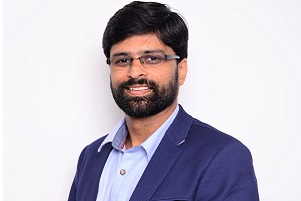
Devasheesh Mathur is Assistant Professor in Healthcare Management at GIM - Goa Institute of Management, which is the first business school from India to be inducted in UN Sustainable Development Solutions Network. He works with the World Health Organisation and the National Health Agency on various projects related to policy monitoring and impact evaluations. He is a graduate from Indian Institute of Technology Bombay in Metallurgical Engineering and Materials Science and earned his doctorate from the School of Public Policy and Governance, Management Development Institute Gurgaon. He has published peer-reviewed research articles and open editorial pieces in leading dailies. He is one of the founding members of Indian Public Policy Network and a member of Confederation of Indian Industries.
Note: The views expressed in this article are solely author’s own and do not reflect/represent those of Shiksha.
News & Updates
Photos & Videos


+25
Contact Details
Address
Goa Institute of Management,
Poriem, Sattari
Goa - Other ( Goa)
Get details of Similar Colleges
Prin. L. N. Welingkar Institute of Management Development and Research, Mumbai

Student Forum
 Anything you would want to ask experts?
Answered a week ago
GIM Goa has all the qualities of tier 1 and tier 2 colleges. Goa Institute of Management GIM Goa ranking is 43rd by NIRF 2025 under the Management category. The college offers good placement support to students.
As per the student's review, "The infrastructure of the college is exceptional. You al
A
Contributor-Level 10
Answered a week ago
Goa institute of management popular programme is PGDM. GIM Goa Research scholars are equipped with in-depth functional skills & analytical knowledge to succeed in both industry & academia. PGDM & HCM students are placed in top companies such as Deloitte, Amazon, TCS, Accenture, & others.
L
Contributor-Level 10
Answered a month ago
Candidates need to have at least three-years of work experience to apply for Hybrid PGDM course at GIM Goa. Aspirants also need to complete bachelor's degree or equivalent with at least 50% aggregate to apply for Hybrid PGDM.
N
Guide-Level 15
Answered 2 months ago
GIM Goa has experienced faculty members. GIM Goa faculty are PhD, diploma, and degree holders. GIM Goa faculty motivates students to work on their knowledge and skills. Goa Institute of Management invites various prominent business leaders for guest lectures. From time to time Goa Institute of Manag
R
Contributor-Level 10
Answered 2 months ago
| Exam | 2023 | 2024 |
|---|---|---|
| CMAT (percentile) | 98.5 | 98.5 |
| CAT (percentile) | 88 | 88 |
| XAT (percentile) | 85 | 85 |
M
Contributor-Level 10
Answered 2 months ago
No, direct admissions are not available for many courses at GIM Goa. The accepted entrance tests for admission to the UG, PG, and other courses is XAT, CAT, and others. FPM direct admissions are available for students.
R
Contributor-Level 10
Answered 2 months ago
GIM Goa has all the facilities given by tier 1 college. Goa Institute of Management was establsihed in the year 1993 & is accredited by AMBA, SAQS, & BGA. GIM is a member of AACSB. GIM Goa popular programmes are PGDM & the HCM are accredited by the NBA
I
Contributor-Level 10
Answered 2 months ago
GIM Goa has collaborated with various industries, universities, & colleges. For this, the Goa Institute of Management has signed MoUs with several companies and institutions. Below mentioned is a list of several GIM Goa collaborations:
| GIM Goa Collaborations | ||
|---|---|---|
| LUT University | FGV EAESP | Kathmandu University School of Management |
Note: There are various other collaborations. For them, please re
N
Contributor-Level 10