IIT Madras, UK researchers develop paper-based sensors to detect antimicrobial resistance-triggering pollutants


The new sensor named ‘Laser Printed-Microfluidic Paper-Based Analytical Sensors’ is based on a ‘see and tell’ mechanism that makes it logistically effective for wide implementation.
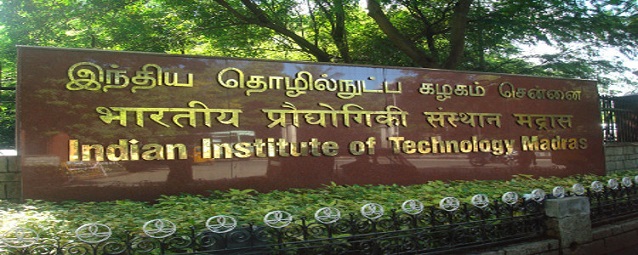
A team of researchers from the Indian Institute of Technology (IIT) Madras along with a group of UK-based researchers has developed paper-based sensors that can detect antimicrobial resistance-triggering pollutants. They are said to be low-cost and field-deployable sensors to detect pollutants in water bodies which could be a viable tool for environmental surveillance.
The new sensor named ‘Laser Printed-Microfluidic Paper-Based Analytical Sensors’ is based on a ‘see and tell’ mechanism that makes it logistically effective for wide implementation. The practical application of the sensors is environmental monitoring, food safety analysis and health care monitoring.
It will help to detect antimicrobials easily in the parts per million range. It will also help understand the relationship between AMR and AMR-triggering pollutants and assist policymakers in framing solutions to tackle grand societal AMR challenges.
Sensors combine adsorption-based pre-concentration using reagents that undergo a measurable colour change enabled parts per billion level detection of pollutants.
The process utilizes the easily available laser printer and hence offers tremendous potential for large-scale sensor fabrication. It could enable community-driven microfluidics and facilitate mass surveillance.

The research was led by Prof S Pushpavanam, Institute Chair Professor, Department of Chemical Engineering, IIT Madras and Dr T Renganathan, Associate Professor, Department of Chemical Engineering, IIT Madras. It was funded by the Department of Science and Technology (DST), Government of India in bilateral collaboration with the UK’s Natural Environment Research Council and Engineering and Physical Sciences Research Council (EPSRC) under the ‘Indo-UK Water Quality Research Programme’.
This research was first reported through a journal publication in ‘Nature Scientific’ reports.
Read More:
Follow Shiksha.com for latest education news in detail on Exam Results, Dates, Admit Cards, & Schedules, Colleges & Universities news related to Admissions & Courses, Board exams, Scholarships, Careers, Education Events, New education policies & Regulations.
To get in touch with Shiksha news team, please write to us at news@shiksha.com

She has over 10 years of experience in the education and publishing sectors. She specialises in exam coverage and content creation. At Shiksha, she writes, analyses, and presents information for students preparing f
Read Full Bio