
Importance of inculcating soft skills in our budding hospitality professionals

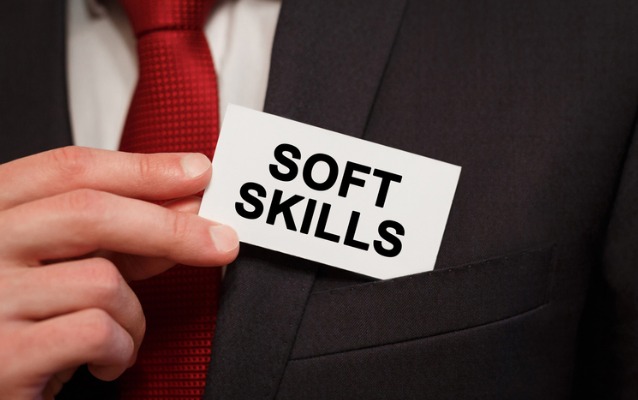
Hospitality Industry has come a long way in the past decade. The traditional emphasis of Hospitality learning has been around honing technical skills in operational or core areas of the hotel and this remains the focus of many hospitality programmes across all major continents. Additionally, till a few years back, the criteria for hiring new recruits in the Hospitality sector, in general, and Hotels, in particular, were practical and purposeful. Candidates with a pleasing personality, excellent academic record, vis-à-vis technical skills and good command of English, had the opportunity of being recruited by the best hotel brands in the industry.
Today, the expectations and preferences of the same hotel brands have gone through a metamorphosis. In present times, employers have started giving equal importance to hard skills and soft skills the candidates possess. This means that the candidate needs to be not only academically proficient but also possess excellent soft skills like communication skills, interpersonal skills, work ethics, leadership skills, teamwork, etc. It has been brought to focus, that a candidate with a balance of both sets of skills, has a much better chance of being hired at the entry-level. Discussions between educators and industry stalwarts, over the last decade, have brought into focus, the need to recognize the significant generic or soft skills relevant to the industry and to accommodate them in the course curriculum.
In present times, employers have started giving equal importance to hard skills and soft skills the candidates possess. This means that the candidate needs to be not only academically proficient but also possess excellent soft skills like communication skills, interpersonal skills, work ethics, leadership skills, teamwork, etc.
According to researchers, it is extremely imperative that the students are proficient in both Soft as well as Hard skills, to be successful in this much-hyped, ever-demanding yet exciting world of the Hospitality Industry. Soft skill training should be incorporated into the Higher Education curriculum, integrated with technical training (International Youth Foundation, 2013). Regular exposure to soft skills training sessions will enable enhancement of the soft skills which in turn will enhance their employability (John, 2009). This would be the much-required link between universities and industry needs, bridging the gap between both, to create employability opportunities for students.

Soft Skill Training at Vedatya
For the purpose of incorporating these generic skills in the course curriculum at Vedatya Institute, they have been segregated into two categories – one, for these disciplines, separated modules could be designed, where the course content and learning outcomes are well-defined and aligned with the requirement of the industry and expectations of the prospective employers. The skills that come under this category would be Communication skills, Customer service and Information and Technology Application.
The second category would consist of those employability skills which play a supporting role in the development of student learning, for which an entire module could be designed but the development of which could also be integrated into the various modules already being taught in Vedatya today. The activities and assessment techniques used for them could also be incorporated into the various student engagement activities and events organised, as part of the curriculum. The skills that come under this category would be Work Ethics & Team Work, Professional & Self-Management, Critical & Analytical Thinking and Interpersonal skills.
The activities and assessment techniques used for them could also be incorporated into the various student engagement activities and events organised, as part of the curriculum. The skills that come under this category would be Work Ethics & Team Work, Professional & Self-Management, Critical & Analytical Thinking and Interpersonal skills.
There are few modules already integrated into the curriculum of Vedatya Institute like Branding Self & Effective Communication, Hospitality Service Excellence and Word Processing & Spreadsheet Skills, which concentrate solely on Communication skills, Customer Service and Information and Technology Application skills respectively, all of which are identified as key soft skills essential for a Hotel Management graduate. Though these modules are already in place, they could be modified further to suit the industry need.
Coming to the support skills like Work Ethics & Teamwork, Critical & Analytical thinking, Professional & Self-Management and Interpersonal skills, a separate module for these skills are not a part of the present curriculum. But these skills have been recognised as comprehensive and glimpses of the same can be seen in various modules being taught in Vedatya today. During Food Production practicals and Theme lunches, the students work in groups, responsible for timely and accurate presentations of their skills. Embedded in these activities, we have the students portray their skills in decision making, planning, interpersonal skills, teamwork, self and professional management, honesty and integrity, creativity, problem-solving skills and even customer service. The need of the hour is to introduce many such student engagement activities with varying difficulty levels, which have the core soft skills integrated into them, structured with an alignment of learning outcomes, activities and assessment.
During Food Production practicals and Theme lunches, the students work in groups, responsible for timely and accurate presentations of their skills. Embedded in these activities, we have the students portray their skills in decision making, planning, interpersonal skills, teamwork, self and professional management, honesty and integrity, creativity, problem-solving skills and even customer service.
Presently, the module for Effective Communication concentrates more on verbal communication and less on written communication. The need of the hour is to bring a balance of both written and verbal communication through various learning activities and assessments thereof. It could be made compulsory to converse in English only, when the students are in the premises of the institute, so that the students, who are not confident of conversing in English, learn to do so and improve their ability. We also make use of a ‘buddy system’ where a student with poor spoken English is teamed with one who is adept at it. The one-to-one conversations between both improve the communication skills of the students with spoken English challenges. We conduct Group Discussions, Extempore, Debates and mock-interviews, Elevator pitches, etc. in the class on a regular basis. They are included in the formative assessments and are made compulsory for all to participate. We could also incorporate Business correspondence as part of formative assessments. This would definitely prepare the students with appropriate and formal writing skills, a key attribute of a good manager.
The need of the hour is to bring a balance of both written and verbal communication through various learning activities and assessments thereof. It could be made compulsory to converse in English only, when the students are in the premises of the institute, so that the students, who are not confident of conversing in English, learn to do so and improve their ability.
Finally, it is commendable that Vedatya Institute recognized the need for reinforcing the necessary soft skills into the students’ daily routine and teaching curriculum a long time before the other institutes woke up to the fact. Every effort has been made to ensure the students are exposed to all types of academic and professional challenges and are given the necessary inputs and atmosphere to refine these generic skills. But since, ‘change is the only thing constant’, we will keep improving the modules, their content delivery and raising the parameters for students’ growth, competence and excellence, at regular intervals, motivating and guiding them to imbibe the many skills taught here, so that they strive confidently towards a bright, productive and successful future in the Hospitality Industry.
About the author:

Prashanti Jaykumar is an Assistant Professor at the Vedatya Institute. She has over six years of experience in both industry and academia working with various renowned hotels such as The Taj Mahal, Mumbai, Hotel Fortune Landmark, Indore, IHM, Aurangabad and Mashal College of Hotel Management, IPS Academy, Indore.
Note: The views expressed in this article are solely author’s own and do not reflect/represent those of Shiksha
News & Updates
Photos & Videos


+1
- Social Responsibility
- BHM (Bachelor of Hotel Management)
- B Des (Bachelor of Design)
- BSc
- B.A (Bachelor of Arts)
- BCT & CA (Bachelor of Catering Technology and Culinary Arts)
- BBA (Bachelor of Business Administration)
- Hospitality & Travel
- Business & Management Study
- Design
- Mass Communication & Media
- Humanities & Social Sciences
- IT Software Courses
- Arts ( Fine / Visual / Performing )
- Top Colleges Colleges in Delhi/NCR
- Top Mass Communication Colleges in Delhi/NCR
- Top Private Fashion Design Colleges in Delhi/NCR
- Top Hospitality Management Colleges in Delhi/NCR
- Top Skill University Colleges in Delhi/NCR
- Top NIFTs Colleges in Delhi/NCR
- Top Hotel Management Colleges in Delhi/NCR
- Top BBA Colleges in Delhi/NCR
- B.Des colleges in Gurgaon
- B.A. colleges in Gurgaon
- Certificate colleges in Gurgaon
- B.Sc. colleges in Gurgaon
- BHM colleges in Gurgaon
- BBA colleges in Gurgaon
- After 10th Diploma colleges in Gurgaon
- BCT & CA colleges in Gurgaon
- Hospitality & Travel colleges in Gurgaon
- Design colleges in Gurgaon
- Business & Management Studies colleges in Gurgaon
- Humanities & Social Sciences colleges in Gurgaon
- Mass Communication & Media colleges in Gurgaon
- IT & Software colleges in Gurgaon
- Arts ( Fine / Visual / Performing ) colleges in Gurgaon
Contact Details
Address
C/O Umak Educational Trust
Garhi Murli (Garhi Bazidpur),
Sohna Road
Gurgaon ( Haryana)
Get details of Similar Colleges

Student Forum
 Anything you would want to ask experts?