
Responsive design for services in hospitality businesses

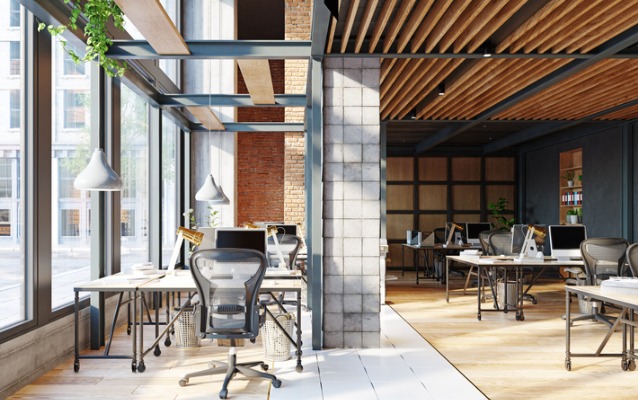
Design of service spaces often lends itself to complexities that are driven by often competing considerations and requirements of key stakeholders. The investors or ownership brings their vision of what space should look like in the form of a narrative or brief that the design team is expected to build upon to initiate the process, it will be safe to state that the ‘design team’ will then typically bring their understanding of what the ‘patron’ would like to see in a form that can be presented for approval of the design with the required level of detailing such that the decision-makers can now witness the expression of their vision or ideas about the space in the form of 2D layouts and 3D models essentially depicting the designers' translation of the patron’s mandate.
Designing spaces for hospitality businesses is all about finding the right balance between creative expression that would define the look and feel of the spaces and the critical need for these spaces to also respond to ‘operational requirements’. In effect achieve equilibrium between the aesthetics and functionality such that the ‘customer experience’ is of high quality at all times. The diverse range of hospitality services and products being offered is quite interesting, this also requires the design teams to build a strong understanding of the needs and expectations of all stakeholders starting from the patron or ownership to the operational leaders, the employees and of course the customers that they intend to attract to their facilities to serve and retain.
Hotels, Restaurants, Lounges, Coffee Shops, Pubs and Bars are all service spaces built and designed to service customer segments aligned with the level of pre-determined product and service delivery, each of these are further segmented into luxury, mid-segment or budget segments. This segmentation has bearing on all aspects of designing, starting from the budget outlay to ensuring that the spaces are designed and fit-out to achieve the product and service standards that render the facility apt for the target customer segments.

Key Factors to consider
Some of the key factors for design professionals to consider are listed below:
- Aesthetics
- Functionality
- Customer centricity
- Sustainability implications
- Cost efficiency
- Futuristic appeal
- Technology imprint
As one reflects on each of the above-listed factors, the complexity around the task at hand becomes apparent; also what becomes obvious that for the implemented design of a hospitality service space to meet all the intended objectives a consultative process is an absolute requirement. The guidance of operational experts, feedback from customers and sensitivity towards sustainability considerations can go a long way in ensuring that, any approach that side-lines the operational experts runs a risk of designing a space that fails to meet the fundamental ‘functionality’ standard, any gaps in design in this respect are likely to percolate into inefficiencies and service quality implications that are hard to resolve without correcting or filling the design gaps, often at a significant cost both financially as well as in terms of time delays.
What is unique about designing hospitality spaces?
When it comes to designing hospitality service spaces it is important to distinguish between the ‘front of the house’ and ‘back of the house’ areas or spaces. By definition the two are explained as below:
- Front-of-the-House: Comprises every area that the guest or customer will see (i.e. lobbies, dining space, restrooms, passenger elevators, guest rooms, etc.)
- Back-of-the-House: General services area which is important for operational efficiencies and service quality; absorbs all orders and demands making everything possible (i.e. Kitchens, housekeeping areas, employee lockers, laundry, administration areas, offices, etc.)
While designing the front of the house, customer-facing areas the aesthetics may trump other considerations, this can be a costly mistake if operational requirements and customer needs are not factored in, there is no point in having chairs in a dining space that look great but are either uncomfortable to sit in or are high maintenance from an upkeep perspective. As is true for any industry, certain standards are made available to the designers; these are elements that provide the non-negotiables for them to work with and ensure that the ‘functionality’ aspect is not lost in translation at any time.
What must also be avoided is any lapse in giving due consideration to the design of all the back of the house areas, while it is acceptable and true that these spaces will not attract investment with respect to the aesthetic elements, yet it is critical that they have a positive disposition that motivates the employees and service providers and more importantly meet the specific requirements of the operational teams at the shop floor, it is not uncommon for operating teams to have to come to terms with poorly designed back areas as they get started with a typical pre-opening process, being forced to find rather inefficient solutions to design faults that could have been easily avoided if only the operational requirements and standards had been communicated and paid heed to. Some design gaps emerging out of a broken design process can be resolved, while others may have to be inherited for the long haul. For example ovens placed right next to refrigeration equipment in a kitchen may represent a bad call that can be fixed easily, having a wrong width for ‘swing doors’ between kitchen and restaurant space may not be all that easy to resolve.
A ‘design audit’ from an operational perspective can highlight many such avoidable design faults for almost any hospitality service space, the challenge for the design team is to work with all stakeholders in all stages of design and implementation of projects with an intent to minimise if not completely avoid such gaps.
Business models in hospitality and their impact on the design process
The popular business growth models like ‘franchising’ or ‘management contracts’ come with riders that often push the designers to follow a cookie-cutter approach. The key reason for this is the push with respect to brand consistency in terms of the look, feel and service experience. That said each additional facility comes with an opportunity for creative expression and design impact without breaching any brand compliance aspects. It is becoming increasingly clear to brands that responding to local contexts of business in terms of customer expectancies and employee requirements cannot be underscored. For example, an international hotel brand started off in India by replicating a lobby design wherein no luggage handling support in the form of a ‘bell desk’ was facilitated, only to get sharp feedback from customers demanding the same, forcing a response in terms of change in both lobby design and its operational expression.
Contemporary hotels and restaurants are increasingly focussing attention on design aspects that lead to enhanced technology deployment, finding sustainable solutions with respect to elements like managing waste and consumption of water and energy, the coming decades will demand the design function to deliver on both these aspects and also push design teams to tap opportunities to support operational efficiencies through creative design of hospitality spaces, vertical linen chutes in the past represent one such example for hotels that deployed the same globally.
Way forward
Designing hospitality spaces that respond to all key factors will require designers to walk in the shoes of operators, the design process will need to ensure that all the stages right from ideation to implementation and fit-out are consultative process, this will require the design teams to understand the smallest details of both the front of the house and back of the house.
Standard operating procedures.
It is with this integrated and interdisciplinary approach that service design for hospitality spaces will achieve the level of excellence that all stakeholders would look for. Design education too will need to respond to this need for domain specialists who are trained to respond to the unique requirements of various different segments of the large services sector rather than the usual and often limited capacity that is on display by generic interior designers at large. Vedatya Institute has taken an initiative to offer a unique specialisation to fix this gap.
About the author:

Sandeep Munjal is an experienced Institute Director with a demonstrated history of working in the education management industry. Skilled in Student Recruiting, Lecturing, Academic Advising, Educational Technology, and Instructional Design. Education professional with extensive industry experience in hospitality and retail in India and USA. Impressive research credentials and international educational qualifications, awards. He is currently associated as the Director of Vedatya Institute.
Note: The views expressed in this article are solely author’s own and do not reflect/represent those of Shiksha
News & Updates
Photos & Videos


+1
- Social Responsibility
- BHM (Bachelor of Hotel Management)
- B Des (Bachelor of Design)
- BSc
- B.A (Bachelor of Arts)
- BCT & CA (Bachelor of Catering Technology and Culinary Arts)
- BBA (Bachelor of Business Administration)
- Hospitality & Travel
- Business & Management Study
- Design
- Mass Communication & Media
- Humanities & Social Sciences
- Arts ( Fine / Visual / Performing )
- IT Software Courses
- Top Colleges Colleges in Delhi/NCR
- Top Mass Communication Colleges in Delhi/NCR
- Top Private Fashion Design Colleges in Delhi/NCR
- Top Hospitality Management Colleges in Delhi/NCR
- Top Skill University Colleges in Delhi/NCR
- Top NIFTs Colleges in Delhi/NCR
- Top Hotel Management Colleges in Delhi/NCR
- Top BBA Colleges in Delhi/NCR
- B.Des colleges in Gurgaon
- B.A. colleges in Gurgaon
- Certificate colleges in Gurgaon
- B.Sc. colleges in Gurgaon
- BHM colleges in Gurgaon
- BBA colleges in Gurgaon
- After 10th Diploma colleges in Gurgaon
- BCT & CA colleges in Gurgaon
- Hospitality & Travel colleges in Gurgaon
- Design colleges in Gurgaon
- Business & Management Studies colleges in Gurgaon
- Humanities & Social Sciences colleges in Gurgaon
- Mass Communication & Media colleges in Gurgaon
- IT & Software colleges in Gurgaon
- Arts ( Fine / Visual / Performing ) colleges in Gurgaon
Contact Details
Address
C/O Umak Educational Trust
Garhi Murli (Garhi Bazidpur),
Sohna Road
Gurgaon ( Haryana)
Get details of Similar Colleges

Student Forum
 Anything you would want to ask experts?
Answered a year ago
As per the latest report, the highest package offered to Hotel Management and Culinary Arts students during Vedatya Institute placements 2023 was over INR 30,000 per month. The average package offered was around INR 25,000 per month. The top recruiters of Vedatya Institute in 2023 included The Ober
Contributor-Level 10
Answered a year ago
As per the latest report, the highest package offered to Hotel Management and Culinary Arts students during Vedatya Institute placements 2023 was over INR 30,000 per month. The following image showcases the salary offered at Vedatya Institute placements over the past few years:

Image source: official
Contributor-Level 10
Answered a year ago
The following is a list of a few top companies that were a part of the recent placement drive at Vedatya Institute:
Vedatya Institute Top recruiters | ||
|---|---|---|
Taj Hotel | The Oberoi | The Westin |
InterContinental Hotels Group (IHG) | Radisson Blu | JW Marriott |
ITC Hotels | Le Meridien | Neemrana Hotels |
Contributor-Level 10
Answered a year ago
Yes, the BDes course is available at Vedatya Institute. The institute offers BDes courses at the UG level. Candidate must meet the eligibility criteria to enrol for BDes course admission set by the college. Aspirants must pass Class 12 with a minimum of 50% aggregate. VI admission process is aptitud
Contributor-Level 10
Answered a year ago
Bachelor of Design, a UG degree programme offered for specialisations like Fashion Design, Interior Design, Accessory Design, Textile Design, and much more. Stduents can check some of the reasons to pursue BDes course from Vedatya Institute:
- The course will help the students upgrade their abilities a
Contributor-Level 10
Answered a year ago
Candidates who are looking for BA course admission at Manikam Ramaswami College of Arts and Science must pass Class 12 with a 50% aggregate. BA is one of the most sought-after courses in India. BA course is usually provided under the Arts & Humanities streams and can be completed in 3 years. The can
Contributor-Level 10
Answered a year ago
The institute offers courses, such as BDes, BSc, BPharma, etc., at the UG level. Apart from the UG courses, the institute also offers a Post-Graduate Programme in Revenue Management (online), diploma, and certificate courses. Students can check some of the course streams from the points mentioned be
Contributor-Level 10
Answered a year ago
Vedatya Institute admissions are currently open for various courses. Candidates are selected for courses based on their entrance exam scores followed by PI. Aspirants can apply online on the official website of the institute. The institute offers courses, such as BDes, BSc, BPharma, etc., at the UG
Contributor-Level 10