
Civil Engineering Education Must Look Beyond Placements and Paychecks

Civil engineering courses in India have come under the scanner time and again for dwindling enrolments, a trend offset by the growing popularity of electronics and IT streams. But do these claims truly indicate that the discipline has lost relevance, or is there a deeper shift in how students perceive civil engineering courses in India today? Ahmedabad- based CEPT University offers to explain.
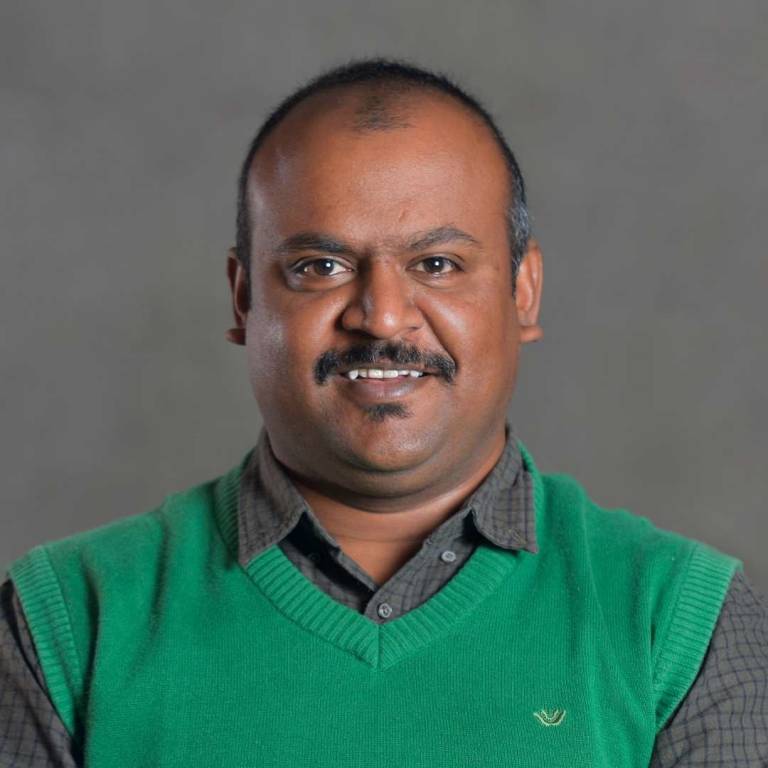
“In a developing country like ours, there will always be significant opportunities for civil engineers. This is a field that can never truly go out of fashion,” says Prof Tushar Bose, who chairs the Bachelor’s in Civil Engineering at Ahmedabad-based CEPT University. The undergraduate course offered by the University is one of the oldest civil engineering programs in India, backed by a legacy spanning four decades. Also, the only one that follows a studio-based pedagogy, which prioritises experiential learning over traditional classroom instruction.
“If we look at engineering education over the last decade, there was indeed a period of fluctuation in enrolments across branches, including civil engineering. However, data over the past few admission cycles suggests that the situation has stabilised significantly. This reflects sustained interest among students who are making more conscious and informed choices. We see a similar pattern at CEPT University. Our civil engineering program has been running at full capacity over the last few years, with strong applicant demand each cycle. So, the narrative is no longer about decline—it is about stabilisation and recalibration of interest,” says Prof Bose.
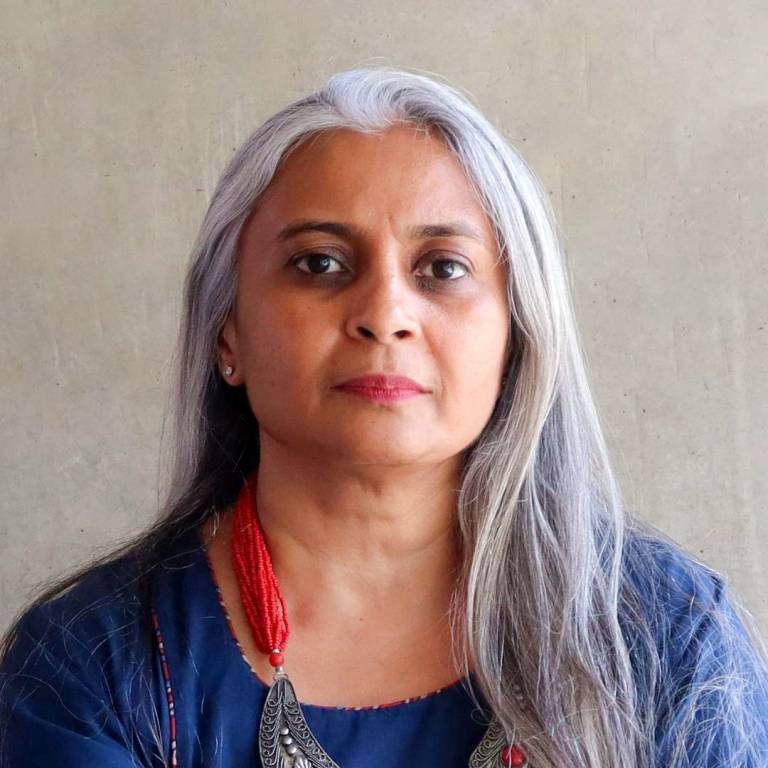
Prof Aanal Shah, Dean, Faculty of Technology, CEPT University, stresses the need for focus on interdisciplinary education in order to achieve recalibration of interest among engineering aspirants. “We can no longer stay working in our own discipline when the world is moving towards interdisciplinary education. At CEPT, all undergraduate students from Architecture, Urban Design, Design and Technology study together in a Common Foundation program for one whole year. About 25 per cent of their curriculum is to be done through electives, which allows them to inculcate interdisciplinary skills, and over the years, this very approach has helped our students stand out from their competition.”
The Bachelor’s in Civil Engineering (BCE) program at CEPT University has been running at a deliberately capped full capacity of 40 students for the past several years. The University credits the studio-pedagogy for this year-on-year turnout. In CEPT’s BCE program, students are encouraged to identify societal issues and develop solutions in their studios. The teaching ecosystem includes both academic faculty and practitioners, ensuring that students are exposed to current industry realities. Partnerships with industry facilitate internships, site visits, expert sessions, exchange programs and active student chapters that bring practitioners onto campus.
This structure ensures that graduates are not siloed specialists, but professionals who can navigate the interconnected realities of modern infrastructure.
Elaborating on this unique structure, Prof Bose says, “Our approach to civil engineering education is closely tied to how the field itself is evolving. Civil engineering, today, operates at the intersection of technology, data, and systems thinking. Infrastructure development is increasingly driven by digital tools, simulation models, and integrated planning approaches. Civil engineers and their expertise are integral to urban infrastructure systems, water and environmental networks, climate-resilient planning, smart mobility and city-scale systems. It is, increasingly, transforming into a systems discipline—one that shapes how cities function and how societies evolve. Look at the Statue of Unity – a stellar engineering marvel that demonstrates this very transformation. From structural design to wind analysis and execution planning, such projects rely heavily on advanced modelling technologies—highlighting how deeply embedded technology has become in modern engineering practice.”
The gap between academic learning and industry practice has long been a concern in engineering education. CEPT addresses this through a deeply integrated model of engagement. Crucially, the program includes a four-month professional training component in the final year. This is not treated as an add-on, but as an integral part of the learning journey, which often serves as a direct pathway into employment.
“The education system should be such that it provides a platform to think and deliver. Our pedagogy allows them to open their minds, think out of the box and experiment with the thoughts, turning them into tangible systems. We have received more than 16 design registrations in the last three years, and our students have won multiple competitions. We are preparing engineers who can not only deal with the current problems but can also anticipate and solve the problems of the future,” said Prof Shah.
Another persistent misconception around civil engineering is that it offers limited career prospects. However, outcomes from institutions like CEPT suggest a far more diverse landscape.
Graduates are increasingly moving into roles in infrastructure and design consulting, technology-driven engineering roles, urban systems and planning organisations, entrepreneurial ventures in the built environment and even higher education at leading global universities.
In Prof Aanal Shah and Prof Tushar Bose’s words, civil engineering today is not stepping back but is moving forward into a more complex, technologically integrated, and interdisciplinary future. They believe that its relevance to national development remains unquestionable. What is changing is the way it is practised, taught, and understood.
At institutions like CEPT University, this transformation is already underway and is clearly visible in the classroom, in student work, and in the trajectories that graduates choose to pursue.
The question is no longer whether civil engineering is losing relevance. It is how quickly we recognise that it has already evolved.
About CEPT University
CEPT University advances excellence in education, research, and practice to shape creative leaders capable of addressing real-world challenges across products, projects, places, and processes. The University brings together the disciplines of architecture, planning, technology, design, and management in an integrated learning ecosystem.
Its studio-centred teaching programs foster critical thinking, professional judgment, and ethical responsibility, preparing graduates to engage meaningfully with complex spatial, social, and environmental contexts. CEPT’s research deepens understanding of human settlements and spatial systems, while its advisory projects translate knowledge into practice — contributing to more livable, inclusive, and sustainable habitats. Through education, research, and advisory work, CEPT seeks to enrich the quality of life in India’s cities and towns, while engaging with global discourses on human environments.
Ranked 6th in the NIRF Rankings 2025 in the category of architecture and planning, the University comprises six faculties: viz., the Faculty of Architecture, the Faculty of Design, the Faculty of Management, the Faculty of Planning, the Faculty of Technology, and the CEPT Foundation Program. In December 2023, CEPT University was recognised by the Government of India as a Centre of Excellence in Urban Planning and Design. This comes with an endowment of Rs. 250 Crore to be used towards the research and training on India-specific knowledge in Urban Planning and Design over the next 25 years.
CEPT University was established by the CEPT University Act of 2005, enacted by the government of Gujarat. It was originally started in 1962 as the School of Architecture, supported by the Ahmedabad Education Society. The Department of Scientific and Industrial Research (DSIR) of the Government of India recognises the University as a Scientific and Industrial Research Organisation (SIRO). CEPT University is recognised as a Centre of Excellence by the Government of Gujarat. CEPT University has over 30 ongoing collaborations and exchange programs with top-ranked universities across the world.
https://cept.ac.in/people/aanalshah
https://cept.ac.in/people/tusar-bose
Note: The views expressed in this article are of CEPT University and do not reflect/represent those of Shiskha.
News & Updates
Photos & Videos






+12
- B.Arch (Bachelor of Architecture)
- B Des (Bachelor of Design)
- M.Arch (Master of Architecture)
- MBA (Masters of Business Administration)
- B Tech (Bachelor of Technology)
- M.E./M.Tech
- M.Plan (Master of Planning)
- B.Plan
- M.Des
- Ph.D.
- MMS (Master of Management Studies)
- Architecture & Planning
- Design
- Engineering
- Business & Management Study
- Humanities & Social Sciences
- Top Colleges Colleges in Ahmedabad
- Top Private Engineering Colleges in Ahmedabad
- Top Skill University Colleges in Ahmedabad
- Top Engineering Colleges in Ahmedabad
- Top Architecture Colleges in Ahmedabad
- Top State Public University Colleges in Ahmedabad
- Top Colleges Colleges in Gujarat
- Top Government Engineering Colleges in Gujarat
- M.Arch colleges in Ahmedabad
- M.Plan colleges in Ahmedabad
- M.Tech colleges in Ahmedabad
- M.Des colleges in Ahmedabad
- MBA colleges in Ahmedabad
- Ph.D. colleges in Ahmedabad
- B.Tech colleges in Ahmedabad
- B.Plan colleges in Ahmedabad
- B.Arch colleges in Ahmedabad
- B.Des colleges in Ahmedabad
- Architecture & Planning colleges in Ahmedabad
- Design colleges in Ahmedabad
- Engineering colleges in Ahmedabad
- Humanities & Social Sciences colleges in Ahmedabad
- Business & Management Studies colleges in Ahmedabad
Contact Details
Address
CEPT University
Kasturbhai Lalbhai Campus
University Road, Navrangpura
University Area, Ahmedabad ( Gujarat)
Get details of Similar Colleges

Student Forum
 Anything you would want to ask experts?
Answered 2 months ago
Candidate can take admission in CEPT University after Class 12, only with relevant entrance exam scores. To take admission, candidate must register on the official university website, appear in the respecitve entrance exam, take part in counselling, and submit the fees before deadline.
R
Contributor-Level 10
Answered 2 months ago
No, candidate cannot take direct admission in CEPT University. Candidate must qualify respective entrance exams, to be eligible for admission. Entrance exams like NATA for BArch, UCEED for BDes, JEE Main for BTech, GATE for MArch, etc. are mandatory for specific course admissions. If candidate does
R
Contributor-Level 10
Answered 2 months ago
The selection criteria for BArch involves Class 12 with Physics and Mathematics as compulsory subjects with at least 50% marks. Candidate must also have a valid score in NATA entrance exam. The seat allocation is done via ACPC or CEPT University. Canidate must pay the fees before due dates.
R
Contributor-Level 10
Answered 5 months ago
AnantU conducts its own BDes entrance test, ADEPT, and interview, which focuses on creative potential. While competitive, it is easier than the NID DAT or CEED/UCEED, which have extremely low selection rates. CEPT also carries a very high academic reputation that makes its admissions particularly ri
R
Contributor-Level 9
Answered 6 months ago
CEPT University is an excellent choice for students who wish to pursue Architecture and Planning with the university being one of the top planning schools. The university is especially known for its Urban Planning and Design courses being one of only 4 Centres of Excellence.
The university features s
C
Contributor-Level 8
Answered 6 months ago
The CEPT University MDes is a good choice with the university being the only one in India to have a Masters in Computational Design and Fabrications. Some of the reasons and USPs are given below:
- The university features a human-centred approach blending creativity, technology & research.
- Students rece
C
Contributor-Level 8
Answered 6 months ago
CEPT University is a good choice for M.Tech with the university featuring Advanced, practice-oriented programs for the built environment and infrastructure sector. Students receive hands-on learning through live projects, labs and industry-linked studios.
The university also features a strong focus o
C
Contributor-Level 8
Answered 6 months ago
Though CEPT University does not offer a traditional MBA it features a unique Urban Management programme and is the only university in India to offer it. The CEPT University Urban Management is definitely worth the hype for the following reasons:
The Urban Management programme blends management with u
C
Contributor-Level 8
Colleges and Universities Admission Expert
Role: Content writer at Shiksha
Education: BA in Journalism and Mass Communication (BAJMC)
Neerja Rohatgi is a content writer and researcher working at Shiksha.com. With a
Read Full Bio