
Paradigm shift in healthcare post-Coronavirus era


The concept ‘paradigm shift’ was first discussed by Thomas Kuhn in his book, 'The Structure of Scientific Revolutions (1962)', there he contended that a series of small, successful challenges to conventional wisdom may ultimately progress to a considerable change in the way the researchers understand the world. In the context of seven decades old Indian health care system, which has been confronting periodic challenges and exigencies, has evolved considerably through these times. Every so often, the old data is requisitioned and re-examined that led to a newer understanding of issues and subsequent actions, causing a paradigm shift. It changes the rules of the game and the roadmap directing new research and emerging possibilities.
In the earlier past, the hospitals provided segregations, custodial and terminal care while today the hospitals are more engaged in providing the entire spectrum of preventive, promotive, curative and rehabilitative services. The role of health care institutions has markedly transformed over time from acute care to management of chronic illnesses and lifestyle disorders. Often greater emphasis is laid on preventive and primary health care rather than curative care and tertiary care. In accordance with consumer-driven and value-based care, the present day’s hospitals are required to provide the best quality medical services consistent with the value for money within the framework of medical ethics and rights of the patients.
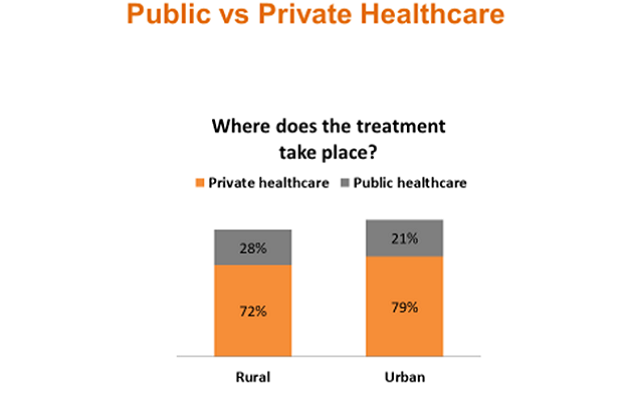
During the 1980s onwards, several government subsidies permitted the introduction of private health care providers. Later in 90’s the opening of the market further gave impetus to the development of the private health sector in India. At the same time, the debate regarding health care reform included questions related to government spending, right to health care, availability, access, fairness, sustainability and quality. The mixed public-private health care delivery system in India became the normative pattern of health care delivery system. The National Sample Survey (NSS) 2014 projected that 72 per cent in rural and 79 per cent in urban patients were treated in the private sector (Refer figure). The private sector is the leading healthcare provider today and they are modernizing very rapidly and providing high-quality treatment comparatively at a lower cost. Progressively the country has been integrating world-class medical technology, skilled professional, low cost of service, as a result, a growing trend is seen in the growth and strengthening of medical tourism.

The healthcare industry in India is one of the fastest-growing sectors in terms of revenue generation and employment opportunities. Accordingly, there is a greater need for knowledge managers and administrators who can lead this change as the healthcare facilities grow and specialised departments rise. Currently, with the continuous paradigm shift in health care sector that is revolutionizing health care, the managers are becoming highly accomplished professionals with advanced degrees; they are prepared for a leadership role in public health and managerial roles in health and hospital administration. Growing with such a demand the healthcare management training institutions offers a variety of leadership career opportunities and the aspirant in this field could pursue rewarding career choices. With the rising opportunities for professional healthcare managers, the incumbents need preparations for entering into the specialised environment under proficient multidisciplinary healthcare faculty.
Over the year, challenges in the professional preparation of healthcare managers have become a crucial concern both in the national and global context. There is a growing need for producing socially conscious, skilled and vibrant top-class health care management professionals. They could be well-matched for the ever-changing health care sector and evolving social milieu with multifarious skill sets, for e.g. management, administration, research and health information technology, and social and behavioural sciences. Healthcare has emerged as one of the Indian’s largest sectors and comprises of hospitals, medical devices, policy research, clinical trials, outsourcing, telemedicine, medical tourism, health insurance and medical equipment. At the present context, the Indian healthcare sector is expected to further grow at a hurried pace due to its need for strengthening coverage, services and increasing expenditure by public as well as private players.
The profession of healthcare management offers variety of career opportunities in wide variety of settings with competitive salary potential and opportunity to lead. Some of the jobs for health care managers could be as follows –
| Public health manager |
Health care manager |
| Health care administrator |
Pharmaceutical healthcare manager |
| Researcher |
Healthcare consultants |
| Health information specialist |
Health information professional |
| Healthcare project manager |
Healthcare quality manager |
| Nursing home administrator |
Hospital executive |
| Healthcare data analysts |
|
The COVID-19 pandemic has exposed the fragility of all nations while handling this public health crisis at all levels. The pandemic has created exceptional disruptions in healthcare delivery by throwing several crucial challenges for healthcare workers. They find their work complicated by challenges of safety, fear of secondary infection, poor supply of Personal Protective Equipment (PPE), supply chain logistics, and financial stress like never before. The turmoil virtually affected all nations encountering a spontaneous situation of lack of equipment and supplies to test for and protect against. In the time of COVID-19, the advancement of new technologies like video-telephony and online chat services, telehealth and teleconferencing, remote monitoring, many healthcare professional as well as patients are realizing now the best advantage in accessing doctors’ consultancy through such platform from their own home. Also, many home-based interventions can be delivered by nurses, physician assistant or community health workers with an applicable payment system. The short-term implications and challenges of the pandemic are evident universally, but the long-term consequences of the pandemic, however, would reform healthcare institutions, employments, and other undetected concerns that are still problematic to envisage. The public health system will take a new shape after the crisis, having a stronger skeleton in terms of funding, research, prevention and promotion of community health at a global level. The system will expand creating newer opportunities for the professionals to work towards safer and healthy communities. There is an apprehension that the economic costs of the pandemic can be enormous, at the same time the post-pandemic situation demands the growing number of healthcare professionals and need for positions in healthcare management. The requirement for strong healthcare leadership with sharp professional acumen and strategic managerial skills will continue to rise.
Finally, it may be concluded that to bring healthcare back in to balance after the COVID-19 pandemic, we require to make numerous essential paradigm shifts away from olden ways of thinking and toward the new. These changes and preparedness will pave the way for the innovative solutions necessary in healthcare today. The central issue is that the art, science, and business of healthcare have fallen out of equilibrium. Today’s healthcare industry is confronting these challenges into stride by working alternatively when the patients can opt for virtual OPDs by means of teleconsultation where doctor-patient communication can happen remotely.
About the authors
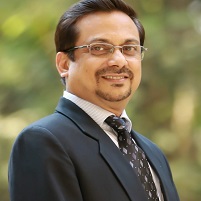
Dr Shankar Das is the Director of International Institute of Health Management Research - IIHMR, Delhi. His professional skills mainly include public health, primary health care, applied research, health promotion and professional education; he has extensive experience of collaborating and working at the highest level in government, the public sector and academic research institutions at regional, national and international levels
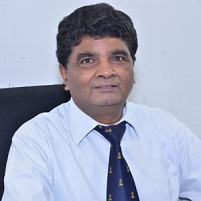
Dr A K Khokhar is a Medical graduated with 3 post graduations in the field of Health Care Administration and Hospital Administration. He has carried out a number of studies and surveys on the role of hospitals in primary health care and has also written a book on Hospitals and Primary Health Care published by International Hospital Federation, London, UK.
Note: The views expressed in this article are solely authors own and do not reflect/represent those of Shiksha
News & Updates
Photos & Videos


+9
Contact Details
Address
Plot no. 3, Sector 18A, Phase-II
Dwarka, Delhi
Get details of Similar Colleges

Student Forum
 Anything you would want to ask experts?
Answered 4 months ago
Candidates must pass PGDM or master's degree or its equivalent in any Health and Social Science/ Allied discipline with a minimum of 60% aggregate (55% aggregate for SC/ ST) to apply for FPM programme at IIHMR Delhi.
Aspirants who have completed a 5-year integrated master's degree in any discipline,
N
Guide-Level 15
Answered 4 months ago
IIHMR Delhi selects candidates for MBA based on their scores in CAT, MAT, XAT, ATMA, CMAT, etc. Aspirants can also appear for DMAT conducted by the institute. Selected candidates also need to pass the group discussion and personal interview round for final admission.
N
Guide-Level 15
Answered 4 months ago
Over the years, IIHMR Delhi has trained over 20,000 professionals in India. IIHMR Delhi gives UG/PG students the knowledge & skills that are needed to succeed in Healthcare Management positions. With many completed research projects, IIHMR Delhi tries to maintain a culture of innovation that encour
A
Contributor-Level 10
Answered 4 months ago
Candidates can apply online or offline for IIHMR Delhi courses. Aspirants need to pay INR 1,000 for a course. Check below the steps to apply online:
- Go to the website of IIHMR Delhi.
- Click on 'Apply Now' on the Home page.
- Register with the basic details to generate login credentials.
- Login and fill out
N
Guide-Level 15
Answered 4 months ago
The below is the PGDM evaluation process at IIHMR Delhi (International Institute of Health Management Research):
The Cumulative Grade Point Average (CGPA), Grade Point andEquivalent Percentages are as follows: | ||
CGPA | Grade | Percent Equivalent |
8.95 - 10.00 | A+ = Outstanding | 90-100 |
7.95 – 8.94 | A = Very Good | 80 – 89 |
6.95 – 7.94 | B+= Good | 70 – 79 |
5.95 – 6.94 | B = Average | 60 – 69 |
5.00 – 5.94 | C= Below Average | 50 – 59 |
<5.00 | F= Poor | <50 |
Grade point average is calculated to two decimal points | ||
R
Contributor-Level 10
Answered 4 months ago
IIHMR Delhi gives a 2-yr full-time MBA equivalent PGDHM, Fellow programme in Management, Online Post Graduate Programme in Hospital Management, and various other programmes to students. All the programmes are approved by the AICTE. The specialisations in which the IIHMR PGDHM course is available ar
V
Contributor-Level 10
Answered 4 months ago
IIHMR Delhi offers admission to PGDM and FPM courses based on national, state or university-level entrance exam scores. For all other courses, the selection is merit-based. Candidates are selected for admission to Online PG certificate courses based on their qualifying exam scores.
N
Guide-Level 15
Answered 4 months ago
IIHMR Delhi conducts DMAT in online mode for admission to PGDM programme. The test includes Language Comprehension-English, General Awareness, Mathematical Skills and Reasoning. Candidates who have completed their graduation in any discipline can apply for DMAT. Aspirants can also get admission in P
N
Guide-Level 15