
How the policy and regulatory framework will enable us to build world-class universities in India?


Nurturing excellence in teaching and research and maintaining it uncompromisingly is the way forward for creating world-class higher education institutions. Do the national policies in education, current or the earlier ones support this? Yes; but what about the Regulatory Frameworks? So far, No! Complete institutional autonomy and facilitative and transparent governance permitting long-term sustainability and stability are the hallmarks of topmost quality institutions all over the world.
The National Education Policy 2020 rightly identifies the major problems currently faced by the severely fragmented Indian higher education system. The development of cognitive skills and learning outcomes are the least emphasised in the curriculum. An undesirable rigid separation of disciplines, with early specialisation and streaming of learners into narrow areas of study is pervading all across. Restrictions in teacher and institutional autonomy, academic, administrative, and financial, are hindering the support and promotion of independent initiatives of individual, academics, researchers, Departments, Faculties and institutions as a whole. Mechanisms for merit-based career progression of faculty and institution leaders are totally inadequate or rather nil.
The National Education Policy 2020 rightly identifies the major problems currently faced by the severely fragmented Indian higher education system. The development of cognitive skills and learning outcomes are the least emphasised in the curriculum.
Lack of emphasis on research at most universities and colleges and the nonexistence of competitive peer-reviewed research funding across disciplines are also limiting factors for quality and excellence. Suboptimal governance and leadership of higher education institutions and an ineffective rigid regulatory system and the mammoth size of the affiliating university system resulting in low standards of undergraduate education were also rightly identified as the reasons for not achieving world-class standards in our education system. The present policy envisions a complete overhaul and re-energising of the higher education system to overcome these challenges and thereby deliver too quality higher education.

Suboptimal governance and leadership of higher education institutions and an ineffective rigid regulatory system and the mammoth size of the affiliating university system resulting in low standards of undergraduate education were also rightly identified as the reasons for not achieving world-class standards in our education system.
World-Class Universities cannot be created overnight. They cannot stand alone or come up on their own. A robust and quality school education system can only pave the foundation for a top-notch high-quality collegiate and university education system. Seamless connection between teaching, research, knowledge creation and innovation are the basic traits of world-renowned teaching and research universities. Recognition of the potentials of knowledge for wealth creation and economic growth is evident in such institutions.
All the national policy formulations in higher education were unanimous regarding the positive roles and absolute necessity of academic autonomy. The Kothari Commission Report which came in 1966 stated: “only an autonomous institution, free from the regimentation of ideas and pressure of party or power politics, can pursue truth fearlessly and build up in its teachers and students, habits of independent thinking and a spirit of inquiry unfettered by the limitations and prejudices of the near and the immediate which is so essential for the development of a free society”. The institutional regulatory frameworks, both at the National and the Regional State levels, for some reason or other, have not really facilitated these autonomy considerations to any reasonable extent. On the contrary, we have seen examples of curbing of autonomy and almost insurmountable hurdles for the smooth operation of institutions arising out of the multiplicity of regulators, during the last 5 decades.
The implementations of NEP 2020 recommendations, taking lessons from the success stories of governance of premier public institutions of excellence like the Indian Institute of Science, IITs, IIMs, IISERs, and extending them to the Collegiate and University system in the country have to be done in a completely disruptive and transformative way, without waiting.
The presence of outstanding institutional leaders that cultivate excellence and innovation is the need of the hour. Excellent faculty with high academic and service credentials as well as demonstrated leadership and management skills need to be identified early and trained through a ladder of leadership positions. The regulatory framework needs to be very flexible and accommodative in attracting the best talents as teachers.
The role of the industries and the corporates in creating world-class universities and research institutions is enormous. Creating opportunities for teachers and researchers to stay in touch with real-world industrial problems and solutions is necessary for achieving global standards in higher education and industrial practices. Developing courses and capacity-building programmes jointly with industry and undertaking teaching and research jointly in specific areas are also needed in establishing world-class standards. If the regulatory frameworks undergo a thorough transformation, looking at the high expectations in the policy formulations, we as a nation can stepwise and systematically bring in world-class features in our university system.
About the author:
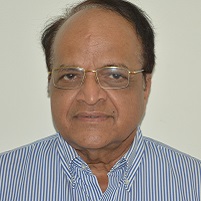
Professor VN Rajasekharan Pillai has been at the helm of affairs of many higher educational and scientific research establishments for the last 47 years of service as a teacher, researcher, professor, and executive head of Education, Science and Technology establishments in the country and abroad. An Elected Fellow of the Indian Academy of Sciences, Professor Rajasekharan Pillai is one among the top-cited Chemistry researchers in the country. He created an internationally renowned research group in the areas of polymer-supported peptide synthesis, photoremovable protective groups and conformational studies of peptides and proteins
Note: The views expressed in this article are solely author’s own and do not reflect/represent those of Shiksha
News & Updates
Photos & Videos





+32
Contact Details
Address
KJ Somaiya Institute of Management, Vidyavihar(E)
Ghatkopar East, Mumbai ( Maharashtra)
Other Popular K.J. Somaiya Institutes
Get details of Similar Colleges

Student Forum
 Anything you would want to ask experts?
Answered 3 weeks ago
With an NMAT score of 209 (QA: 62, LR: 63, English: 84), here's how your chances look:
NMIMS (Mumbai & Other Campuses)
- NMIMS Mumbai (Flagship MBA):
- Typical cutoff is 235–250+.
- At 209, admission to Mumbai campus is unlikely.
- NMIMS Bengaluru, Hyderabad, Navi Mumbai, Indore, Dhule:
- Cutoffs are lower (200–21
S
Contributor-Level 10
Answered a month ago
KJ Somaiya Institute of Management accepts national entrance exams for admission. The institute accepts national entrance exams like CAT, XAT, GMAT, NMAT, ATMA, CMAT for MBA admission. The MCA admission is based on MAH MCA CET, PERA CET, CUET-PG.
A
Contributor-Level 10
Answered a month ago
KJ Somaiya Institute of Management is comparatively expensive as other institute. The MBA fee structure at KJSIM is INR 13.48 lakh- INR 23.45 lakh. The fee structure includes tuition fee, caution fee, security deposit, hostel fee, etc.
K
Contributor-Level 10
Answered a month ago
KJ Somaiya Institute of Management is one of the eminent institute which offers quality education to the students. The institute is well-known for MBA programme. KJSIM hires well-trained and expert faculty members with years of experince. The institute has been ranked 65 in the Management category b
L
Contributor-Level 10
Answered 2 months ago
KJ Somaiya Institute of Management has vibrant campus and oragnises various workshops, fairs, seminars, conferences, meets, summits, symposiums, awareness programs etc. Various fests and fairs are organised on the occasion of religious holidays to be inclusive of the diversity it houses within the c
U
Contributor-Level 10
Answered 2 months ago
Yes, KJ Somaiya Institute of Management is collaborated with various international industries, universities, and colleges. Below mentioned is a list of several KJ Somaiya Institute of Management (KJSIM) global partners in education:
KJ Somaiya Institute of Management Collaborations | ||
|---|---|---|
Saint Martin University, USA | DHBW, Stuttgart, Germany | New Jersey City University, USA |
UC Leuven Limburg, Belgium | THI, Ingolstadt, Germany | University of Technology of Troyes, France |
University of Applied Science, Krems, Austria | - | - |
A
Contributor-Level 10
Answered 2 months ago
KJ Somaiya Institute of Management is a private institute. The institute is accredited with the Association to Advance Collegiate Schools of Business and NAAC A Grade. The institute has partnered with international universities and organisations to support student & faculty exchange programmes and r
A
Contributor-Level 10
Answered 2 months ago
KJ Somaiya Institute of Management admission 2026 is open. Interested students can apply directly through the official page. The institute accepts admission based on entrance exams.
A
Contributor-Level 10