How to Get a Job After BTech Without Campus Placement in 2027
 Call 8045680126Got Doubts?

Didn't get placed in college? Discover proven ways to get a job after BTech through off-campus placements, internships, referrals, LinkedIn, and in-demand skills. The engineers now have many options in terms of the career path to choose from. There is a vast scope for careers like Artificial Intelligence, Machine Learning, Cybersecurity etc.

How to Get a Job After BTech Without Campus Placement
Not getting placed through campus recruitment is no longer a career roadblock. Today, there are many ways to get a job without campus placement. Off-campus hiring, LinkedIn recruitment, startup jobs, remote work, and skill-based hiring have opened new opportunities. Every year, thousands of engineering graduates get jobs through these routes.
If you have recently completed your BTech and are wondering how to get a job after BTech, this article can help. It explains how to find jobs without campus placement and explores the best career options after BTech.
- Can You Get a Job After BTech Without Campus Placement?
- Why Engineering Students Fail to Get Campus Placements
- How to Apply for Off-Campus Placements
- Top Companies Hiring Freshers Off Campus
- How to Make Resume for BTech Freshers?
- Getting Job Through LinkedIn
- How to Prepare for Job Interviews
- Learn the Most In-Demand Skills for Engineering Jobs
- Trending Skills in 2027
- Build Real Projects That Impress Recruiters
- Internships to Full-Time Jobs
- Referrals and Networking for Getting Jobs
- Alternative Options to Engineering Jobs after BTech
- Best Career Options After BTech in 2027

Can You Get a Job After BTech Without Campus Placement?
Yes, you can get a job after BTech without campus placement. Many companies hire graduates through off-campus drives, internships, referrals, LinkedIn, coding contests, and direct applications.
Many software developers, data analysts, cloud engineers, and government engineers started their careers this way. Today, employers care more about skills and project work besied which college you did engineering from like IITs or NITs. The recruiters also value certifications and problem-solving ability more than ever now and whether you got placed through college matters much less.
Why Engineering Students Fail to Get Campus Placements
Many students miss campus placements because they are not fully prepared. It is usually not because they lack talent. Companies check technical knowledge, aptitude, communication skills, project understanding, and confidence. Students who focus only on academics often find it hard to clear coding tests and interviews. Knowing these weak areas helps improve future job chances.
Possible Reasons for Rejection
Many engineering graduates ask why they get rejected. Students even from top colleges who have qualified JEE Mains and JEE Advanced sometime do not get placed in campus placement. Some of the common reasons of rejections include
- Lack of Industry-Relevant Skills
- Weak Resume and LinkedIn Profile
- No Internship or Project Experience
- Poor Interview Preparation
- Poor aptitude performance
- Ineffective communication
Some students also struggle to explain their projects well. Recruiters want to see how you apply your knowledge in real situations. Understanding your mistakes can help you prepare better for the next opportunity.

How to Apply for Off-Campus Placements
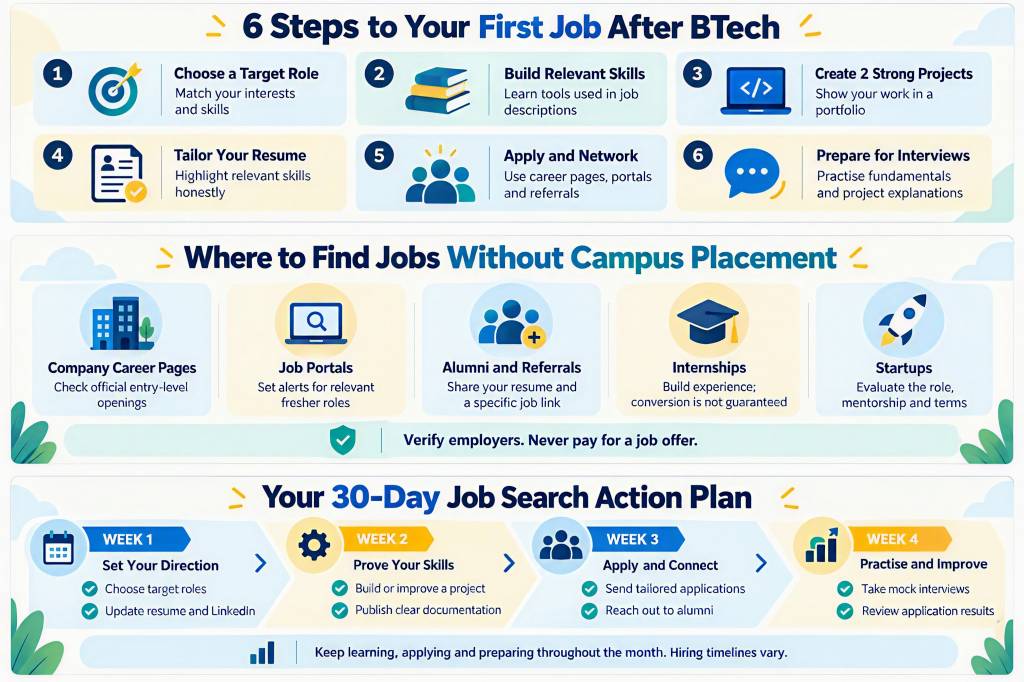
Off-campus hiring is one of the best ways to get a job after college. Companies conduct hiring drives throughout the year. The process usually includes online tests, coding assessments, and virtual interviews. Applying regularly and tracking openings can improve your chances of getting selected. Candidates can check popular job search websites like Naukri.com for latest job opening across various sectors.
Off-campus Placements for Engineering Graduates
Off-campus recruitment has become very popular. Many companies now hire outside college placement programs. Freshers can find openings through company career pages, Naukri job search and other portals, coding competitions, and virtual hiring events. Students who actively monitor these platforms often find opportunities early.
Discover top B.Tech colleges explored by similar minds
Students like you who showed interest in this article are also exploring the following colleges
Want better recommendations?
There is a 90% more chance of getting best college recommendations by sharing preferences.
- Chat with our counselor
- Get your personalised list of colleges & exams matching your preferences
Top Companies Hiring Freshers Off Campus
Many IT companies, product firms, and startups hire freshers through off-campus drives. These companies offer jobs in software development, cloud computing, cybersecurity, testing, data analytics, and operations. Learning relevant skills and applying consistently can help you secure a good role.
Some of the top companies that hire through off-campus recruitment are
Graduate Engineering Trainee
Some of the top companies which hire core engineering graduates include Bosch, Siemens, ABB, Honeywell, L&T, Tata Motors, Volvo Group, and Mercedes-Benz Research & Development India
Product, Tech & Telecom Companies
Google, Microsoft, Amazon, IBM, Cisco, and Salesforce: Offer off-campus software engineering and technical roles, though selection bars are typically higher, Zoho, Flipkart, and Swiggy.
Large IT Services & Consulting
TCS: Hires off-campus through drives like the TCS National Qualifier Test (NQT) for roles across entry and advanced tracks.
Infosys, Wipro, HCLTech, Cognizant, Capgemini, and Accenture: Regularly run off-campus drives and merit-based trainee tracks for software, systems, and engineering roles.
Deloitte, EY, PwC, and KPMG: Recruit engineering graduates into technology, data, and consulting practices.
How to Make Resume for BTech Freshers?
Freshers should create a clear and focused resume by highlighting their technical skills and practical experience. Even without a full-time job, you can showcase projects, internships, certifications, hackathons, and leadership roles. Recruiters prefer resumes that show achievements and real skills. Some important points to note while preparing your resume are mentioned here
Create a Fresher Resume Optimized for ATS
Your resume creates the first impression. Many companies use Applicant Tracking Systems (ATS) to filter applications. An ATS-friendly resume should clearly show your skills, education, projects, internships, and certifications. It should also include important industry keywords. A well-structured resume improves your chances of getting interview calls.
Include These Sections
A good fresher resume should include a career objective, education details, skills, projects, internships, certifications, and achievements. You should also add your LinkedIn profile and GitHub portfolio. A clear structure helps recruiters review your profile quickly. It also improves ATS compatibility.
ATS Keywords to Include
Relevant keywords help recruiters find your resume more easily. Students from computer science background must include keywords like Software Developer, Data Analyst, AI Engineer, Full Stack Developer, Machine Learning, Cloud Computing, and Cybersecurity. These terms match current hiring trends and increase visibility.
Getting Job Through LinkedIn
LinkedIn is one of the best platforms for job seekers. It helps engineering graduates connect with recruiters and companies.
A strong LinkedIn profile works like an online resume. It highlights your skills, projects, certifications, and achievements. Regular networking and engagement can increase your visibility and job opportunities.
How to get a job through LinkedIn?
To get noticed on LinkedIn, optimize your profile with relevant keywords. Add technical projects and certifications. Connect with recruiters and industry professionals. Engage with company posts and industry content. Many graduates receive interview invitations directly through LinkedIn.
Optimize Your Profile
Your LinkedIn profile should clearly show your career goals and technical skills. Showcase your projects, certifications, and achievements. Write a clear headline and professional summary. Regular updates help keep your profile active and professional.
How to Prepare for Job Interviews
Interview performance decides whether you get selected or rejected. Technical interviews test your concepts, coding skills, problem-solving ability, and communication. Regular preparation helps improve confidence and performance.
How to Prepare for Engineering Interviews?
Engineering interview preparation needs a mix of technical study and practice.Review core subjects, revise projects, solve coding questions, and prepare for HR discussions. Mock interviews are also useful. They help identify areas that need improvement.
Coding Preparation
Practice coding regularly on coding platforms. Focus on arrays, strings, data structures, algorithms, and system design. Solving problems consistently improves logical thinking and coding ability.
Aptitude Preparation
Many companies still use aptitude tests in their hiring process. Practice quantitative aptitude, logical reasoning, data interpretation, and verbal ability. Strong aptitude skills can help you clear the first stages of recruitment.
HR Round Preparation
HR interviews evaluate your communication skills, teamwork, and career goals. Prepare answers about your strengths, weaknesses, projects, achievements, and future plans. Be confident, clear, and honest during the discussion.
Learn the Most In-Demand Skills for Engineering Jobs
The job market changes quickly. Employers now prefer candidates with practical and industry-ready skills. Whether you want to work in software, core engineering, AI, or cybersecurity, modern technical skills can improve your job prospects. Learning these skills can help you stand out from other applicants.
Trending Skills in 2027
Skills such as Full Stack Development, Artificial Intelligence, Machine Learning, Data Science, Cloud Computing, Cybersecurity, and DevOps remain in high demand.
Companies need professionals who can build applications, analyze data, automate tasks, and secure systems. Graduates with these skills often get better job opportunities and salaries. Some of the best career options after BTech for various streams are listed here.
For Mechanical Engineering Students
Mechanical engineering students can improve their job prospects by learning design and simulation tools. AutoCAD, SolidWorks, CATIA, ANSYS, and industrial automation skills are highly valued. Employers prefer candidates who can combine theory with practical knowledge.
For Electronics and Electrical Students
Electronics and Electrical Engineering graduates can build careers in embedded systems, robotics, semiconductor design, industrial automation, and IoT. Skills such as PLC programming, VLSI design, PCB design, and embedded systems are in strong demand. These skills can lead to jobs in both private companies and government organizations.
For Computer Science and IT Students
Computer Science and IT graduates have many career opportunities. Companies regularly hire software developers, cloud engineers, AI specialists, cybersecurity experts, and data analysts. Learning programming, development tools, and problem-solving techniques can improve career growth.
Build Real Projects That Impress Recruiters
Projects show your practical skills and technical knowledge. Recruiters often discuss projects during interviews. Good projects demonstrate how you solve real problems. They also strengthen your resume, portfolio, GitHub profile, and interview performance.
Software Engineering Projects
Software projects help demonstrate coding skills and creativity. You can build AI chatbots, e-commerce websites, mobile apps, job portals, or analytics dashboards. These projects help recruiters evaluate your practical abilities and technical knowledge.
Core Engineering Projects
Students from core branches should focus on practical engineering projects. Examples include robotics systems, automation projects, renewable energy solutions, smart irrigation systems, and CAD-based designs. Such projects showcase hands-on experience and strengthen job applications.
Explore more B.Tech exams with upcoming dates

5 Jan '27
JEE Main

1 Nov '26 - 30 Nov '26
21 Sep '26 - 2 Dec '26
5 Dec '26
18 Dec '26
23 Dec '26
1 Jan '27
16 Jan '27 - 23 Jan '27
Internships to Full-Time Jobs
Internships provide real industry experience as they are often the first step toward a full-time job. Many companies hire interns as permanent employees. Even short internships help build skills, improve your resume, and expand your professional network. Candidates can look for AICTE Internship portal to find internship opportunities by various government organisations.
Referrals and Networking for Getting Jobs
Networking is one of the most effective ways to find jobs. Employee referrals often increase your chances of getting interviews. Strong professional connections can also help you discover hidden job opportunities and receive career guidance.
How to get employee referrals?
Build genuine professional relationships instead of directly asking for referrals. Connect with alumni, mentors, industry experts, and former colleagues on LinkedIn. Participate in meaningful discussions and stay engaged. Referrals often come naturally after you build trust.
Alternative Options to Engineering Jobs after BTech
Candidates who do not get a job after BTech can also try other alternative options after engineering like preparing for civil services or any other government jobs if they have interest in government services. Candidates can also look for freelancing jobs.
Government Jobs After BTech
Engineering graduates have a tendency to take up government jobs. Various government organizations, including PSUs, ISRO, DRDO, and BARC, employ engineers in technical jobs. Such jobs demand special preparation but provide stability and career growth opportunities. Candidates having interest in government jobs after BTech must prepare as it has entrance exam followed by interviews.
Remote Jobs and Freelancing
Being a remote worker and freelancer has opened up new avenues for engineering graduates. Freelancing allows you to get exposure, make money, and build a portfolio. Remote working enables you to work for companies from across the world.
Best Career Options After BTech in 2027
The engineers now have many options in terms of the career path to choose from. There is a vast scope for careers like Artificial Intelligence, Machine Learning, Cybersecurity, Cloud Computing, and Data Science.
The job market has seen a massive shift. The companies are now more concerned about skill set, project work, internship work, certifications, and experience. Irrespective of whether you want to be a software developer, AI engineer, data scientist, cloud engineer, PSU officer, or startup engineer, there are many ways to achieve it. Develop skills relevant to the industry and make projects. Optimize your LinkedIn profile, and apply for off-campus jobs.
Read More: Salary Trends of NITs in Last 5 Years; Branch-wise Placement Analysis

Engineering Education & Entrance Exam Expert
Role: Senior News Writer & Content Editor, Shiksha.com
Education: B.Tech in Mechanical Engineering [IET], MA Education Philosophy
Satyendra Singh is an Engineering gradua
Read Full Bio