


By: Sachin Kumar Singh
Complete the syllabus with a focus on covering all the subjects and take out time for revision with undivided attention, sheer determination and discipline to achieve good results in JEE Advanced.

JEE Advanced exam is fast approaching and I hope you guys are preparing for the same in full swing with enthusiasm and dedication. I am sharing my views and a few tips which might help you in your exam preparation as well as for attaining good scores. As per new directions, over 2.40 lakh candidates are shortlisted to appear for JEE Advanced and they must have aggregate marks of 75% in Class 12.
Explore colleges based on JEE Advanced
Want better recommendations?
There is a 90% more chance of getting best college recommendations by sharing preferences.
- Chat with our counselor
- Get your personalised list of colleges & exams matching your preferences
Begin with mock tests
Every candidate appearing for JEE Advanced should begin with taking as many mock tests as one can. Mock Tests help in understanding the exam pattern and the weightage of each section or topic which in turn will help in managing the time wisely and making a tight schedule covering all the subjects on the basis of priority. There is stiff competition in JEE Advanced as compared to JEE Main. Keeping the level of competition in mind, I would advise you all to avoid taking any risk during your preparations.

Commonly asked questions
JoSAA (Joint Seat Allocation Authority) has been set up by the Ministry of Human Resources Development (MHRD) to manage and regulate joint seat allocation for admissions to over 100 institutes including IITs, NITs, IIITs, and Other-Government Funded Technical Institutes (Other-GFTIs). Admissions to all these institutes will be done through a single platform. The idea behind introducing a single counselling platform was to reduce thousands of seats going vacant in engineering colleges across the country. The Joint seat allocation process was introduced to make the whole process of admissions smoother, effective, efficient, transparent and a lot faster. Candidates who qualify for the JEE Main or JEE Advanced must register for JoSAA 2025 to participate in the counselling and admission process for various renowned engineering institutes across India. The admission process for admissions in 23 IITs, 31 NITs, 25 IIITs, and 28 Other-Government Funded Technical Institutes (Other-GFTIs) is managed by The Joint Seat Allocation Authority (JoSAA). Candidates will be allotted seats in various rounds of JoSAA counselling. The seat allotment through JoSAA will be based on the merit of candidates and their preference for courses and colleges.
Determination and dedication are the two main Ds which one should have in plenty. It's the mind which helps you achieve whatever your dreams or goals are and at the same time acting on it. To preparae for JEE Advanced in one year, candidates must consider the following:
- Make formulae sheets along with your preparation, you can also use 100 marks mind maps.
- Keep marking tricky questions to look upon at the time of revision.
- Always solve questions in time constraints.
- It is not at all necessary to attempt questions in a specific order, start with the easiest.
- You only have 1 year, focus on problem-solving tactics rather than analysis of questions.
- If a reverse approach is easy then use it rather than following full solution procedure.
- Go with few books, clear your basics and keep yourself attached to the school curriculum.
- Study all three subjects daily, you may decide timings according to your convenience and do it consistently and eventually, you will surely secure a good rank. 9. Have faith in yourself.
- There will be times when you would find it difficult to understand and manage things. Do not give up. That is the point where many aspirants give up and finally fail. Keep giving your best, even if you feel like you aren't getting any output. Remember, hard work pays forever.
JEE Advanced syllabus can sometimes feel like an infinite sea. So, candidates can get overwhelmed. Thus, here is what to do:
- Firstly, it is crucial to keep yourself updated with the ongoing chapters in your class. It is highly recommended to read ahead of what you are being taught in class. This technique has been proven to be helpful for every person who believed themselves to be average and not incredibly smart.
- Secondly, it is essential to mark the difficulty level of the questions when you attempt them for the very first time. This way, you can categorize them according to their level of difficulty. Then, it is recommended to revise the theory and revisit the marked questions. You should filter out the questions again accordingly to their level and mark them differently for Mains and advanced. (Note: This idea works for inorganic chemistry too but it must be learned by heart first.). Now, whenever you feel the need to revise any topic, just go through the marked questions. If you can do them, practice past year questions. In case you get stuck, you can always refer to your notes or clear your doubts during doubt sessions. This technique is believed to be the best method for effective learning.

Subject-wise preparation tips
In order to ensure that you are on the right track make sure that you solve all the questions and examples from NCERT of all the three subjects (Physics, Chemistry and Mathematics). Also, I advise not to keep NCERT as a second reference.
Explore more B.Tech exams with upcoming dates
VITEEE


30 Oct '26
1 Jun '26 - 31 Oct '26
31 Oct '26
7 Nov '26
JEE Main
1 Nov '26 - 30 Nov '26
1 Nov '26 - 30 Nov '26
18 Dec '26
9 Jan '27 - 10 Jan '27
In Mathematics, solve as many questions as possible from various topics like Calculus, Algebra, Trigonometry, Coordinate, Permutation and Combination. You can refer to R.D. Sharma and study material provided by a good coaching centre for practice.
In Physics, D.C. Pandey and H.C. Verma would be a better option. First, build your concept then solve problems. Take help from online tutorial videos and with this invest your time in self-study. Give utmost importance to subjects like Laws of Motion, Heat and Thermodynamics and Electrostatics.
In Chemistry, there is a lot of scope to learn in Physical Chemistry so ensure that proper time is allotted to the subject. In addition, practice other subjects like Electrochemistry and Block Elements.
Also, divide your chapters into Easy, Medium and Hard categories as per your preparation and convenience. Always write the formulae while revising and make a separate note of it. Track your problem-solving speed and time, and put maximum focus on the numerical part.
Practice and revise
I would suggest solving the previous five years question papers this would help in enhancing the accuracy and speed and would also help in analysing the difficulty level and understanding the gaps. At the time of revision, focus on the concepts, as it would help in eliminating the scope of any confusion during the exam.
You can achieve good results only when you prepare for exams with undivided attention, sheer determination and discipline. So, stay positive and stick to a balanced routine and don’t think too much about the results rather focus on your practice.
About the Author:
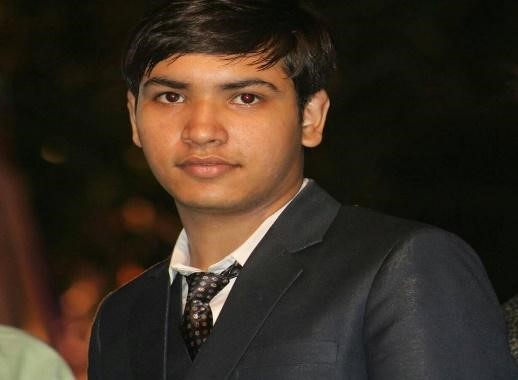
Sachin Kuman Singh recently completed his Bachelor of Technology in Civil Engineering from KIIT, Bhubaneshwar. Currently, he is working with Simplex Infrastructures Limited as a Graduate Engineer Trainee. He is also a state-level athlete
News & Updates
Explore Other Exams
Oct '26 | JEE Main 2027 Registration Ses... |
Dec '26 | JEE Main 2027 Correction Windo... |
Oct '26 | SRMJEEE 2027 Notification |
Nov '26 | SRMJEEE 2027 Registration Phas... |
Feb '27 | COMEDK Application Form 2027 |
Feb '27 | COMEDK Mock Test Release Date ... |
19 Oct '26 - 15 Mar '27 | MET 2027 application form - Ph... |
Mar '27 | MET 2027 application form star... |
Dec '26 | BITSAT 2027 Application Form S... |
Mar '27 | BITSAT 2027 Form Correction Se... |
19 Aug '26 - 20 Aug '26 | TS EAMCET 2026 MPC Counselling... |
12 Aug '26 - 17 Aug '26 | TS EAMCET 2026 MPC Counselling... |
Student Forum
 Anything you would want to ask experts?
Answered a week ago
IIT Tirupati BTech cutoff 2026 for the BTech course ranged from 6030 (CSE) to 17682 (Civil Engineering) in the last round (Round 5) for the General AI category. To know the IIT Tirupati cutoff category-wise for 2026 for the BTech course, see the table below. Please note that these are closing rank
N
Contributor-Level 10
Answered a month ago
You are not eligible for JEE (Advanced) 2027 because your first appearance for Class 12 was in 2025. For JEE (Advanced) 2027 candidates must have taken their Class 12 (or equivalent) examination for the first time in either 2026 or 2027. Since your first appearance was in 2025 you fall outside this
S
Contributor-Level 10
Answered a month ago
Yes, Indian students can apply for TU Munich Admissions directly after Class 12th, provided they meet the minimum qualifying JEE Advanced score requirement and other program-specific entry requirements.
Students without a JEE Advanced score, will either have to enroll in the Studienkolleg or complete
A
Contributor-Level 10
Answered a month ago
Technical University of Munich generally accepts a JEE Advanced score only for the immediate academic intake to the year the exam was passed (usually within one year).
Universities like TU Munich assess students based on current admission rules, and hence using a scorecard older than admission year i
A
Contributor-Level 10
Answered a month ago
No, the Technical University of Munich does not accept JEE Advanced scores for Master's programs. For entry to PG programs, students need to have completed a UG degree from a recognised Indian college or university, submit relevant documents, and meet the program-specific criteria.
Check TU Munich Ad
A
Contributor-Level 10
Answered a month ago
While evaluating opening and closing rank trends, JEE Advanced cutoffs, and branch allocation dynamics for civil engineering at IIT Bhubaneswar provides a helpful baseline for your academic planning, Lovely Professional University (LPU) serves as an excellent alternative to elevate your engineering
A
Contributor-Level 7
Answered a month ago
The IIT GANDHINAGAR JEE Advanced closing ranksfor the General (open) female only category in 2026 ranked from roughly 5,437 for computer Science and engineering up to 20270 for civil engineering.
m
Beginner-Level 1
Answered a month ago
IIT BHU CSE cutoff 2026 ranged from 1436 in the first round to 1439 in the last round for the General category under the All India quota. Hence, a rank of at least 1439 is needed to qualify for admission to the CSE course. Check the table below to know the overall cutoff range for other categories.
| Category | IIT BHU CSE cutoff 2026 |
|---|---|
| General | 1436 - 1439 |
| OBC | 601 - 601 (R1) |
| SC | 313 - 373 |
| ST | 161 - 170 |
| EWS | 245 - 245 (R1) |
| PWD | 66 - 66 (R1) |
N
Contributor-Level 10
Answered a month ago
IIT BHU JEE Advanced cutoff 2026 ranged from 601 to 7870 in the first round for the OBC AI category. In the last round, the closing cutoff ranged from 601 to 9002 for the aforementioned category. Check the table below to know the Round 1 and last round closing cutoffs for different courses.
| Course | Round 1 Cutoff 2026 | Last Round Cutoff 2026 |
|---|---|---|
| B.Tech. in Computer Science and Engineering | 601 | 601 |
| B.Tech. in Mathematics and Computing | 826 | 845 |
| B.Tech. in Electronics Engineering | 1167 | 1189 |
| B.Tech. in Electrical Engineering | 1497 | 1529 |
| B.Tech. in Mechanical Engineering | 2760 | 3175 |
| B.Tech. in Chemical Engineering | 3394 | 3609 |
| B.Tech. in Engineering Physics | 3490 | 3620 |
| B.Tech. in Civil Engineering | 3834 | 3980 |
| B.Tech. in Materials Science and Technology | 3886 | 4257 |
| B.Tech. in Metallurgical Engineering | 4269 | 4494 |
| B.Tech. in Industrial Chemistry | 4389 | 4681 |
| B.Tech. in Biomedical Engineering | 4798 | 5067 |
| B.Tech. in Biochemical Engineering | 4877 | 5156 |
| B.Tech. in Ceramic Engineering | 4899 | 5245 |
| B.Tech. in Mining Engineering | 5031 | 5329 |
| B.Tech. in Pharmaceutics Engineering and Technology | 5424 | 5776 |
| Bachelor of Architecture (B.Arch.) | 7870 | 9002 |
N
Contributor-Level 10
Answered 2 months ago
IIT Gandhinagar JEE Advanced cutoff 2026 for the General AI female category ranged from 5437 (CSE) to 20270 (Civil Engineering). Students can check the table below to know the last round cutoff range for other female categories.
| Category | IIT Gandhinagar JEE Advanced cutoff 2026 |
|---|---|
| General | 5437 - 20270 |
| OBC | 2700 - 9008 |
| EWS | 981 - 3973 |
| ST | 369 - 1941 |
| SC | 802 - 4390 |
| PWD | 225 |
N
Contributor-Level 10