
 5 Videos,
IIT Kanpur: Cutoff 2026, Fees, Courses, Placement, Admission and Ranking


- Public/Government Institute
- Estd. 1959
 Last updated on 7 Oct '26
IIT KanpurWhat's new?

IIT Kanpur admissions 2026 are currently open for several courses. A few more updates are given below:
- IIT Kanpur has recently launched 4 new MTech courses. Admissions to the courses are offered on the basis of GATE scores, and are currently ongoing.
- GATE 2027 Registration extended closing for admission to the ME/MTech and Phd courses with late fee is Oct 12, 2026.
- The IIT JAM 2027 registration process for admission to the MSc course will conclude on Oct 12, 2026.
- CEED 2027 online registration for admission to the MDes course with regular fee will be ongoing till Oct 31, 2026. Further exam will be conducted in offline mode on Jan 17, 2027.
- The JEE Main 2027 session 1 exam dates have been announced on the official website for admission to the BTech, BArch and BPlan courses. The exam will be held on Jan 22, 2027 to Jan 24, 2027 and Jan 28, 2027 to Jan 30, 2027 respectively.
IIT Kanpur Highlights 2026
Indian Institute of Technology Kanpur, also known as IIT Kanpur or IITK, is a public engineering institute. Approved by the All India Council for Technical Education (AICTE), IIT-K was the first-ever Indian institute to offer formal Computer Science education. The institute has an extension centre set up in Noida for outreach activities. Want to take admission at IIT Kanpur? Check out some of the key highlights below:
- Flagship Course: BTech is IITK's flagship course, offered across multiple specialisations. Popular options include Computer Science and Engineering, Civil Engineering, and Aerospace Engineering. Other popular courses at IIT-K are BTech MBA, BS, BTech MTech, BS MS, MTech, MSc, MDes, MBA, MS, and PhD.
- IIT Kanpur fee: IIT Kanpur fees vary depending on the course you choose. IIT Kanpur fees for 4 years btech is INR 8 lakh. Meanwhile, management program fees range from INR 7 Lakh (MBA) to INR 18 Lakh (PGP in Manufacturing for Executives for Visionary Leadership). IIT Kanpur Fee Structure 2026
- IIT Kanpur admissions are completely entrance-based. For flagship BTech admission, JEE Main + JEE Advanced + JoSAA is required. As IITK is one of the leading Engineering institutes of the country, the cutoffs go extremely high for all courses, especially for BTech. Whereas, IITK MTech admission is through GATE + COAP.
- Other Accepted Exams: Other than JEE & GATE, the institute also accepts CAT, IIT JAM, CSIR NET, UGC NET, JEST, CEED, and GMAT depending on the programmes.
- IIT Kanpur Cutoff 2026: JEE Advanced cutoff 2026 is out now for BTech & BSc admissions. The closing ranks ranged from 276 to 10552 for the General AI category students in the first round. BTech CSE is currently the most competitive branch with a cutoff of 276 for the General category in the early rounds and going up to 283.
- Placements: IIT Kanpur's Phase I placements for the 2025-26 batch concluded with 250+ organisations participating across on-campus, virtual, and hybrid modes. Top companies extended a total of 1,202 job offers, of which students accepted 1,079 offers (including Pre-Placement Offers). Notably, 15 students secured international offers from companies in Europe, Japan, Korea, and the United States. Major recruiters included Accenture, Airbus, American Express, BlackRock, Boeing, Databricks, Deutsche Bank, ICICI Bank, Mastercard, Meesho, Navi, PwC, Qualcomm, Samsung, InMobi, and Square Point Capital, along with PSUs like BPCL, BEL, MIDHANI, and EIL.
- IIT Kanpur MBA Placements: As per IIT Kanpur MBA Summer Placement Report 2024-26, the batch recorded 100% placement, with all 57 students securing internships through 22 participating recruiters. On the stipend front, the highest stipend stood at ₹1,70,000 per month, with the top 25% of students earning ₹1,52,000 per month or more, an average stipend of ₹93,000 per month, and a median stipend of ₹75,000 per month. Top recruiters included companies such as Mastercard, Accenture, ICICI Bank, HDFC Bank, Dell Technologies, RBI, Amul, Dabur, IndiaMART, and Volvo Eicher, among others.
- Scholarships: IITK offers merit-based, need-based, and special awards for meritorious students and financial assistance.
- Rankings: NIRF has ranked IITK 5th in the ‘Overall’ and 4th in the ‘Engineering’ category in the 2025 Rankings. While QS World University Rankings 2027 placed the institute at 221 position.
- Notable Alumni: IIT Kanpur has several acclaimed alumni, including Ashwini Vaishnaw (Indian politician & former IAS officer), Som Mittal (Indian Business Executive), Prakash Bare (Indian Theater & Film Actor), etc.
- International Collaborations: IITK has collaborated with Imperial College London and Deakin University.
- Location: IIT Kanpur campus area in acres is 1,055. The institute is located on Grand Trunk Road, about 15 km west of Kanpur city, Uttar Pradesh. IIT Kanpur pincode is 208016.
Download:

Commonly asked questions On Highlights

The institute has not released the placement report incorporating the overall data for the 2026 drive. However, the institute have disclosed the 2026 placement statistics till Phase I. As per the reports, over 250 recruiters participated and presented 1202 offers to the students. 1079 students were placed, of which 15 students have got international placements.
IIT Kanpur offers MBA via Department of Management Sciences (DoMS). The MBA course of the institute has been ranked by various agencies. Under the 'Management Category', NIRF ranked IIT Kanpur at 23rd position in 2023 rankings. Business Today also ranked IIT Kanpur at 32 position. Talking about placements, IIT Kanpur highest package recorded for MBA was INR 24 LPA. The median CTC was INR 17.25 LPA.
In Summer Placement (2022-24), the highest stipend offered to students was INR 17.01 lakh whereas, median stipend was INR 1 lakh.
As per the verified students' reviews on Shiksha, top companies, such as Barclays, Flipkart, Qualcomm, Bajaj, HSBC, Tata Motors and Intel come for final placements at IIT Kanpur for MTech. Students get roles from technical research profiles to analytical roles. Additionaly, the institute in 2022 recorded a the highest domestic package of INR 1.9 crore per annum (not just for M.Tech but overall across courses).
As of now, the institute has released the phase-I placement statistics. A total of 1079 students were placed and 1202 job offers were distributed among them. Check the complete insights of IIT Kanpur placements 2026 from the table below:
Particulars | Placement Statistics (2026) Phase I |
|---|---|
Total job offers | 1202 |
Students placed | 1079 |
International offers | 15 |
Top Recruiters | Accenture, American Express, BlackRock, Boeing, Databricks |
IIT Kanpur Cutoff 2026
The JEE Advanced 2026 last round cutoff round 5 have been released for IIT Kanpur BTech admissions. During the fifth round of admission, the closing ranks ranged from 283 to 7837 for the General AI category candidates. Under IIT Kanpur B.E. / B.Tech course, the lowest cutoff rank released for B.Tech. in Computer Science and Engineering, making it the most competitive for admission. IIT Kanpur B.Tech. in Computer Science and Engineering cutoff 2026 stood at 283 in the fifth round for the General category.
Entrance Exams and Cutoff Range (Across All Categories)
| Course | Exam | Cutoff Range |
|---|---|---|
| BTech | JEE Advanced | 3 - 7,837 |
| BS (Earth Science) | JEE Advanced | 72 - 11,668 |
| B.S (Stats & Data Science) | JEE Advanced | 207 - 1,409 |
| MTech | GATE | 226 - 967 |
| MSc | IIT JAM | 21 - 4,990 |
| MBA | CAT | 75- 85 |
| MDes | CEED | 35 - 48 |
IIT Kanpur JEE Advanced Cutoff 2026
Admission to B.Tech, BS, and B.S programmes at IIT Kanpur is based entirely on a candidate's JEE Advanced rank. As per the latest 2026 cutoff (Round 5), the overall closing rank across all categories stood at 3 to 7,837 for B.Tech, 72 to 11,668 for BS, and 207 to 1,409 for B.S.
Among the various specialisations, B.Tech Computer Science and Engineering, BS Mathematics and Scientific Computing, and B.S Statistics and Data Science remain the most sought-after choices for JEE Advanced qualifiers.
• B.Tech Computer Science and Engineering: In 2026, the closing rank for the General category stood between 276 and 283 in Round 5.
• BS Mathematics and Scientific Computing: The General category closing rank for 2026 came in at 1,258 to 1,270 in Round 5.
• B.S Statistics and Data Science: For 2026, the General category closing rank was recorded between 1,299 and 1,409 in Round 5.
Check detailed IIT Kanpur cutoff for various courses below:
MBA/PGDM CAT Cut Off 2025: Year-Wise percentile
| Section | 2025 |
|---|---|
| Overall | 90 |
| Quants | 50 |
| VA-RC | 50 |
| DI-LR | 50 |
 Cut-off data is indicative and not official.
 4
4
GATE Last Round score (General-All India)
JEE Advanced Round 5 Closing Rank (General-All India)
| Course | 2024 | 2025 | 2026 |
|---|---|---|---|
| B.Tech. in Computer Science and Engineering | 252 | 271 | 283 |
| B.Tech. in Electrical Engineering | 1290 | 1124 | 1171 |
| B.Sc. in Mathematics and Scientific Computing | 990 | 1025 | 1270 |
| B.S. in Statistics and Data Science | 1030 | 1129 | 1409 |
| B.Tech. in Intelligent Systems | – / – | – / – | 1134 |
Commonly asked questions On Cutoffs
The cut off rank in Round 6 for B.Sc. in Chemistry is 11824 which is very close to this range. This was for general category under All India quota. Unless the candidate belongs to some other category or domicile, one can not afford to score less than this. With this rank, there is a probability of getting admission however since, the cut offs keep changing from round to round, better ranks definitely increases your chances of getting admission in IIT Kanpur - Indian Institute of Technology.
IIT Kanpur also accepts GATE exam scores for the admission to M.Tech courses. Candidates with 700 score can easily get admission to any course except Discontinued (Jul 2023)-M.Tech. in Microelectronics and VLSI at IIT Kanpur. The IIT Kanpur cutoff 2024 stood between 622 and 840 for the General AI category candidates. The toughest and the easiest course to get into IIT Kanpur were Discontinued (Jul 2023) - M.Tech in Microelectronics and VLSI and Discontinued (Jul 2023)-M.Tech. in Power Engineering for the General AI category candidates. Further, candidates can check out courses available under 700 score at IIT Kanpur:
The rank needed to get into IIT Kanpur would depend on the category and branch chosen. For the General AI category, the highest rank admissible was 900 for the Integrated PhD in Sustainable Energy Engineering programme.
To know the maximum rank required by other categories, check the table below.
| Category | Highest Acceptable Rank 2026 |
|---|---|
| General | 900 |
| OBC | 1322 |
| SC | 3192 |
| ST | 3515 |
| EWS | 1459 |
| PWD | 3002 |
IIT Kanpur JEE Advanced 2025 cutoffs have been published for admission to various BTech programmes. In Round 6, JEE Advanced cutoffs for 2025 varied between the 271 and 2771 values. Notably, the BTech in CSE is highly competitive among General category students under the All India Quota, with a the lowest Round 6 cutoff rank of 271.
IIT Kanpur Courses & Fees 2026
Indian Institute of Technology Kanpur also offers BTech as its flagship programme across multiple specialisations in full-time mode for a duration of 4 years. Below are some more details around IITK BTech course:
Specialisations:
- Computer Science and Engineering
- Civil Engineering
- Aerospace Engineering
- Chemical Engineering
- Electrical Engineering
- Biological Science and Bioengineering
- Material Science and Engineering
- Mechanical Engineering
IIT Kanpur Fees 2026
The IIT Kanpur Fee ranges between INR 2k - INR 18 lakh for the total tuition fee. The total fee depends upon the choice of course and specialisations. The total fee is inclusive of various fee components such as tution fee, hostel fee (if opted), admission fee, and security deposits. The fee is to be paid annually or semester wise with some of the components to be paid once. The IIT Kanpur fees for 4 years BTech is INR 8 lakh. The insitute also offers Certificate courses for shorter durations with their fee ranging between INR 2k - 1.45 lakh. The IIT Kanpur Hostel fee is approx INR 15k for each semester with fee varients of hostel seat rent, water charges and establishment charges.
To know more on IIT Kanpur Courses and Fees check the table below:

Commonly asked questions On Popular Programs
BTech CSE is the most sought after BTech specialisation at IIT Kanpur. The course is offered in full-time mode for a span of 4 years. BTech CSE students at IITK have bagged excellent placement packages over the years. In 2024, the vaerage package for BTech CSE stood at INR 52.8 LPA.
Further, the course curriculum offers a strong foundation in Science and maths in the first 2 years, followed by highly advanced professional courses and electives in the last 2 years of the course. It is also the most competitve BTech branch with a closing cutoff rank of 271 in 2025.
IIT Kanpur offers the M.Tech programme in 15 specialisations, including Aerospace Engineering, Computer Science & Engineering, Materials Science & Engineering, Electrical Engineering, Mechanical Engineering, Environmental Engineering & Management, Photonics Science & Engineering, Sustainable Energy Engineering and Earth Sciences. All these specialisations together have a total intake of 736 students spread unevenly.
Mechanical Engineering at IIT Kanpur is a 4-year programme offered in full-time mode. The curriculum covers areas such as applied mathematics, scientific computing, and foundational engineering sciences. IITK offers electives in core areas including Fluid Mechanics, Thermodynamics and Structure and Properties of Materials, Engineering Design and Graphics, and Advanced Mechanics of Solids.
The IIT Kanpur M.Tech course curriculum focuses on core areas of:
- Microelectronics and VLSI (MVLSI)
- Power Engineering (PE)
- RF and Microwaves (RF)
- Signal Processing, Communication and Networks (SPCOM)
- Control and Automation (CA)
- Optoelectronics and Optical Communication (OPTEC)
IIT Kanpur Placements 2026
IIT Kanpur has successfully wrapped up Phase I of campus placements for the 2025-26 graduating batch, conducted through a flexible mix of on-campus, virtual, and hybrid hiring modes to maximise accessibility for both recruiters and students.
Key Highlights
The major highlights of IIT Kanpur placements 2026 are listed below:
- 250+ organisations participated in Phase I, spanning a diverse range of sectors.
- A total of 1,202 job offers were extended, out of which students accepted 1,079 offers (including Pre-Placement Offers).
- 15 students secured international offers from companies based in Europe, Japan, Korea, and the United States.
- Phase II placements are scheduled to begin from mid-January 2026, with the institute expecting even stronger global opportunities in this phase.
Top Recruiters
IIT Kanpur Placements Phase I saw participation from several leading domestic and international companies, including: Accenture, Airbus, American Express, BlackRock, Boeing, Databricks, Deutsche Bank, ICICI Bank, Mastercard, Meesho, Navi, PwC, Qualcomm, Samsung, InMobi, and Square Point Capital, among others. Several Public Sector Undertakings (PSUs) also participated actively, including BPCL, BEL, MIDHANI, and EIL.
IIT Kanpur MBA Placements
The institute has released the MBA placement report 2025. The highest package offered during the IIT Kanpur MBA placements 2025 was INR 36 LPA. The average package secured by the MBA batch 2025 was INR 17.2 LPA.
As per the IIT Kanpur MBA Summer Placement Report 2024-26, all 57 students secured internships through 22 recruiters. The highest stipend was ₹1.70 lakh per month, while the average and median stood at ₹93,000 and ₹75,000, respectively. The batch had an 88:12 male-female ratio and an average work experience of 18 months. IT/Consulting and BFSI were the leading recruiter sectors. Marketing roles accounted for the highest share at 33%, followed by Analytics (21%) and IT/Consulting (18%). Major recruiters included Mastercard, Accenture, ICICI Bank, HDFC Bank, RBI, Amul and Dabur.
| Course | Median Salary |
|---|---|
| B.E. / B.Tech | ₹19.4 LPA |
| M.E./M.Tech | ₹14.7 LPA |
| B.Sc. | ₹19.4 LPA |
Top Recruiters

Insights on Placements
Based on 146 Student Responses
Internships and industry projects
Students can work with faculty on research projects
Employment opportunities
Many students started their own start-ups
Higher studies preferences
Both inside India & outside India
Placement support
Organized & proactive placement process
Alumni network
Strong alumni network that help with placement opportunities
Entrepreneurship cell
Very Active and resourceful, college is also involved
Overall feeling of students
Love being in college
Commonly asked questions On Placements
IIT Kanpur has not released course-wise placements information so far for 2022-23 Phase-I placements (which got over in December). According to media reports, phase 1 of the placement session 2022-23 concluded with 1,200 job offers received from over 250 companies. IIT Kanpur the highest package (domestic) stood at INR 1.9 crore per annum. The recruitment drive witnessed 74 international offers and 208 PPOs and a total of 1,198 students accepted the job offers. Further, 33 students received packages of above INR 1 crore per annum during IIT Kanpur placements 2023. For more details on IIT Kanpur placements, click here.
The overall IIT Kanpur highest package has not been released yet. Take a look at the table below to know the IIT Kanpur highest package trends for MBA:
Course | Highest Package (2023) | Highest Package (2024) | Highest Package (2025) |
|---|---|---|---|
MBA | INR 24 LPA | INR 24 LPA | INR 36 LPA |
The IIT Kanpur CSE average package for the BTech academic year 2023-24 stood at INR 52.80 LPA. The institute has also released the IIT Kanpur average package 2024 for other branches, which is presented below:
| Branch | Average Package (2024) |
|---|---|
| MBA | INR 18.20 LPA |
| AE* | INR 20.10 LPA |
| BSBE* | INR 13.80 LPA |
| CE* | INR 16.30 LPA |
| CHE* | INR 18.90 LPA |
| CSE* | INR 52.80 LPA |
| EE* | INR 27.60 LPA |
| ME* | INR 19.70 LPA |
| MSE* | INR 17.30 LPA |
*The statistics mentioned above are gathered from public sources and are for BTech.
IIT Kanpur Admission & Application Process 2026
Admission to IIT Kanpur is governed primarily by a candidate's performance in the relevant entrance examination, followed by a structured counselling process. The institute offers admission to a wide range of programmes, including BTech, MTech, MBA, MSc, MDes, MS, and PhD, each with its own specific eligibility and selection criteria.
For undergraduate admissions, candidates are selected on the basis of a valid JEE Advanced score. As per the JoSAA seat matrix for 2026, IIT Kanpur has a total of 1,210 seats available across its B.Tech programmes. For those applying to the MBA programme, a bachelor's degree in a relevant field from a recognised university is required, while PhD admissions call for a master's degree with qualifying marks in the relevant discipline. Candidates applying for MSc courses need a valid JAM score, and those seeking MDes admission are selected on the basis of their CEED score.
Download:
IIT Kanpur PG Admission 2026 Guidelines
IIT Kanpur MBA Admission Guidelines 2026
Eligibility & Selection Criteria
Candidates seeking admission at IIT Kanpur must note that eligibility and selection criteria vary here as per the course. Check out the course-wise eligibility and its selection criteria below:
| Course | Eligibility | Selection Criteria |
|---|---|---|
| BTech/BS | 10+2 | JEE Advanced + JoSAA |
| MTech | Bachelor's Degree | GATE/Written Test + COAP Counselling |
| MSc | Bachelor's Degree | JAM + CCMN |
| MDes | BDes | CEED |
| MBA | Bachelor's Degree | CAT |
| MS | Bachelor's/Master's Degree | GATE/CSIR/JRF/NET/COGJET |
| PhD | Master's Degree | Written Test + Interview |
How to Apply for IIT Kanpur Admissions 2026?
The application process differs slightly depending on the programme a candidate is applying for:
BTech: Candidates selected through JoSAA counselling need to pay the applicable B.Tech fee and report to the college with the required documents for verification.
MTech: After registering for COAP, candidates must fill out the M.Tech application form on the official website and pay an application fee of ₹500 (General/EWS/OBC/OBC-NCL) or ₹250 (SC/ST/DAP candidates).
MBA: Candidates need to fill out the application form on the official website, pay the applicable fee (₹500 or ₹250, depending on category), and submit the form.
MSc: Candidates allotted seats through CCMN counselling must report to IIT Kanpur along with all required documents for verification.
MDes: After qualifying CEED, candidates need to complete the application form online and pay the applicable fee.
MS/PhD: Candidates must visit the official website, fill out the application form, upload the required documents, and pay the applicable application fee.
Check: IIT Kanpur Admission 2026 through Olympiad
IIT Kanpur B.Tech Admission Process 2026
IIT Kanpur's B.Tech programme is offered across several specialisations, including Electrical Engineering, Mechanical Engineering, Civil Engineering, Aerospace Engineering, and Chemical Engineering, etc. Admission to these programmes follows a fairly structured, step-by-step process:
1. Candidates must ensure they meet the eligibility criteria for undergraduate admission at IIT Kanpur.
2. They then need to appear for and qualify both JEE Main and JEE Advanced.
3. Once results are declared, candidates who meet the required cutoff can go ahead and register for JoSAA counselling.
4. During this process, candidates have to list IIT Kanpur as their preferred institute, along with their preferred course choices.
5. Those who satisfy the institute's cutoff proceed further in the admission process, with seat allotment based on their entrance exam performance.
6. Finally, provisional admission is confirmed once the candidate completes verification of documents and pays the applicable IIT Kanpur fee.
IIT Kanpur Admission 2026: Documents Required
Candidates seeking admission at IIT-K must keep the following documents ready along with correctly attested copies at the time of admission:
• Passport-size photograph
• Degree certificate
• Class 10 marksheet
• Class 12 marksheet
• Entrance examination scorecard
• Caste certificate (if applicable)
Check: Financial Assistance to M.Tech./M.Des./MS Students
Candidates can check the IIT Kanpur admission dates 2026 in the table provided below:
B.E. / B.Tech Admissions 2027
 Eligibility
- 10+2 with 75% aggregate
- Accepting Exams: JEE Main, JEE Advanced, CBSE 12th, ISC, UP 12th
 Important dates
| Dates | Events |
|---|---|
Oct '26-Nov '26 | JEE Main 2027 Registration Session 1Tentative |
Jan '27 | JEE Main Admit Card 2027 Session 1Tentative |
22 Jan '27 - 24 Jan '27 | JEE Main 2027 Exam Date Session 1 |
M.E./M.Tech Admissions 2027
Eligibility- Undergraduate Degree with 55% aggregate
- Accepting Exams: GATE
Important dates| Dates | Events |
|---|---|
12 Oct '26 | GATE 2027 Registration Last Date With Late FeeOngoing |
Jan '27 | GATE 2027 Admit CardTentative |
6 Feb '27 | GATE 2027 Exam- Day 1 |
M.Sc. Admissions 2027
Eligibility- Undergraduate Degree with 55% aggregate
- Accepting Exams: IIT JAM, GATE
Important dates| Dates | Events |
|---|---|
11 Sep '26 - 19 Oct '26 | IIT JAM 2027 Application ProcessOngoing |
Nov '26 | IIT JAM 2026 Form CorrectionTentative |
14 Feb '27 | IIT JAM 2027 Exam Day |
Commonly asked questions On Admissions
Students who want admission to MTech at IIT Kanpur should have a bachelor's degree in Engineering or Science (4-year course) or must have completed their master's degree in Science with the specified marks. A relaxation of 5% aggregate or 0.5 CPI is offered to reserved category candidates.
As per the details collated from various sources on the internet, a student must have a GATE rank up to 200 or below for admission to M.Tech at IIT Kanpur. While there is no minimum GATE score for IIT admission, the minimum rank/ score requirement depends completely on the individual institutes participating in the admission process. However, keeping the past cut off trends in mind, candidates must score a GATE rank of up to or below 200 and their minimum GATE score must be between 400-800. The closing ranks of GATE COAP 2022 for the General All India category are as follows:
Course | COAP Round 9 score (General-All India) 2022 |
|---|---|
717 | |
678 | |
650 |
IIT Kanpur only offers merit-based admission for all the courses. The institute accepts JEE Advanced scores for admission to BTech. Candidates need to pass JEE Main exam prior to appearing for JEE Advanced. Apart from its flagship programme, Indian Institute of Technology (IIT Kanpur) offers BSc, BS, MTech, MSc, MDes, MBA, along with a few Dual Degree programmes. Admission to all courses is based on scores obtained in the entrance examinations such as GATE, IIT JAM, CEED and CAT. Along with UG and PG courses, IIT Kanpur also offers PhD in various specialisations, admisison to which again is entrance-based.
IIT Kanpur conducts the application process online. The step-wise application process is mentioned below:
- Open the official website and register.
- Fill in the required info and complete the registration.
- Fill the detailed application form by providing information around educational qualifications, parents' details, address of communication and permanent address, and exam center preference.
- Upload scanned images of passport-size photographs and signature.
- Pay the application fee.
- The application will be automatically submitted after the successful application amount payment.
IIT Kanpur Rankings 2026
IIT Kanpur has consistently been ranked by the NIRF in multiple categories, like overall, engineering, management, law, etc. Also, the institute is ranked by QS World Rankings and many other organisations. While NIRF 2026 report is yet to be released, other leading bodies have already started releasing the latest rankings. Based on QS World Rankings, the institute has gone up a position from 222 in 2026 rankings, to 221 in 2027 rankings.
|
Ranking body |
Category |
Ranks |
|---|---|---|
|
QS World Rankings 2027 |
World University |
221 |
|
NIRF 2025 |
Engineering |
4 |
|
NIRF 2025 |
Overall |
5 |
|
NIRF 2025 |
Innovation |
5 |
|
NIRF 2025 |
Research Institutions |
6 |
|
NIRF 2025 |
Management |
27 |
|
QS World University Rankings 2026 |
World University |
222 |
|
QS World University Rankings 2026 |
Asia |
77 |
|
QS World University Rankings 2026 |
Southern Asia |
6 |

NIRF Ranking 2025
| Category | 2023 | 2024 | 2025 |
|---|---|---|---|
| B.E. / B.Tech | – / – | 4 | 4 |
| MBA/PGDM | 29 | 29 | 27 |
| Business & Management Studies | – / – | – / – | 5 |
| Science | – / – | – / – | 6 |
Commonly asked questions On Rankings
IIT Kanpur MBA course has been ranked by various ranking Agencies. Check below the 2025 rankings of IIT Kanpur:
| Ranking Body | Rank (2025) |
|---|---|
| NIRF | 27 |
NIRF has ranked IIT Kanpur under the 'Management' Category for past three-years. Check below the NIRF rankings:
| Year | Rank |
|---|---|
| 2025 | 27 |
| 2022 | 29 |
| 2023 | 23 |
The table below compares the IIT Kanpur placement statistics 2023 with other closely ranked IITs:
| IIT Name | the highest Package (2023) | Total Offers (2023) |
|---|---|---|
| IIT Kanpur | INR 1.90 crore per annum * | 1,200* |
| IIT Bombay | INR 1.68 crore per annum (domestic) INR 3.67 crore per annum (international) | 1,788 |
| IIT Roorkee | INR 27.94 LPA* | N/A |
| IIT Kharagpur | Above INR 2.68 crore per annum* | 1,600+* |
*The placement data is fetched from multiple media reports.
IIT KanpurStudents Ratings & Reviews
 Placements4.5
 Infrastructure4.7
 Faculty & Course4.5
 Campus Life4.7
 Value for Money4.7

IIT Kanpur Scholarships 2026
IIT Kanpur offers scholarships to meritorious students. The institute offers Merit-cum-Means, Free Basic Mess, INSPIRE- SHE Scholarships, Donor Scholarships and more to its students who meet the specified eligibility required. Students can go to the IIT Kanpur website to know more about the scholarships. Find below the details for some of the IIT Kanpur scholarships:
| Scholarship Name | Scholarship Criteria |
|---|---|
| Merit-cum-Means | INR 1,000 per month is offered to students maintaining a minimum CPI of 6.5. |
| Donor Scholarship | The institute gives Donor Scholarships to meritorious and needy students. 115 scholarships are awarded. |
| Free-Basic Mess Scholarship | This scholarship can be availed by those who are category (SC/ST) students with an annual parental income less than 4.5 lakhs |
Note: This information is taken from official sources and can change.
Merit-cum-Means (MCM) Scholarships:
The Institute gives Merit-cum-Means (MCM) Scholarships to meritorious and needy students. Details and Criteria are given below:
An undergraduate (UG) student in the 4-year, 5-year, or 2-year M.Sc. program can receive the MCM scholarship subject to the following criteria/conditions:
1) Up to 25% of the students in a batch may be awarded the MCM scholarship. From the total number of MCM Scholarships available in each batch, 20% shall be reserved for students belonging to the SC/ST category. The SC/ST students are not to be compared with the GN/OBC students.
2) The MCM scholarships unutilized in a batch may be transferred to another batch. Similarly, the MCM scholarships unutilized in SC/ST category may be transferred to other category students.
3) A student should have a CPI of 6.5 or above to be eligible to receive a full MCM scholarship (freeship +
Commonly asked questions On Scholarships
IIT Kanpur scholarships are for students who fulfil the eligibility criteria. Those who are eligible can go to the official website to apply. The scholarships are offered in a limited number.
IIT Kanpur offers financial assistance to needy and deserving students. Some of the IITK scholarships are as follows:
- Scholarships from Donors
- Scholarship for Free Basic Mess
 4 years
Explore popular similar colleges
Students who showed interest in IIT Kanpur - B.Tech also showed interest in
Want better recommendations?
There is a 90% more chance of getting best college recommendations by sharing preferences.
- Chat with our counselor
- Get your personalised list of colleges & exams matching your preferences
College comparison
Compare IIT Kanpur with other similar colleges
| College | Median Salary | Total Tuition Fees | Ranking |
|---|---|---|---|
| ₹ 19.4 LPA | ₹ 8 L | #4 NIRF, 2025 | |
| ₹ 15 LPA - 26.58 LPA | ₹ 8 L | #6 NIRF, 2025 | |
| ₹ 14 LPA - 19.76 LPA | ₹ 8 L | #5 NIRF, 2025 | |
| ₹ 13 LPA - 34.1 LPA | ₹ 8 L | #8 NIRF, 2025 | |
| ₹ 20 LPA | ₹ 8 L | #10 NIRF, 2025 | |
| ₹ 8 LPA - 24.4 LPA | ₹ 2.5 L - 5 L | #28 NIRF, 2025 |
 Compare
IIT KanpurOther Popular IITs
IIT Bombay - Indian Institute of Technology
 MumbaiESTD 1958
 4.6(571 reviews)
IIT Madras - Indian Institute of Technology
ChennaiESTD 19594.5(374 reviews)IIT Delhi - Indian Institute of Technology
DelhiESTD 19614.5(698 reviews)IIT Kharagpur - Indian Institute of Technology
KharagpurESTD 19514.5(717 reviews)IIT Roorkee - Indian Institute of Technology
RoorkeeESTD 18474.4(610 reviews)IIT Hyderabad - Indian Institute of Technology
HyderabadESTD 20084.4(151 reviews)IIT Guwahati - Indian Institute of Technology
GuwahatiESTD 19944.5(403 reviews)Indian Institute of Technology, BHU, Varanasi
VaranasiESTD 19194.3(655 reviews)Indian Institute of Technology Patna
PatnaESTD 20084.2(237 reviews)IIT Dhanbad (ISM) - Indian Institute of Technology (ISM)
DhanbadESTD 19264.2(620 reviews)IIT Indore - Indian Institute of Technology
IndoreESTD 20094.2(124 reviews)IIT Mandi - Indian Institute of Technology
MandiESTD 20094.3(100 reviews)IIT Kanpur Campus & Facilities
IIT Kanpur's campus stretches across 420 hectares in Kalyanpur, and with around 108 buildings, it's built to support a fully residential student life. Beyond academic blocks, the campus houses separate hostels for boys and girls, a library, canteen, sports grounds, auditorium, computer centre, and a few specialised setups like the Liquid Helium Facility and Central Cryogenic Facility. Internet access, too, is available round the clock across campus.
Hostels: Boys get spacious, well-ventilated rooms, and each hostel comes with its own table tennis room, reading room, computer room, and mess. Girls' hostels are just as comfortable, offering access to indoor and outdoor sports, a reading room, common hall, and mess facilities.
Medical Facilities: There's a proper health centre on campus that takes care of medical needs for students, faculty, and staff alike.
Gym: A modern gym is available on campus for students looking to stay fit.
Library: The P.K. Kelkar Library holds a solid collection of books, journals, theses, and periodicals, and it's centrally air-conditioned with a spacious reading area.
Sports: Students can play basketball, volleyball, football, badminton, table tennis, chess, squash, and cricket, and the campus hosts several tournaments through the year.
IT Infrastructure: The computer centre runs 24x7, fully air-conditioned and backed by UPS support, catering to both academic and residential needs with regularly updated systems.
Cafeteria: Food here is prepared hygienically and served to students, faculty, and staff.
Wi-Fi: Connectivity covers the whole campus — classrooms, hostels, and the library included.
Laboratories: A dedicated CAD Lab supports concept design, product development, certification programmes, and even consultancy work for industry.
Auditorium: Multiple conference and seminar halls come equipped with audio-visual setups and central air-conditioning, hosting academic events and institutional gatherings.
Library
Hostel
Sports Complex
Labs
Others
Insights on Infrastructure
Based on 146 Student ResponsesSports facilities
Multiple sports grounds & coaching present
College events
Moderately busy calendar with 1-3 monthly events
Mess food
Mess and Cooking arrangements are Hygienic
Attendance policy
Incomplete attendance invites penalty
Dress code
Students can wear whatever they want
Additional expenses
Books
Consequence of rules violation
Rule breakers are let off with a warning
Outside movement of girl students
Not at all restricted
Commonly asked questions On Infrastructure
Yes, IIT Kanpur offer the most spacious hostels and the largest rooms for the students along with 22 hours of eating facilities available in the campus ranging from some well-known food chains to hostel canteens which are well-stocked. Every hostel has a basketball court, few badminton courts, a volleyball court, table tennis room, a television room, a computer room, a reading room for newspaper, magazines, journals, etc., and a hall office to handle hostel affairs.
Top online courses you might be interested in
How to Reach IIT Kanpur?
Indian Institute of Technology Kanpur has various means to travel to the Institute. IIT Kanpur is well connected via the roadways. For candidates coming in from various parts of India, airways and railways is an affordable option. The Institute can be reached through public transports as well within the city. Chaudhary Charan Singh International Airport and Kanpur Central Railway Station are the some of the options in Uttar Pradesh to ease out the candidates for airway and railway means.
IIT Kanpur FAQs
The best way to understand whether a college is worth picking for any course is by taking the reviews of the college and course from current or past students. The below list highlights the review of BSc course offered by IIT Kanpur. These reviews are fetched from multiple verified students' reviews available on Shiksha for BSc at IIT Kanpur. Check what students have to say in the below pointers:
- Almost 95% of students get placed every year in our college. Students get placed with the average salary package of 20 LPA.
- IIT Kanpur is a very good college for research
- Companies such as Intel, American Express, Jio, Qualcomm and JP Morgan visit the college for placements
- Top roles offered here include Software Developer, Business Analyst, Management Consultant, etc.
- There is unlimited Wi-Fi availability with a speed of around 100 Mbps. The classrooms are excellent. They can accommodate 50 to 600 students.
- It has the best teachers in our country. They are highly qualified
- The professors are highly qualified and supportive. They are always ready to help you in academics.
To read more BSc reviews for IIT Kanpur, check out this link.
IIT Kanpur or IITK is considered one of the eminent engineering institutions of the country. The pros of IITK are enlisted below:
- High-quality academics
- Excellent placements
- Research opportunities
- Flexible curriculum
- Distinguished faculty
- Well-equipped infrastructure
- Emphasis on innovation and entrepreneurship.
- Vibrant student life because of the student clubs, sports facilities, and cultural events
In conclusion, IIT Kanpur is a perfect choice for academically inclined and ambitious candidates.
IIT Kanpur tuition fee costs around INR 2,000 – INR 13.5 L. This fee is exclusive of other components such as examination fee, application fee, hostel fee, security deposit, etc. This fee is taken from the official website. It is subject to change. Hence, it is moderately costly.
The cutoff trend for BTech at IIT Kanpur has been decreasing in the recent years. In 2022, the closing rank for BTech under General category for all India quota was 4649. In 2023, it decreased to 4344. Likewise, the cut off ranks have changed from 2034 to 2208 for OBC, 1281 to 1139 for SC, 678 to 706 for ST, 762 to 758 for EWS. This trend is likely to continue in the coming years, as the demand for engineering education in India continues to grow. Similar cut off trend can be seen for female candidates under all categories however the ranks are slightly different.
IIT Kanpur BTech cutoff for female category.
The GATE cutoff is the minimum mark that an aspirant needs to score to be eligible for admission to M.Tech, M.Sc. And Ph.D. courses offered at the participating institutes. There are several factors based on which the cutoff is decided. Those who will obtain the GATE cutoff will be eligible to participate in the CCMT counselling for admission to IITs, NITs, CFTIs, and COAPS for admission to IITs. Therefore, factors that determine the GATE cutoff are:
The difficulty level of the GATE question paper. The number of candidates taking the paper. The total number of available seats. The marks obtained by the aspirants. Category under which the candidate is seeking admission.
CAT exam usually takes place in the month of November. The registration usually begins from August and the last date of application is until September.
Candidates were able to make choices during JoSAA counselling till June 11.
The total fee for the four-year BS programme of IIT Kanpur is INR 8 lakh. This is inclusive of the one-time admission and caution deposits but is not inclusive of the hostel fee. However, this fee is sourced from unofficial sources. Hence, is indicative. For the exact fee, students can reach out to the admission office. Other than this, students are required to pay the JEE Main application fee which is INR 625 (for boys) and INR 325 (for girls). For JEE Advanced, the application fee ranges from INR 1,400 to INR 2,800 for different category students.
Check below IIT Kanpur admission process:
- After the application process is over; students have to go through various selection rounds for final admission. The institute considers the merit of the candidates for MBA and PhD admission.
- For BTech, MDes, MSc, BSc and MTech courses, JEE Advanced, IIT JAM CEED and GATE scores are considered for the selection of candidates.
- Additionally, admission to PhD and MS by Research is based on UGC NET/ CSIR NET and other national-level exam scores.
- After the exams, JoSAA, COAP and CCMN Counselling are conducted for seat allotment to BTech, M.Tech and MSc courses. However, a merit list is released by the institute for announcing the names of the candidates shortlisted for certificate, PhD and MS by Research courses followed by a counselling round. Candidates need to pay the admission fee to confirm their admission.
IIT Kanpur CAT cutoff is released for multiple categories, including OBC. Candidaes seeking IIT Kanpur admission 2023 to MBA course is based on CAT. Candidates can check out IIT Kanpur CAT cutoff for OBC category in the table below for last three years:
| Master of Business Administration (MBA) - IIT Kanpur - IME : CAT percentile Cutoff (OBC-All India) | |||
|---|---|---|---|
| Section | 2020 | 2021 | 2022 |
| Overall | 85 | 85 | 85 |
| Quants | 50 | 50 | 50 |
| VA-RC | 50 | 50 | 50 |
| DI-LR | 50 | 50 | 50 |
Admission to the BTech programme at IIT Kanpur is entrance exam-based, i.e., based on JEE Main followed by JEE Advanced scores. Candidates seeking admission to BTech can not get admission to IIT Kanpur with only the scores of JEE Main. JEE Advanced followed by JoSAA counselling is the final selection criteria followed by the institute. However, to be eligible for the BTech programme, students are required to have passed their Class 12 with at least 75% aggregate with Science subjects (i.e., Physics, Chemistry and Mathematics). Read on to know more around IIT Kanpur BTech course.
In order to apply for BS at IIT Kanpur, candidates are required to go through the official application of JEE Main followed by applying for JEE Advanced. The application form is submitted automatically after the successful payment of application fees. Read more details around JEE Main application form and fee 2022 here.
The final IIT Kanpur CAT cutoff 2023 will be released after the CAT exam results are announced. IIT Kanpur admission 2024 to MBA course is based on CAT scores 2023 followed by the final Interview round. Going as per the last three year trends, IIT Kanpur cutoff 2022 for CAT was 90 Percentile. Tabulated below is IIT Kanpur cutoff for MBA offered through CAT for last three years:
| Master of Business Administration (MBA) - IIT Kanpur - IME : CAT percentile Cutoff (General-All India) | |||
|---|---|---|---|
| Section | 2020 | 2021 | 2022 |
| Overall | 92.5 | 90 | 90 |
| Quants | 50 | 50 | 50 |
| VA-RC | 50 | 50 | 50 |
| DI-LR | 50 | 50 | 50 |
IIT Kanpur BTech cutoff 2026 ranged from 283 to 7837 in the last round for the General AI category. As per this range, BTech CSE was the most difficult course for admission, with the lowest closing rank of 283. Candidates can check the table below to know the IIT Kanpur BTech cutoff 2026 for different BTech course specialisations.
| Course | IIT Kanpur BTech cutoff 2026 |
|---|---|
| B.Tech. in Computer Science and Engineering | 283 |
| B.Tech. in Intelligent Systems | 1134 |
| B.Tech. in Electrical Engineering | 1171 |
| B.Tech. in Mechanical Engineering | 3178 |
| B.Sc. in Economics | 3650 |
| B.Tech. in Aerospace Engineering | 4015 |
| B.Tech. in Chemical Engineering | 4436 |
| B.Tech. in Materials Science and Engineering | 6533 |
| B.Tech. in Civil Engineering | 7177 |
| B.Tech. in Biological Science and Bioengineering | 7837 |
According to the IIT Kanpur GATE cutoff 2024, the last round closing ranks ranged from 622 to 840 for the General AI category. So, students who score above 630 increase their chances of admission. The higher the score, the better the chances of admission. Check the list below to know the minimum score for different categories.
- General: 840
- OBC: 692
- SC: 504
- ST: 424
- EWS: 693
- PWD: 930
IIT Kanpur cutoff 2026 ranged from 155 in the first round to 173 in the last round for the OBC category candidates under the All India quota. Hence, General AI category candidates need to attain a rank of at least 173 or lower to get a chance at admission.
Students should know that just attaining the required rank does not guarantee admission. You would have to complete the entire admission process to be eligible for a final seat offer.
The IIT Kanpur MSc cutoff 2026 was published for round 1 for various All India categories, including the OBC category. For this category, the round 1 cutoff ranged from 155 to 1134, wherein M.Sc. in Statistics was the most sought-after course.
Students can refer to the table below to know the IIT Kanpur cutoff 2026 for various branches, listed from most to least competitive.
| Course | IIT Kanpur cutoff 2026 |
|---|---|
| M.Sc. in Statistics | 155 |
| M.Sc. in Economics | 202 |
| M.Sc. in Physics | 203 |
| M.Sc. in Chemistry | 279 |
| M.Sc. in Mathematics | 338 |
| M.Sc.+ Ph.D. in Physics | 417 |
| M.Sc.+ Ph.D. in Chemistry | 504 |
| Integrated Ph.D. in Sustainable Energy Engineering | 1134 |
IIT Kanpur provides the MBA course based on the student's performance in the CAT exam. In 2025, the overall CAT percentile was 90 for the General AI category candidates. For more information, refer to the table below. The cutoff provided below is for the General AI category.
| Section | IIT Kanpur MBA cutoff 2025 |
|---|---|
| Overall | 90 |
| Quants | 50 |
| VA-RC | 50 |
| DI-LR | 50 |
Note: The cutoff provided here is not official. It is based on an estimate of the previous year's cutoff data via unofficial sources
If you're not able to receive OTP while applying at IIT Kanpur, try resending or reloading the sent OTP. Wait for atleast 15-20 minutes or change the current netword settings. If this does not fix the problem of OTP not getting loaded, try using a different Email Id or phone no.
IIT Kanpur
Student Forum
 Anything you would want to ask experts?
Answered 2 months ago
MHT-CET is not necessarily the only way, but you should not assume that you can simply take direct admission without any entrance/eligibility requirements.
S
Beginner-Level 2
Answered a month ago
Students do not need to wait until 2028. Students from the 2024–2028 batch can appear for IIT JAM 2027 while in their final year (3rd year). It will make them eligible for admission to MSc Economics in 2027.
A
Contributor-Level 10
Answered 3 months ago
Students who fulfil the preset eligibility criteria can apply for the PDVVCOE BE course. The eligibility required for the programme is to pass Class 12 with a minimum aggregate of 45% marks from any recognised board of education. The programme application process is online.
A
Contributor-Level 10
Answered 5 months ago
At Lovely Professional University, admission to B.Tech Electrical Engineering is not based on a fixed rank cutoff like many government colleges. LPU mainly considers your performance in LPUNEST, JEE Main, or your 12th marks, along with eligibility criteria.
So if you are talking about a rank like 237
V
Contributor-Level 7
Answered 4 months ago
To get admission at IIT Kanpur for the MBA/PGDM course, candidates have to secure a CAT percentile of at least 90 if they belong to the General AI category.
Candidates who clear the exam cutoff are then eligible to take part in the Group Discussion (GD) and Personal Interview (PI). Students who pass
N
Contributor-Level 10
Content authored by:

Updated on Oct 7, 2026

IIT KanpurTake a look at Campus
 Campus View
 Campus View
 Campus View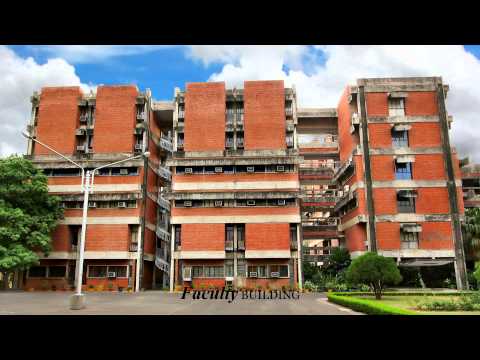
IIT Kanpur News & Updates





IIT KanpurContact Information

Indian Institute of Technology, Kalyanpur
Kanpur ( Uttar Pradesh)
(For general query)
(For admission query)
(For general query)
(For admission query)
Useful Links
Know more about IIT Kanpur
- Courses 2027
- Fees 2027
- Reviews on Placements, Faculty & Facilities
- Admission 2027 - Cutoffs, Eligibility & Dates
- Placement - Highest & Average Salary Package
- Cut off & Merit List 2027
- IIT Kanpur Rankings
- Gallery 2027
- Infrastructure Details & Reviews
- IIT Kanpur Faculty
- Compare IIT Kanpur
- IIT Kanpur Q&A
- Scholarships
- JEE Advanced
- IIT Kanpur News & Articles
Explore Streams at IIT Kanpur
Know more about Programs
- B Tech (Bachelor of Technology)
- M.E./M.Tech
- BSc
- MSc (Master of Science)
- Social Responsibility
- MMS (Master of Management Studies)
- MBA (Masters of Business Administration)
- Ph.D.
- M.Des
- Engineering
- Science Subject
- IT Software Courses
- Humanities & Social Sciences
- Business & Management Study
- Design
- Banking, Finance & Insurance
- Arts ( Fine / Visual / Performing )
- Teaching & Education
Explore Colleges in this Location
- Certificate colleges in Kanpur
- M.Tech colleges in Kanpur
- M.Sc. colleges in Kanpur
- Ph.D. colleges in Kanpur
- B.Tech colleges in Kanpur
- B.Sc. colleges in Kanpur
- PG Diploma colleges in Kanpur
- MBA colleges in Kanpur
- Engineering colleges in Kanpur
- IT & Software colleges in Kanpur
- Science colleges in Kanpur
- Business & Management Studies colleges in Kanpur
- Humanities & Social Sciences colleges in Kanpur
- Teaching & Education colleges in Kanpur
- Banking, Finance & Insurance colleges in Kanpur
Can I get admission to SAE - Sinhgad Academy of Engineering B.E. / B.Tech course without MHT CET?