JEE Main 2016 Paper Analysis For Online Exam
Joint Entrance Exam (JEE) Main 2026 ( JEE Main )


JEE Main CSAB special counselling
22 Jul '26 - 18 Aug '26


JEE Main 2016 offline exam commenced on April 3 while the online exam was held on April 9. The same will conclude on April 10. Around 12 lakh students took JEE Main 2016 examination this year from over 2000 centres in 129 cities in India & abroad. Aspirants had the choice of appearing in any one of the two types of papers or both. Paper – I is for B.E / B.Tech courses while Paper – II is for B.Arch / B.Planning. Paper – I held on April 3 was in off-line mode (pen & paper based) and the one conducted on April 9 & 10, 2016 is online (Computer based) . Paper – II which was held on April 3, 2016 is only offline. Take a look at the JEE Main 2016 time table here!
Check JEE Main 2016 results here!
JEE Main 2016 Online Exam Analysis By FIITJEE Expert - Ramesh Batlish:
JEE Main 2016 Online Exam Paper Pattern:
- There were total 90 questions from Physics, Chemistry & Mathematics in three parts in the question paper A, B, C with 30 questions in each part.
- Each question was of 4 marks
- 1/4 marks of total marks per question would be deducted in case of an incorrect answer, whereas no deduction if the question is left un-attempted.
- Students were asked to use the Ball pen as provided by the Board for rough work. Two sheets of rough paper was also given to students at the start of the exam. Students could however ask for additional sheets(if needed)
General Response of students:
- Paper was reported as balanced and of moderate level. Order of difficulty with Maths – Moderate level, Chemistry & Physics - Easy. As compared to the Paper held on 3rd April, 2016 Physics was not that tough, Maths and chemistry were of similar level
- Some reported that Mathematics seemed to be lengthy but not tough.
- There was at least one question from each of the chapters in Physics, Chemistry & Mathematics.
Other Observations:
- Students could not carry a copy of the question Paper after the exam
- There were no Set No of question Paper unlike the Offline Exam
- Students could ask for additional rough sheet
- Pencil Box/stationery/Wrist watch/Mobile was NOT allowed inside the Test Centre
- No major errors in question paper have been reported till now, some students said there was one question in Maths where no options were matching(this is yet to be ascertained from our side after seeing the question paper).
FIITJEE experts - R.L.Trikha and Ramesh Batlish share the complete analysis of the offline exam with Shiksha.com. Take a look the same below.
Explore colleges based on JEE Main
Want better recommendations?
There is a 90% more chance of getting best college recommendations by sharing preferences.
- Chat with our counselor
- Get your personalised list of colleges & exams matching your preferences
JEE Main 2016 Answer Key By Allen Career Institute
JEE Main 2016 Offline Exam Paper Analysis By R.L.Trikha
The Question Paper – I for B.E. / B.Tech courses in 2016 is similar to the pattern in the past few years - 2011 to 2015. Paper had objective type questions(Multiple Choice) with one out of four correct with equal weightage to Physics, Chemistry & Mathematics.

There were 30 Questions each in Physics; Chemistry & Mathematics with marking scheme of 4 marks for right answer & for each in-correct response, one-fourth of the total marks allotted to the question would be deducted from the total score.
Explore more B.Tech exams with upcoming dates

3 Aug '26
5 Aug '26
25 Jul '26 - 3 Aug '26
28 Jul '26 - 3 Aug '26
3 Aug '26
3 Aug '26
31 Jul '26 - 5 Aug '26
12 Aug '26
Paper was balanced & was set from CBSE syllabus of Class XI & XII, however as expected many of the questions is conceptual with some needing analytical skills. 27 questions are easy, 48 questions are of moderate difficulty & 15 questions are of relatively higher difficulty.
As in 2015, few questions in Physics were tricky & challenging but compared to last year this section was just a shade tough. Further Q. 84(Set F) had two answers. One or two questions in Chemistry were tricky prima-facie. Compared to last year it was a bit tough. Q 17 (Set F) appears to have no matching answer in choices given. Mathematics compared to last year is a shade tough with few of the questions bring lengthy.
Overall difficulty level for JEE Main 2016 paper was Moderate. For a student who has been focussed & serious all through the two years in improving speed & accuracy by taking regular quizzes & mock tests on JEE pattern, must have done reasonably well. It is always relative performance, which matters in such highly competitive examinations.
In terms of errors & ambiguity, it will be possible to say something only after fully solving the paper. Cut-offs are expected to be little higher than last year.
Cut-offs for CML (Common Merit List) in 2013, 2014, 2015 were 113,115,105 respectively.
Admission in NIT’s / IIIT’s / DTU / CFTI’s & other allied institutes will be based on overall merit list comprising of 60% of JEE Main marks & 40% of normalised Board marks.
Top 2, 00,000 candidates of JEE Main will be eligible to appear in JEE Advanced on 23rd May 2016 to fight for one of 10000 seats in Prestigious IIT’s / ISM Dhanbad.
In centralised Seat allocation process,32 NIT’s,18 Indian Institute of Information Technology &19 Central Government/State Government funded Institutes will be represented using JEE Main ranks.34 self financed deemed Universities/Universities/other Institutes also participated in 2015 in Central Allocation Board (eligible only for spot round).
9 States Haryana, Uttarakhand, Nagaland, Gujarat, Maharashtra, M.P., Odisha, Punjab & Rajasthan also accept JEE Main ranks to fill seats through their own seat allocation process.
JEE Main 2016 is scheduled to be conducted on April 3, 9 & 10, 2016. There will be two papers on day one of the exam for B. Tech and B. Arch aspirants. While the Paper 1 will begin from 9:30 AM to 12:30 PM, Paper 2 will start from 2 PM to 5 PM. Catch live updates for JEE Main 2016 here!
JEE Main 2016 Offline Exam Paper Analysis By Ramesh Batlish
Pattern:
- The question paper Booklet had 24 printed pages.
- There were total 90 questions from Physics, Chemistry & Mathematics in three parts in the question paper A, B, C with 30 questions in each part.
- Each question was of 4 marks
- 1/4 marks of total marks per question would be deducted in case of an incorrect answer, whereas no deduction if the question is left un-attempted.
- Students were asked to use the Blue/Black Ball pen as provided by the Board.
General Response of students:
- Paper was moderate level in general and balanced. Order of difficulty with Physics- Moderately tough, Chemistry & Maths - Easy.
- Less space for rough calculations
- There was at least one question from each of the chapters in Physics, Chemistry & Mathematics.
Chapter Wise Analysis Of JEE(Main) 2016 Paper-1(Set-H)
| Q.No. |
Topic |
Sub Topic |
Easy |
Moderate |
Difficult |
| 1 |
Simple Harmonic Motion |
Equation of SHM |
|
|
P |
| 2 |
Semi-Conductor Devices |
Semi-Conductor Devices |
P |
|
|
| 3 |
General Physics |
relative error absolute error mean error |
|
P |
|
| 4 |
Semi-Conductor Devices |
Semi-Conductor Devices |
P |
|
|
| 5 |
Rotational Motion |
Vector form of Angular Momentum |
|
P |
|
| 6 |
Communication |
Communication |
P |
|
|
| 7 |
Modern Physics |
photo-electric effect |
|
|
P |
| 8 |
Magnetics |
Biot savarts law |
|
P |
|
| 9 |
Waves and Sound |
Superposition of waves - Stationary waves in organ pipe |
P |
|
|
| 10 |
Electro statistics |
Gauss law |
|
|
P |
| 11 |
EMI & AC |
LR IN AC |
|
P |
|
| 12 |
Heat and Thermodynamics |
PV Graph |
|
|
P |
| 13 |
Work Power and Energy |
Potential energy |
|
P |
|
| 14 |
Work Power and Energy |
Mechanical energy |
|
|
P |
| 15 |
Current Electricity |
Effect of charge in temp and resistance |
P |
|
|
| 16 |
EM Waves |
Properties |
P |
|
|
| 17 |
Current Electricity |
Galvanometer |
P |
|
|
| 18 |
Modern Physics |
radioactivity |
P |
|
|
| 19 |
Semi-Conductor Devices |
Semi-Conductor Devices |
P |
|
|
| 20 |
Electro statistics |
Capacitors, Electric Field |
|
|
P |
| 21 |
Gravitation |
Motion of planet and satellites |
P |
|
|
| 22 |
General Physics |
screw gauge |
|
P |
|
| 23 |
Rotational Motion |
Rolling Motion |
|
P |
|
| 24 |
Magnetics |
Magnetic Properties |
P |
|
|
| 25 |
Optics |
Diffraction |
|
|
P |
| 26 |
Waves and Sound |
velocity of longitudinal and transverse waves |
|
|
P |
| 27 |
Heat and Thermodynamics |
Polytropic process |
|
P |
|
| 28 |
Optics |
Optical Instrument |
|
P |
|
| 29 |
Optics |
Prism |
|
|
P |
| 30 |
Heat and Thermodynamics |
Thermal expansion of solids, liquids, gases |
|
|
P |
| 31 |
Area |
area bounded by g(y) , y axis, y=a and y=b. |
P |
|
|
| 32 |
Functions |
functional relationship (investigate fn) |
|
P |
|
| 33 |
Indefinite Integral |
Problems based on substitution - Algebric substitution |
|
P |
|
| 34 |
Functions |
composite function |
|
P |
|
| 35 |
Circle |
condition for two circles touching each other |
P |
|
|
| 36 |
Logarithm |
definition |
P |
|
|
| 37 |
Progression Series |
GP |
P |
|
|
| 38 |
Hyperbola |
Problem based on - finding focus directrix, vertex , latus rectum etc |
P |
|
|
| 39 |
Binomial Theorem |
Sum of co-efficient and Relationship between the Co-efficient of the expansion like (a + bx + cx2) |
|
P |
|
| 40 |
Mathematical Reasoning |
Equivalent Statements |
P |
|
|
| 41 |
Application of Derivative |
Problems based on Normals to a curve |
P |
|
|
| 42 |
Definite Integral |
Limit as a sum |
|
P |
|
| 43 |
Circle |
common chord |
|
P |
|
| 44 |
Probability |
Independent events |
P |
|
|
| 45 |
Complex Number |
definition based problems |
P |
|
|
| 46 |
Progression Series |
AP |
P |
|
|
| 47 |
Determinant |
Homogeneous Equation |
P |
|
|
| 48 |
3-Dimensional Geometry |
Condition for a line to lie in a plane ( C. F. ) |
P |
|
|
| 49 |
Permutation & Combination |
Dictionary Rank |
P |
|
|
| 50 |
Statistics |
Standard Deviation |
P |
|
|
| 51 |
Application of Derivative |
Maxima Minima |
P |
|
|
| 52 |
Limits |
Problems based on exponential limits |
|
P |
|
| 53 |
Parabola |
Problems based on normal |
|
P |
|
| 54 |
Differential Equation |
Solution of DE reducible to Bernoulii form |
P |
|
|
| 55 |
Vector |
Triple product |
P |
|
|
| 56 |
Matrices |
Adjoint |
P |
|
|
| 57 |
Height and Distance |
Angle of Elevation |
P |
|
|
| 58 |
3-Dimensional Geometry |
Distance of a point from a plane (C.F) |
|
P |
|
| 59 |
Straight Line |
Intersection of two lines |
|
P |
|
| 60 |
Trigonometric Equations |
Solution of Simultaneous trigonometric equation - in one variable |
P |
|
|
| 61 |
Gaseous State |
Ideal Gas Equation |
|
P |
|
| 62 |
Hydrogen |
Water |
P |
|
|
| 63 |
Amines |
Hoffmann Bromamide |
|
P |
|
| 64 |
Periodic Properties |
Ionization Energy |
P |
|
|
| 65 |
Stoichiometry |
Concentration |
|
P |
|
| 66 |
Thermodynamics |
Hess Law |
P |
|
|
| 67 |
Equilibrium |
Chemical Equilibrium |
P |
|
|
| 68 |
General Organic Chemistry & Isomerism |
R, S configuration |
|
P |
|
| 69 |
Surface Chemistry |
Freundlich Adsorption Isotherm |
P |
|
|
| 70 |
Liquid Solution |
Distillation |
P |
|
|
| 71 |
Chemistry in Everyday life |
Detergent |
P |
|
|
| 72 |
Chemical Bonding |
Hybridisation |
P |
|
|
| 73 |
Biomolecules |
Amino Acid |
P |
|
|
| 74 |
Ores and Metallurgy |
Forth Floation |
P |
|
|
| 75 |
Polymers |
Low denisty polyethene |
P |
|
|
| 76 |
Solid State |
Magnetic Properties of solids |
P |
|
|
| 77 |
Hydrocarbons |
Halogenation |
|
P |
|
| 78 |
Qualitative Analysis |
Flame |
P |
|
|
| 79 |
Gaseous State |
Eudiometry |
|
|
P |
| 80 |
Group 15 to Group 18 |
Oxoacids of phosphorous |
P |
|
|
| 81 |
Hydrocarbons |
Addition of HOCl on alkenes |
P |
|
|
| 82 |
Haloalkanes and Haloarenes |
Substitution and elimination |
|
P |
|
| 83 |
Coordination Compounds |
Optical Isomerism |
|
|
P |
| 84 |
s block element |
Effect of excess of air on alkali metals |
P |
|
|
| 85 |
Liquid Solution |
Raoult's law |
|
P |
|
| 86 |
Group 15 to Group 18 |
Reactions of Nitric Acid |
P |
|
|
| 87 |
Chemical Kinetics |
First order kinetics |
|
P |
|
| 88 |
Coordination Compounds |
Magnetic moment calculation of complexes |
|
P |
|
| 89 |
Electrochemistry |
Galvanisation |
P |
|
|
| 90 |
Atomic Structure |
de Broglie Wavelength |
|
P |
|
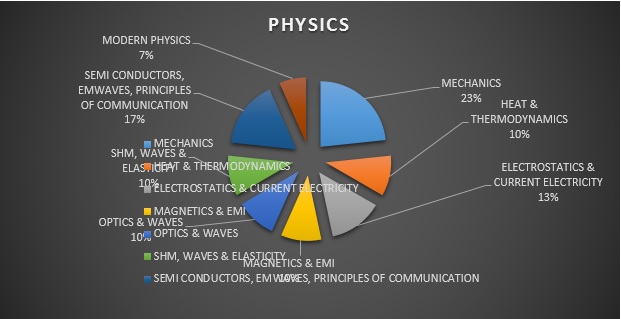
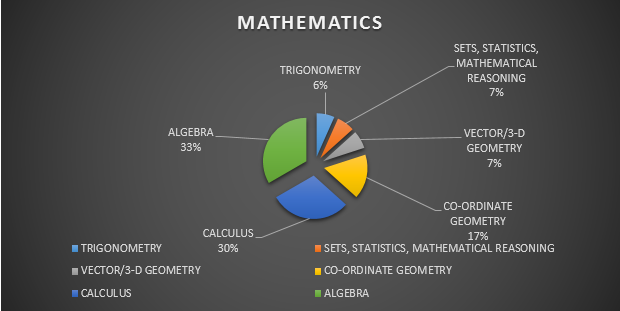
Analysis(Class Wise) Of JEE Main 2016 Paper -1
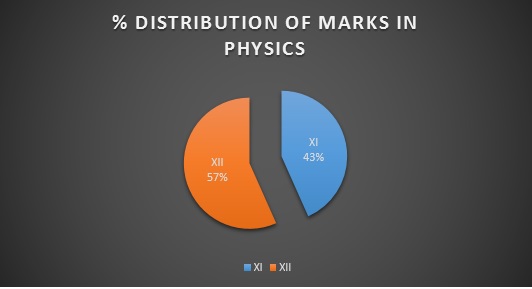
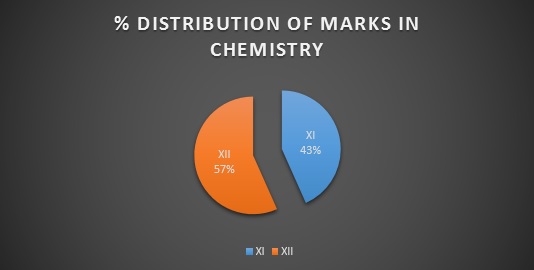
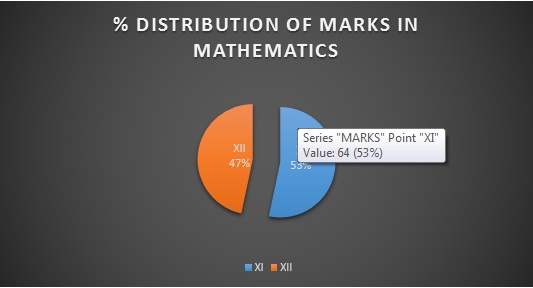
Percentage Distribution Subject-wise JEE Main -2016- Paper-1

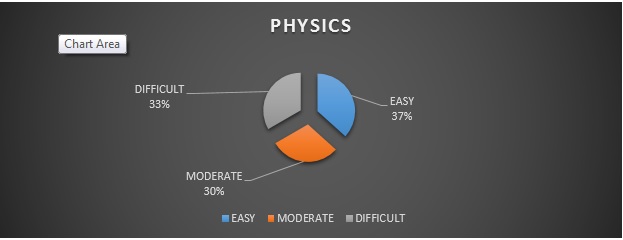
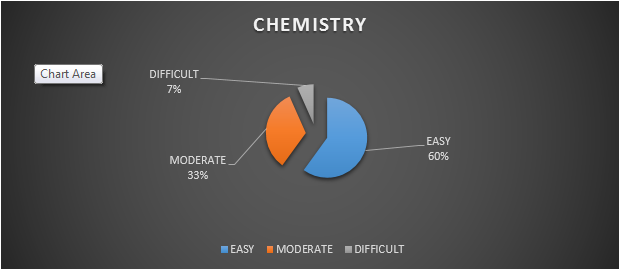
Analysis(Difficulty Level) Of JEE Main 2016 Paper-1
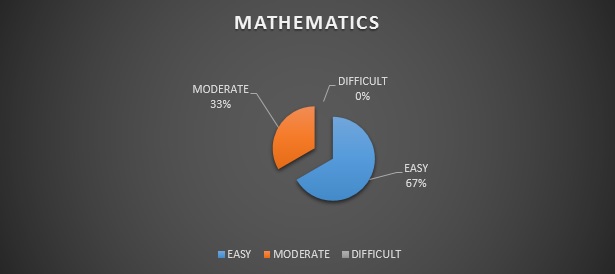
Also, check out JEE Main 2016 student reactions here! For more updates on JEE Main 2016, stay tuned to Shiksha.
News & Updates
Explore Other Exams
Jun '26 | JoSAA 2026 starts |
1 Jun '26 | JEE Advanced 2026 Result Date |
6 Aug '26 | BITSAT 2026 Iteration-V fee pa... |
10 Aug '26 | BITSAT 2026 Iteration-VI Annou... |
9 Jul '26 | SRMJEEE Phase 3 Result 2026 |
4 Jul '26 - 5 Jul '26 | SRMJEEE 2026 Exam (Phase 3) |
28 Jul '26 - 3 Aug '26 | COMEDK 2026 Counselling: Round... |
28 Jul '26 - 3 Aug '26 | COMEDK 2026 Counselling: Round... |
28 Jul '26 | WBJEE 2026 seat allotment - Ro... |
24 Jul '26 - 26 Jul '26 | WBJEE 2026 counselling registr... |
Oct '26 | VITEEE 2027 Registration Start... |
Apr '27 | VITEEE 2027 Mock Test Release ... |

Student Forum
 Anything you would want to ask experts?
Answered 7 hours ago
You do not need JEE Main scores to apply for BTech course at VIT Bhopal University. The university does not accept national or state entrance test scores for engineering admissions. Everyone must appear for their own institutional exam, called VITEEE. Your selection relies entirely on the rank you s
R
Contributor-Level 9
Answered 10 hours ago
Yes, but only in private colleges through management quota, based on Class 12 marks, without needing WBJEE. Colleges like IEM, Heritage, Techno India, and Adamas offer this option.
Always check that the college is AICTE-approved before taking direct admission, as unapproved seats can create problems
T
Contributor-Level 10
Answered 3 days ago
Yes, you can get admission to VNIT Nagpur with 95.55 percentile in JEE Main under the EWS category (Maharashtra home state) but your course options might be limited or into less competitive or core branches.
A
Contributor-Level 8
Answered 3 days ago
No, JEE Main ranks are not accepted for core engineering seat allotments at this campus. Admission to all BTech tracks is handled exclusively through the university's own entrance test ranks. VIT Bhopal University requires all engineering aspirants to register for and clear the VITEEE exam to secure
R
Contributor-Level 9
Answered 4 days ago
Sorry, but even under the SC category, securing a seat in an NIT with a JEE Main CRL rank of 632000 is not possible.
A
Contributor-Level 8
Answered 4 days ago
The rank needed for admission to the BTech course would depend on the course, round and branch you are applying for. For the General HS category, the Round 2 cutoff was 770798 for the BTech CSE course. So, this category students need a rank of at least 770798 to be considered eligible for admission.
N
Contributor-Level 10
Answered 5 days ago
Yes, several colleges convert a good JEE Main percentile directly into a fee waiver. Graphic Era's GECET-linked scholarships and UPES's merit scholarships can cut your fees by up to 50%. This makes originally expensive private colleges much more affordable for high scorers, so it's worth applying ev
T
Contributor-Level 10
Answered 6 days ago
No, JEE Main is not required to get admission in BTech at Rajalakshmi Engineering College. Admissions under the government quota rely primarily on Class 12 marks through TNEA counseling. However, JEE Main scores may be considered for admission.
R
Contributor-Level 10
Answered 6 days ago
Yes, most Coimbatore colleges, including PSG Tech, Karunya, and Kumaraguru, primarily admit students through TNEA counselling, which is based on Class 12 merit rather than JEE Main. JEE Main is mainly relevant if you're targeting government institutes like NITs. So a strong Class 12 score alone can
T
Contributor-Level 10
Answered 6 days ago
No, I don't think you can get into B.Tech EEE at Ajay Kumar Garg Engineering College, Ghaziabad with JEE Main rank of 5,30,000 as General, non-UP domicile candidate. Typically, closing rank for EEE close much earlier around 3,00,00.
A
Contributor-Level 8